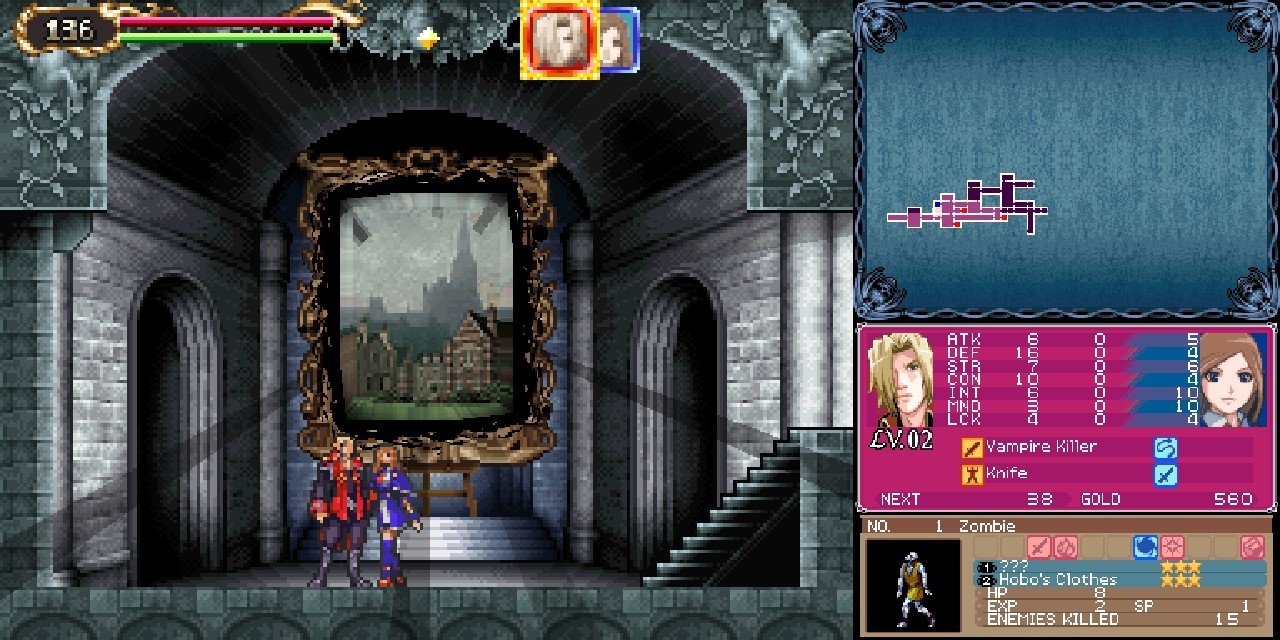
The portraits hold the secrets to the castle!
- JP release: 16th November 2006
- NA release: 5th December 2006
- EU release: 9th March 2007
- Developer: Konami
- Publisher: Konami
- NGC Magazine Review: 78%
- Platforms: DS
- Version Played: DS (Dominus)
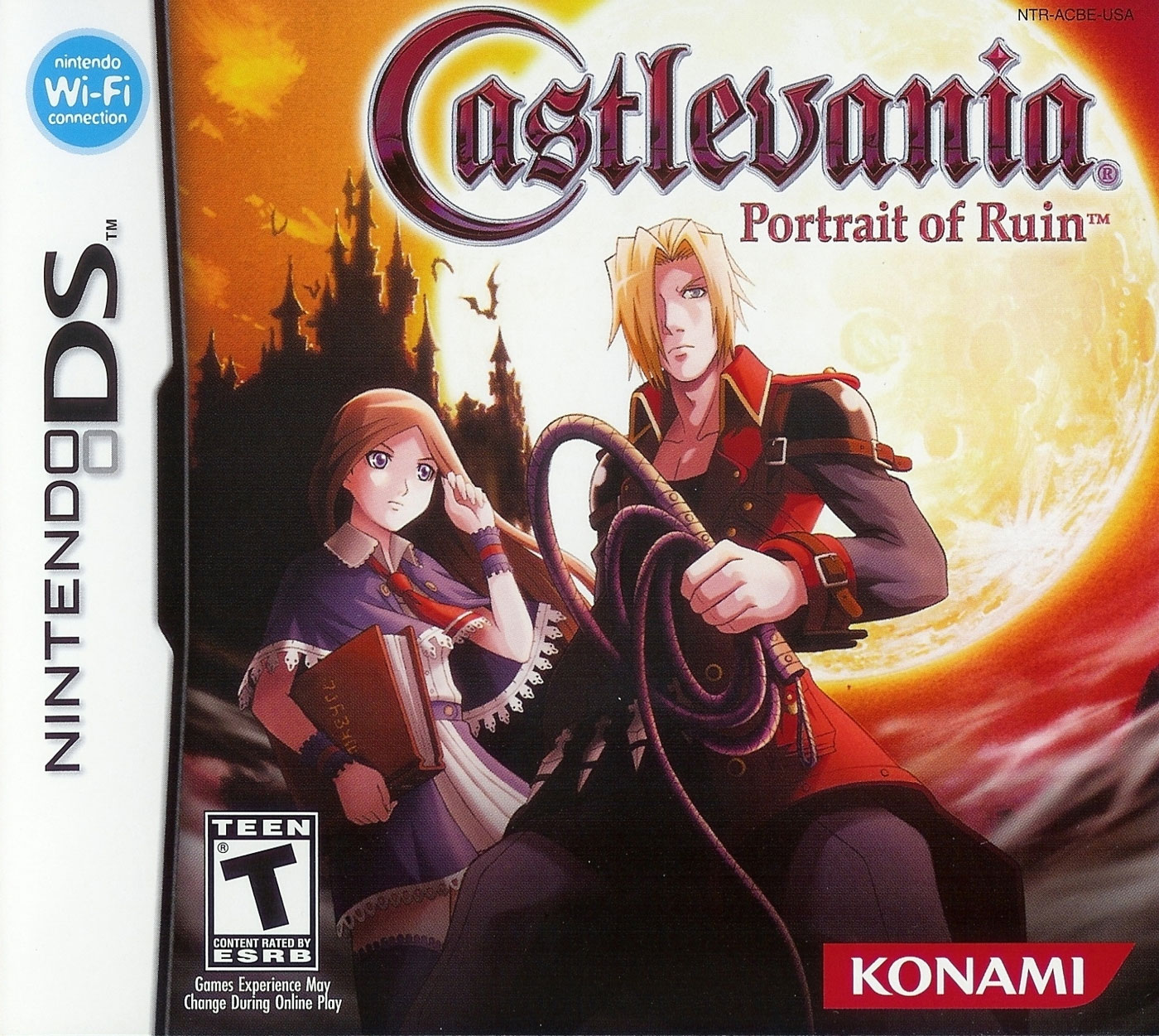
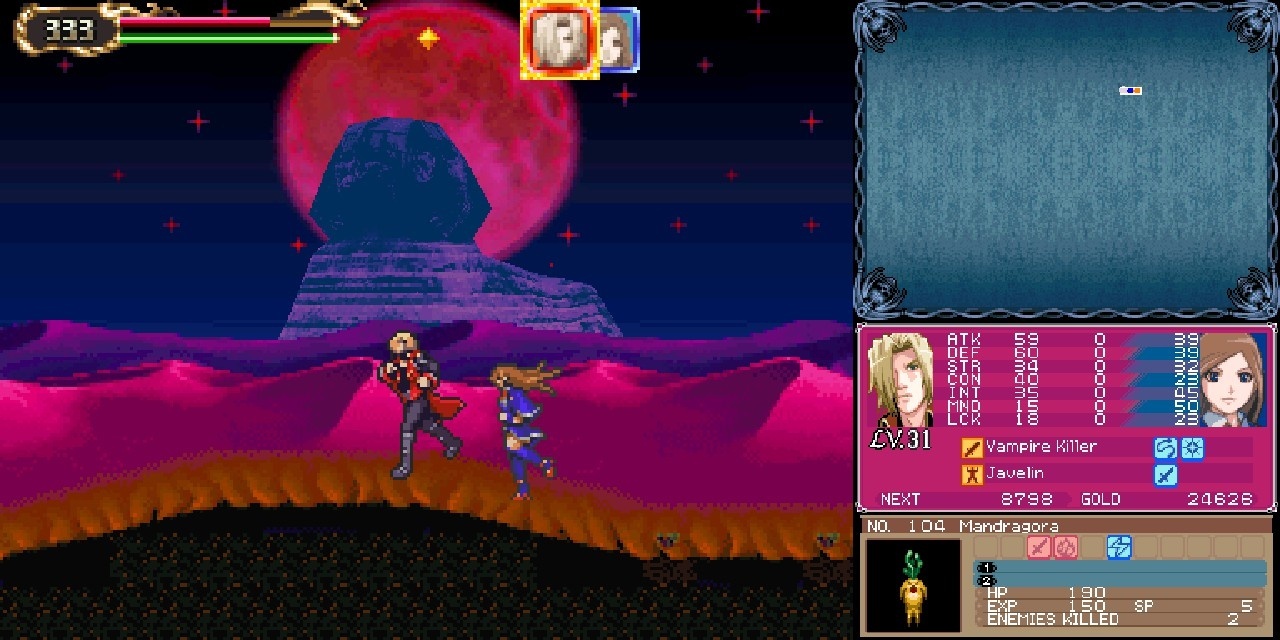
The second DS Castlevania came out at a time where developers felt like they didn’t need to use all the features of the DS, so they decided to get rid of the touch controls for the main game. It felt like an unnecessary addition anyway, so nothing was lost. Portrait of Ruin actually mixes things up in a few ways, giving the game a bit of a fresh feeling.
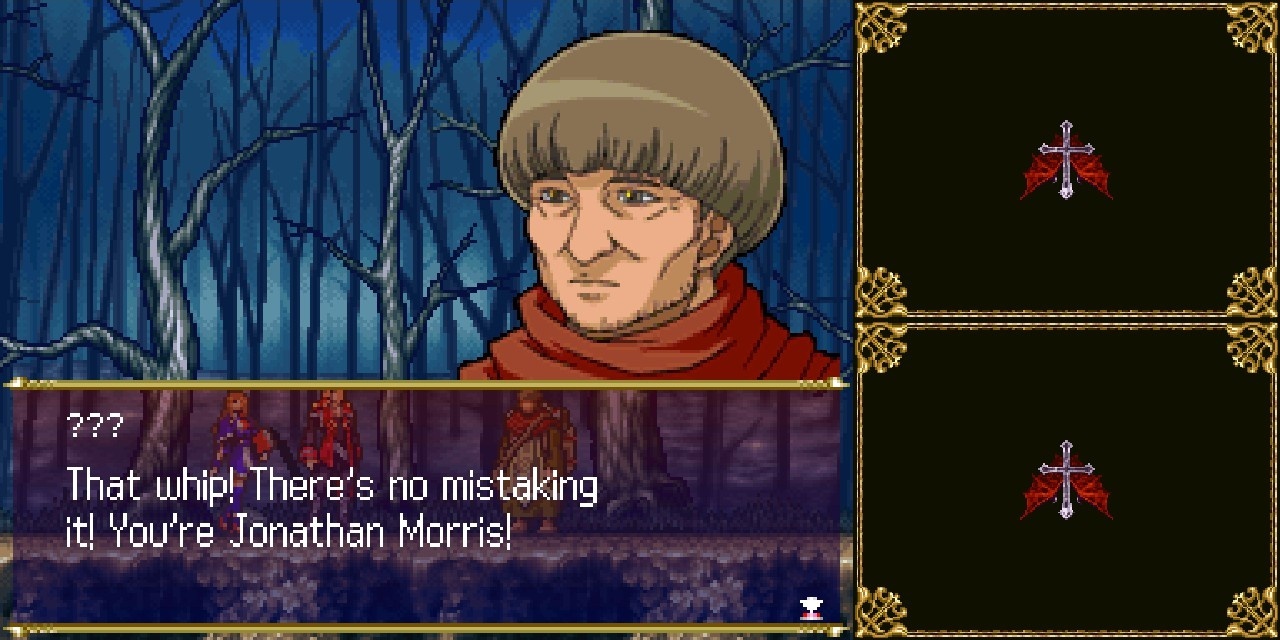
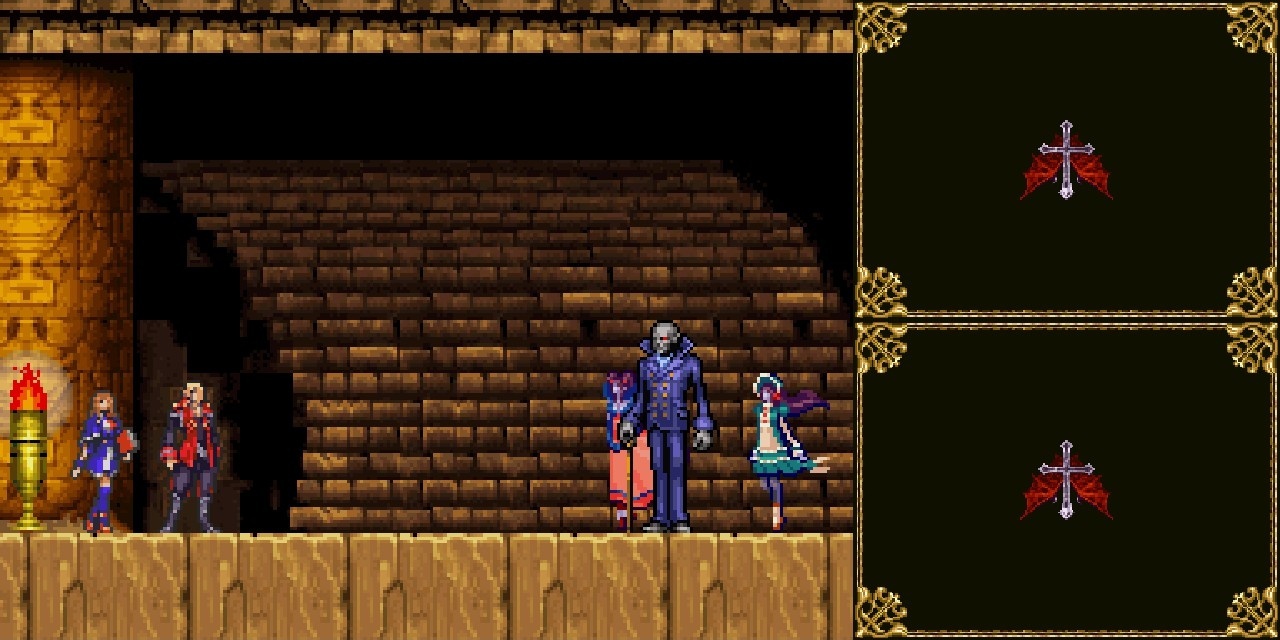
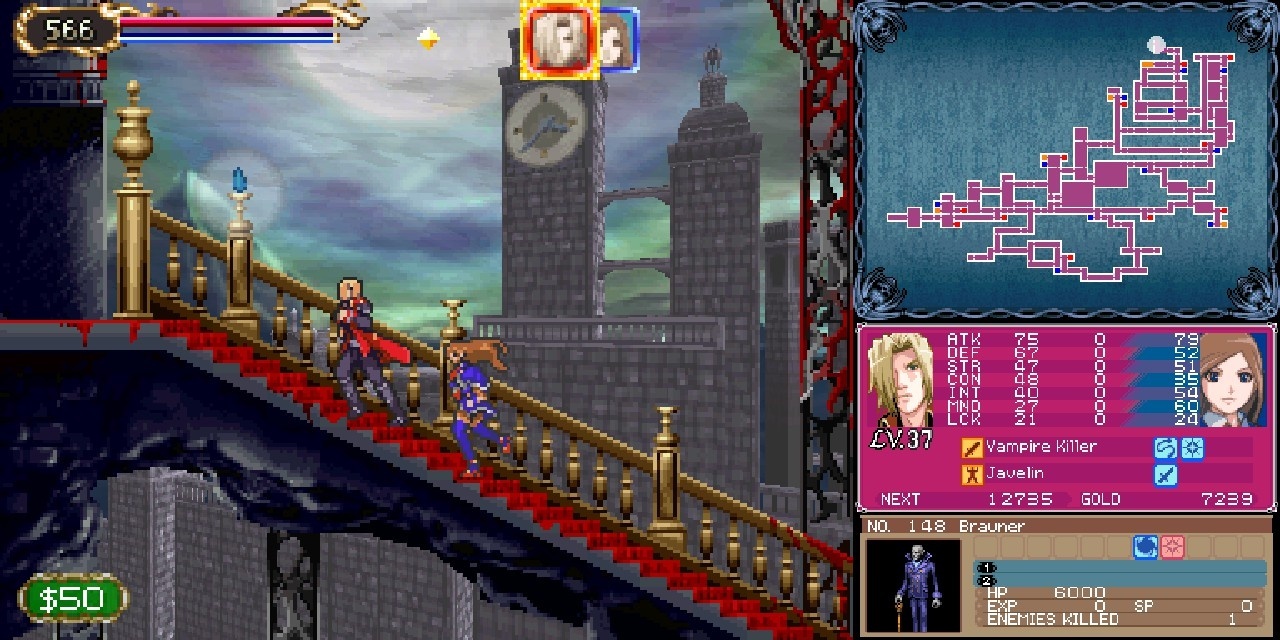
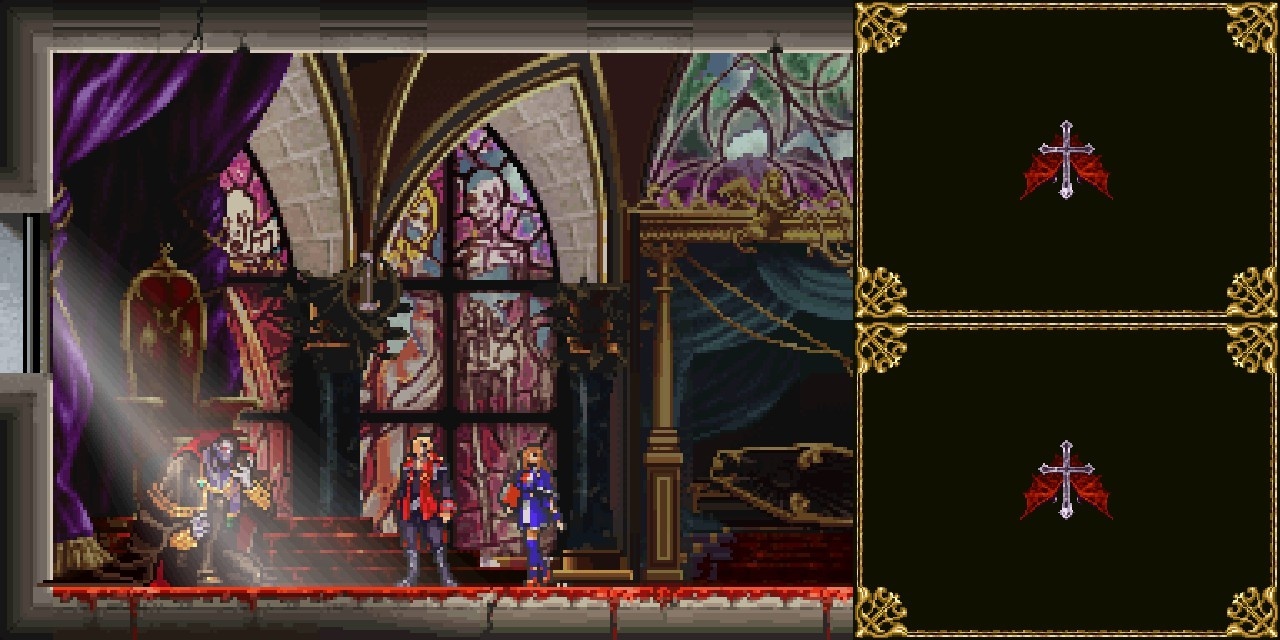
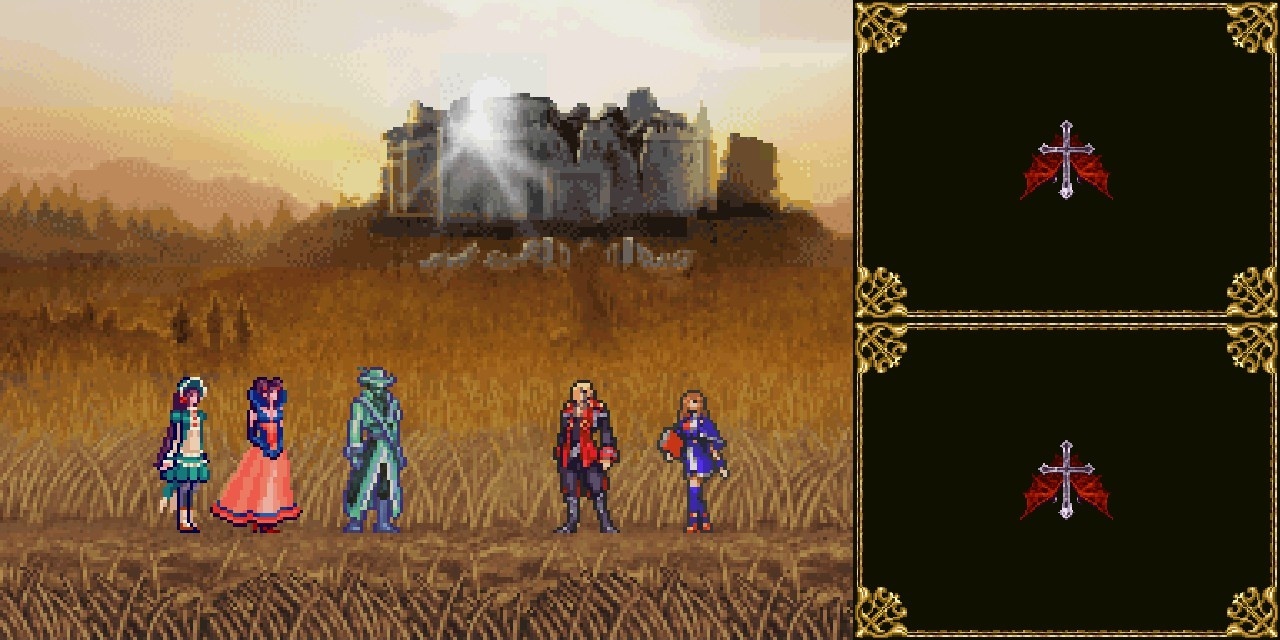
Portrait of Ruin is a sequel to Bloodlines, and you play the son of John Morris, Jonathan. He has inherited the legendary Vampire Killer Whip, but hasn’t been shown how to unlock its full power – there’s some interesting lore regarding why that fits in nicely with Lament of Innocence. Joining him on his adventure is Charlotte Aulin, a young sorceress. Dracula’s Castle has re-appeared, but not with the goal to revive Dracula. Brauner, along with his vampire daughters, has sealed Dracula away and is using magical paintings to take Dracula’s power for himself.
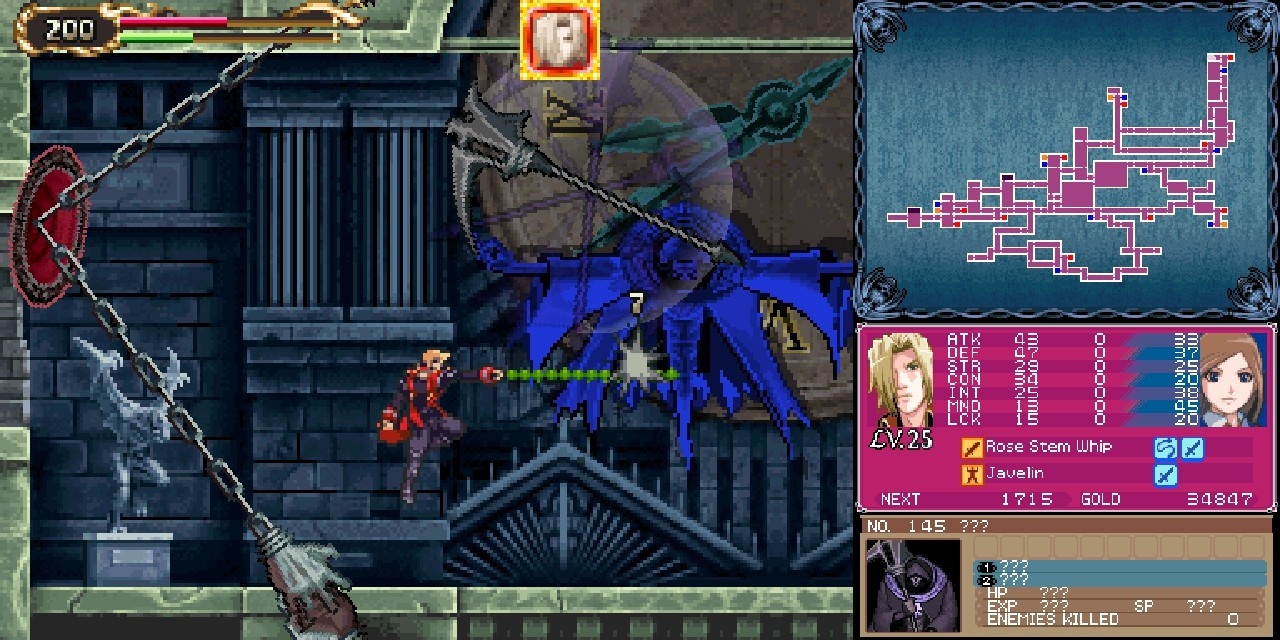
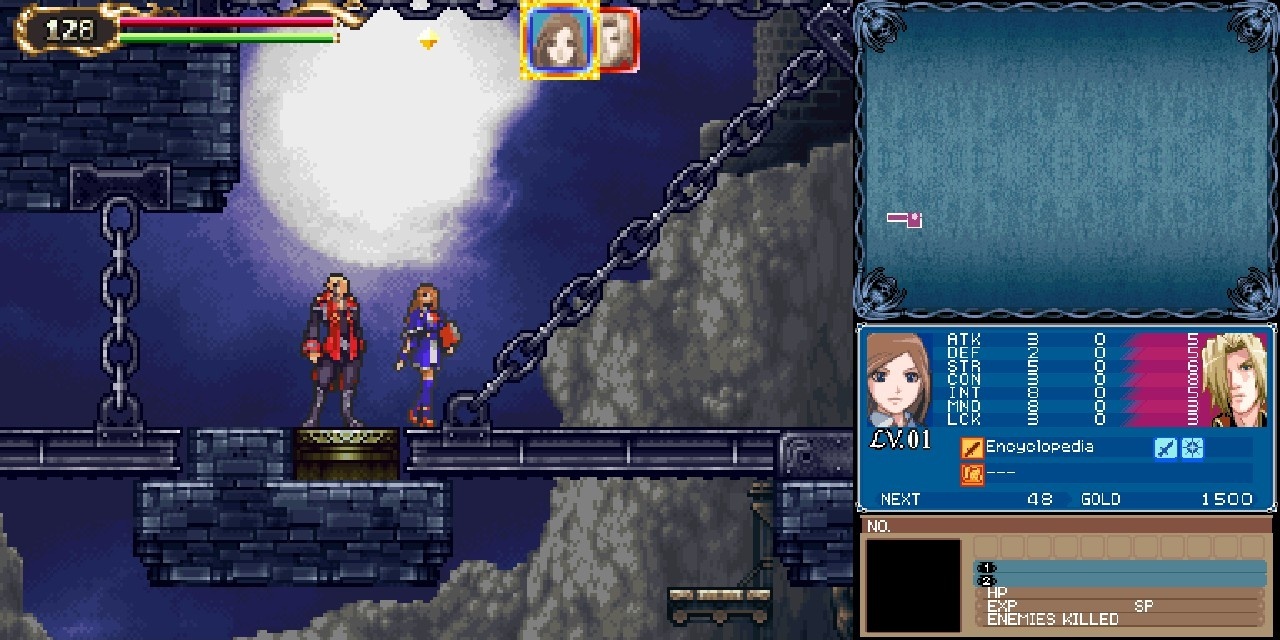
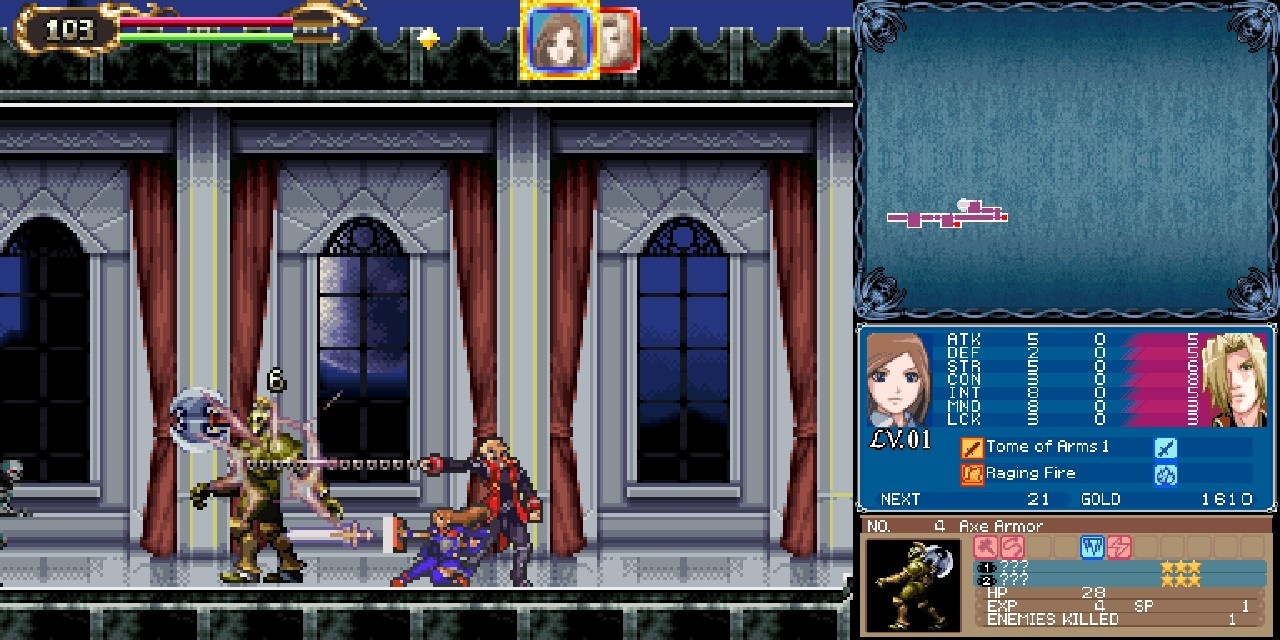
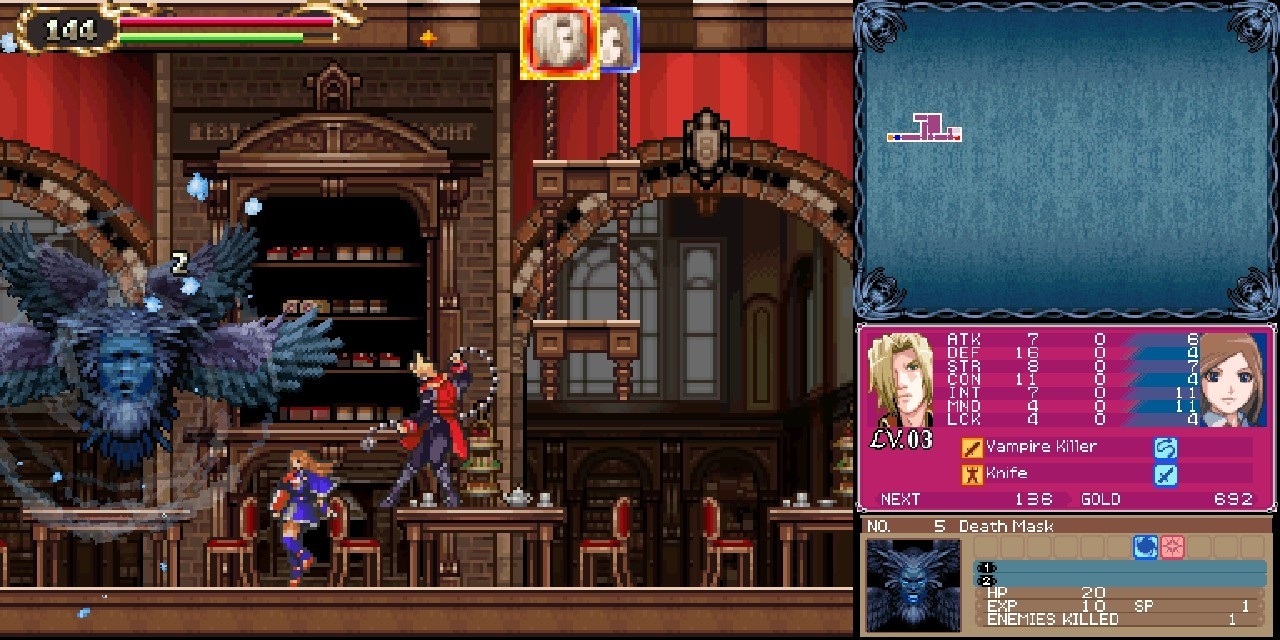
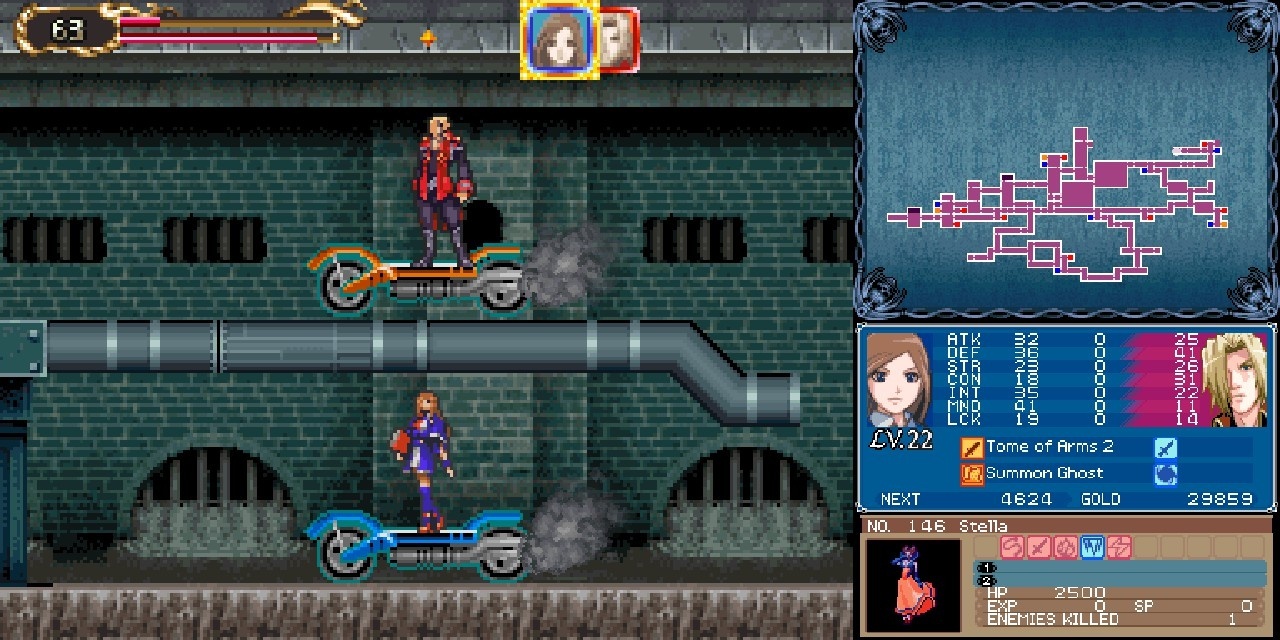
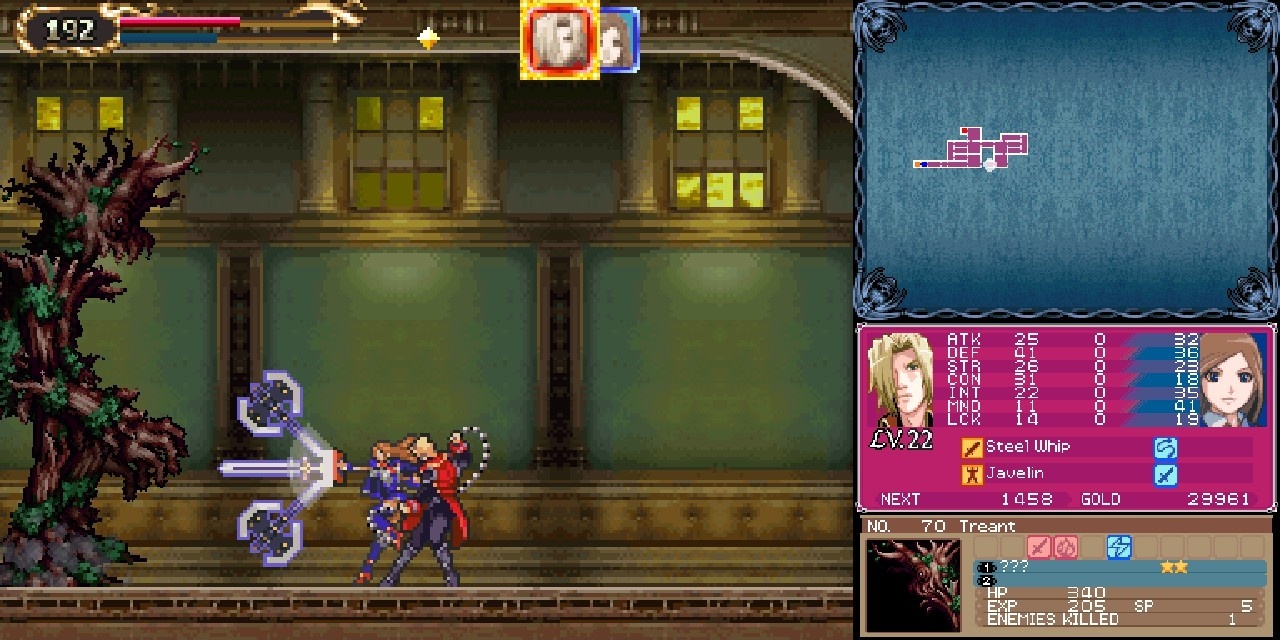
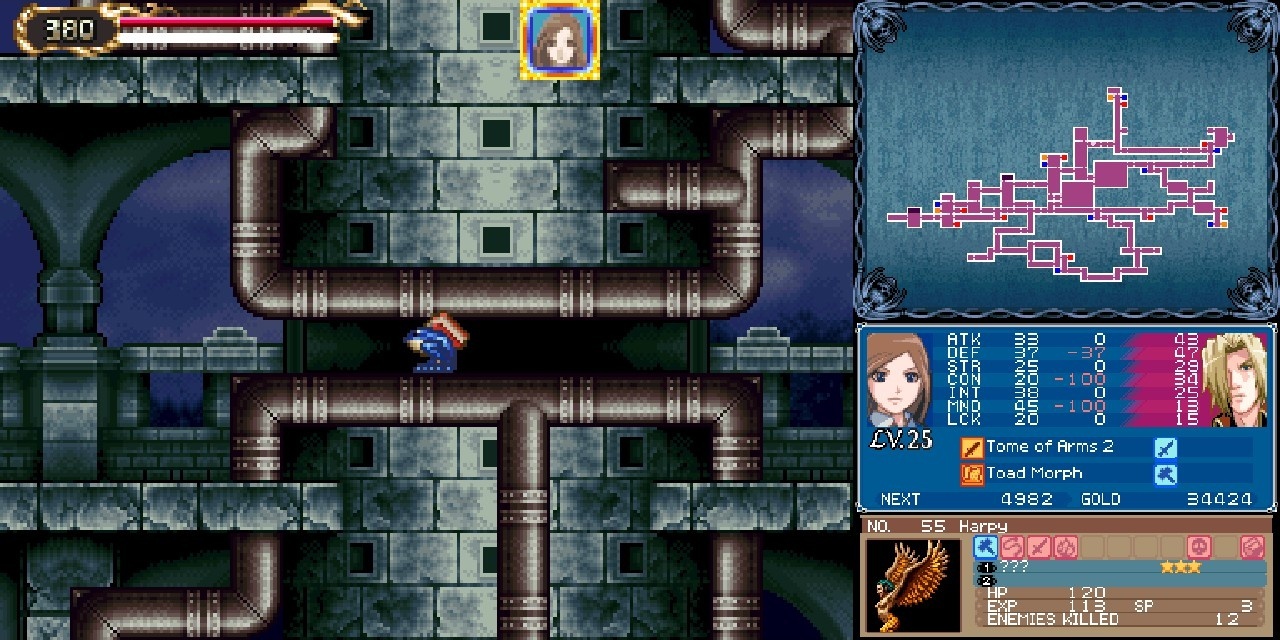
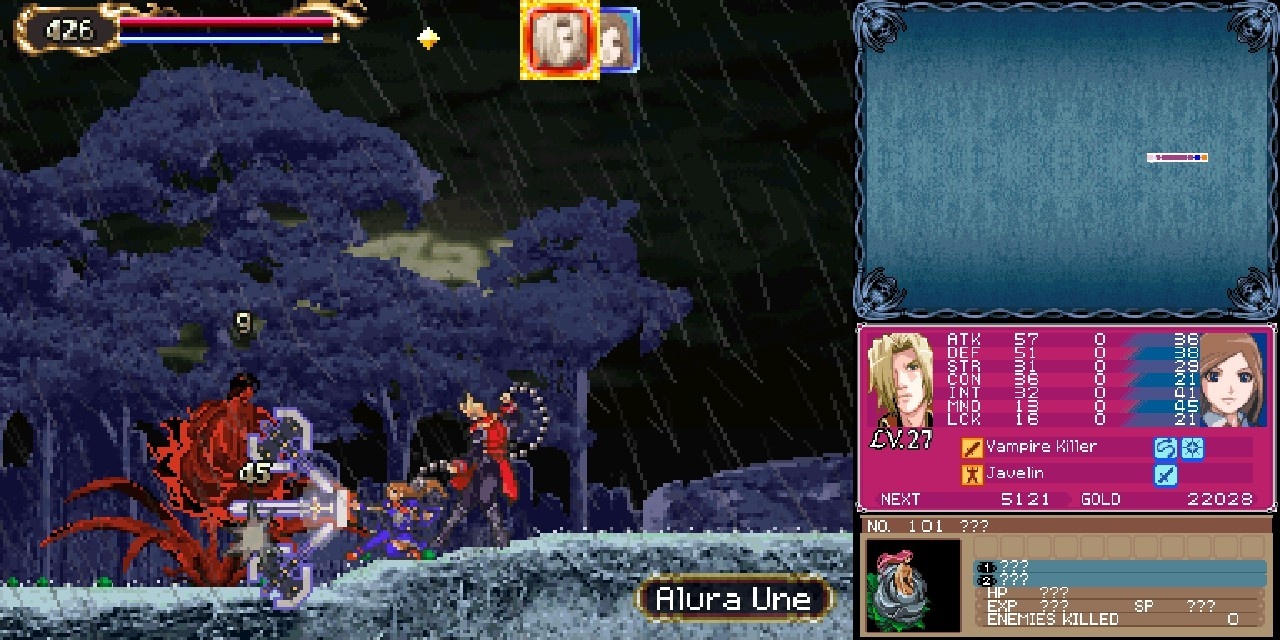
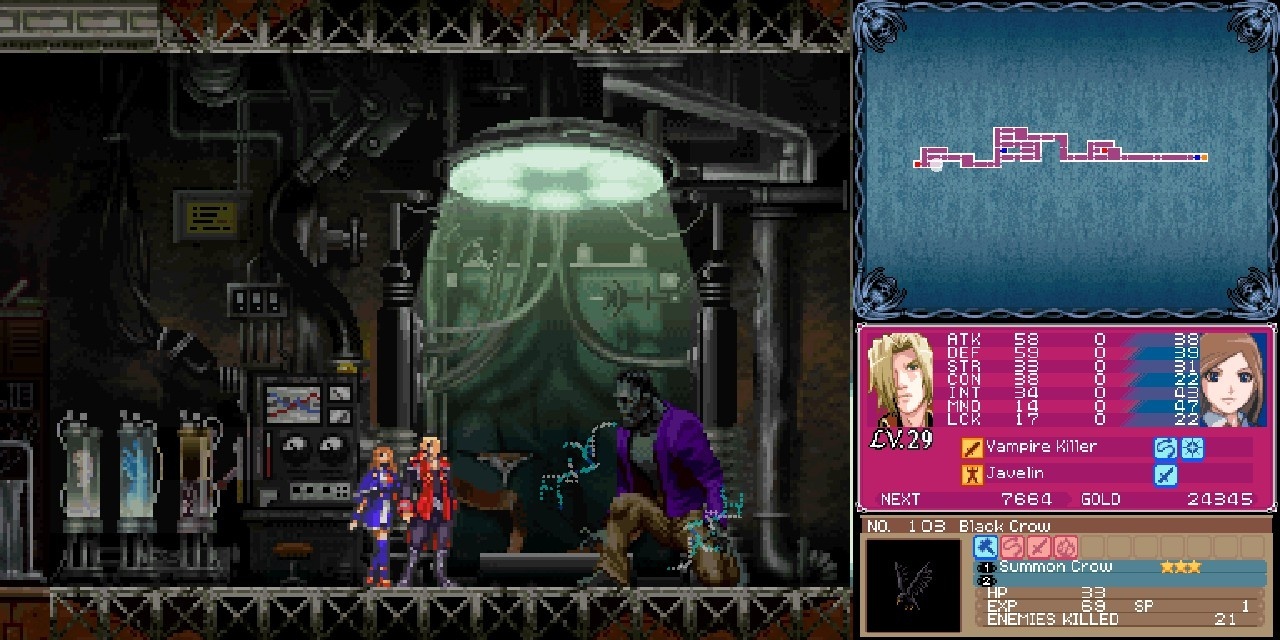
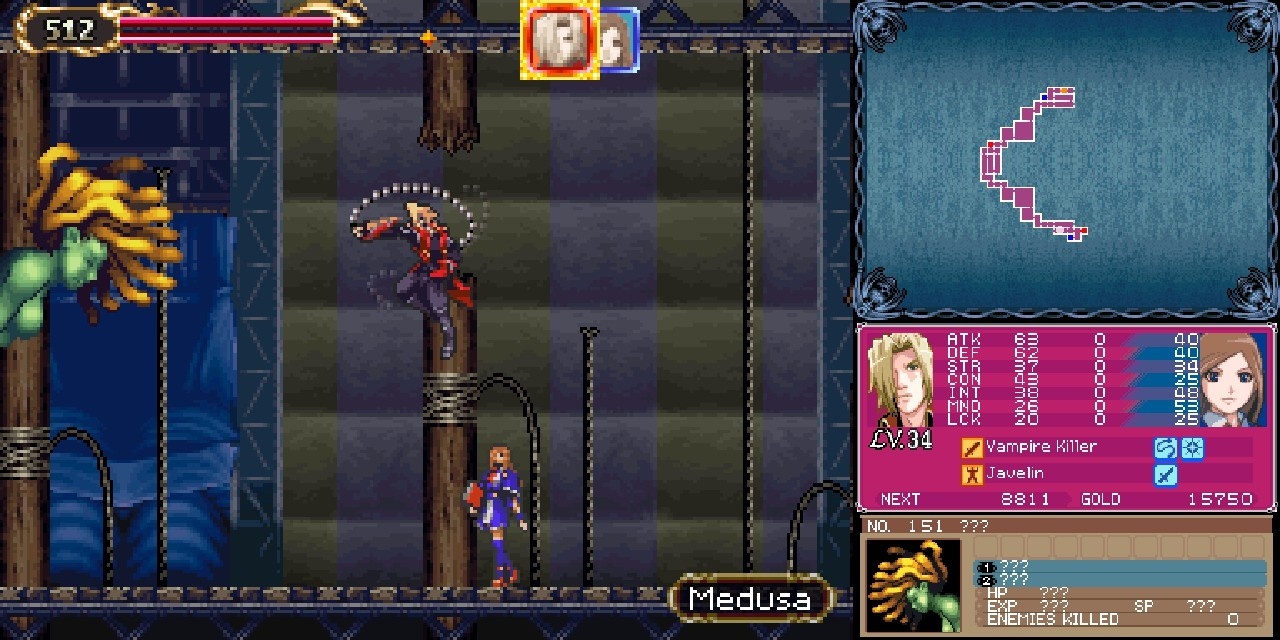
You play as both Jonathan and Charlotte, using the Y button to swap between them. Jonathan uses lots of different weapons (especially with the Vampire Killer being quite weak until very late on) and can equip subweapons (permanently) or other abilities like stat boosts. Charlotte has magical books for different attacks and can cast a wide array of spells. There’s a bit of the souls mechanic from the previous handheld games as some enemies drop a spell of their ability – but the only ones required for progression (some transformation spells) are hidden in the world and not associated with a random drop.
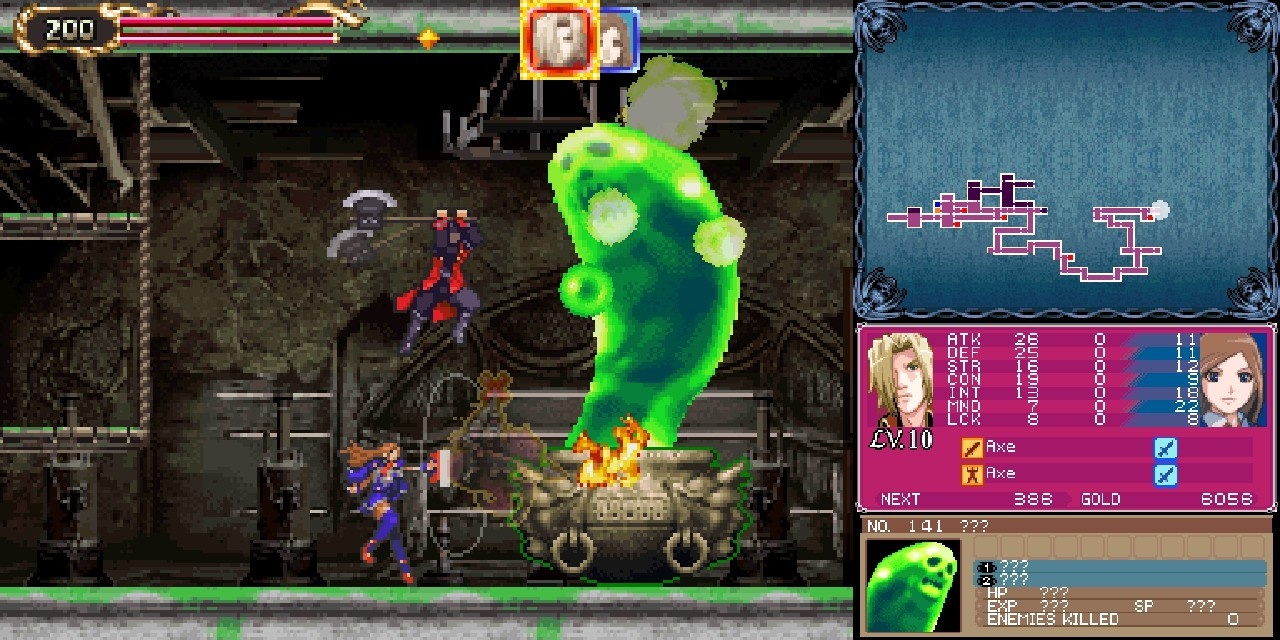
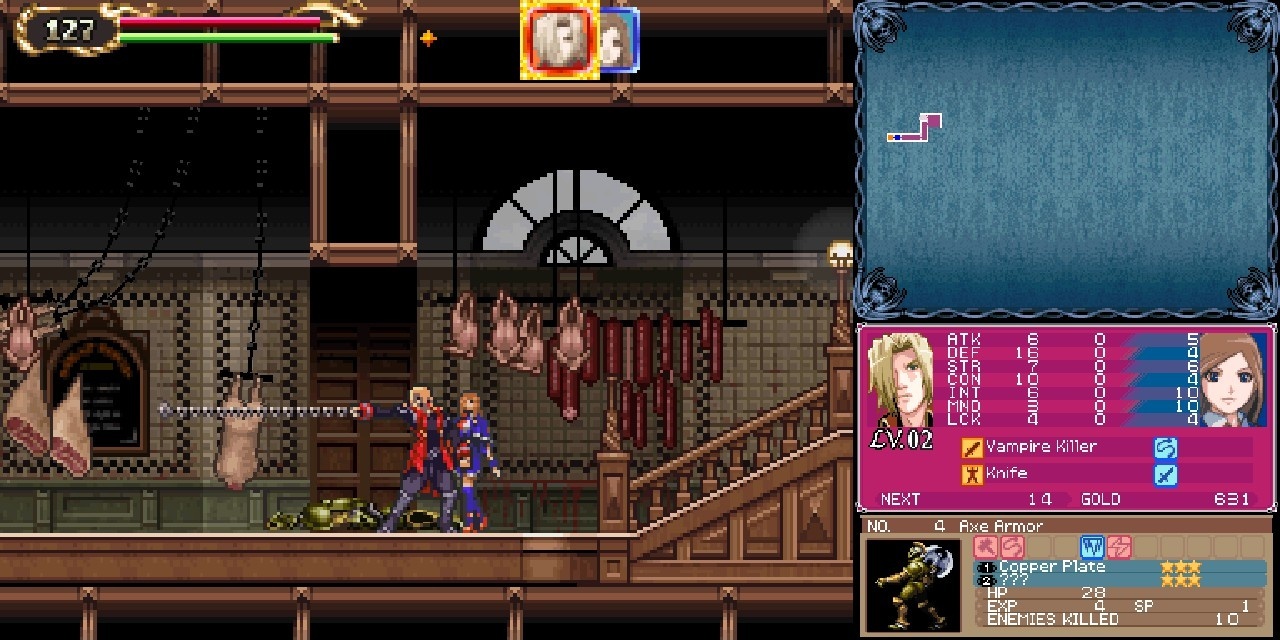
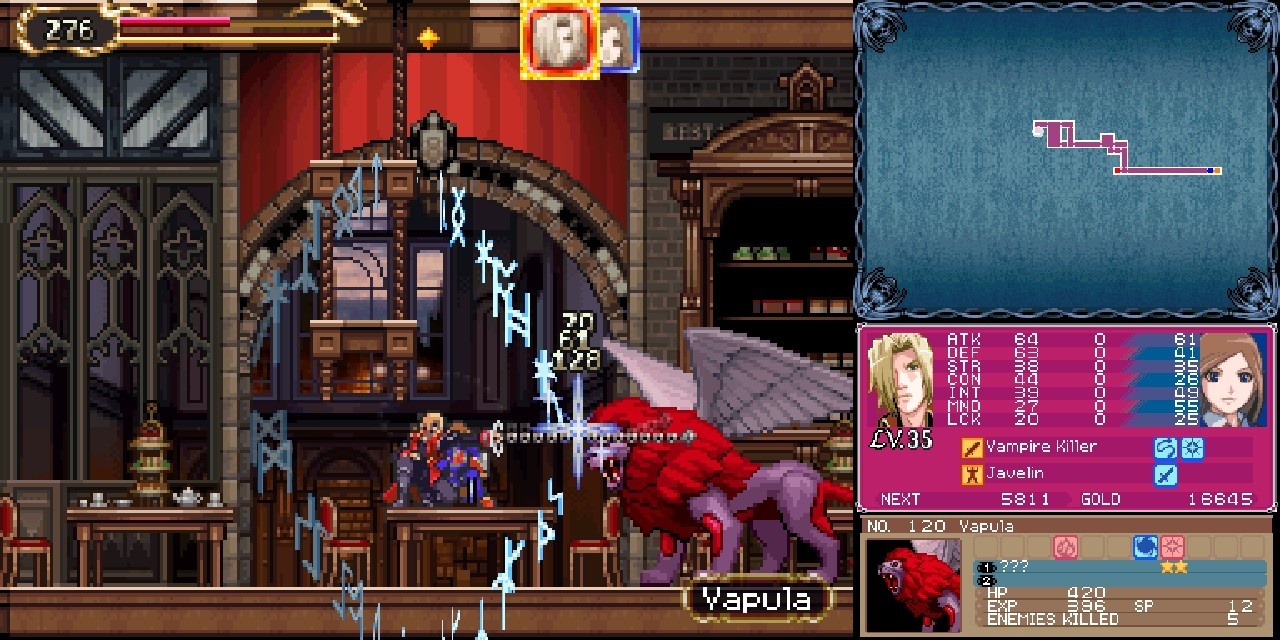
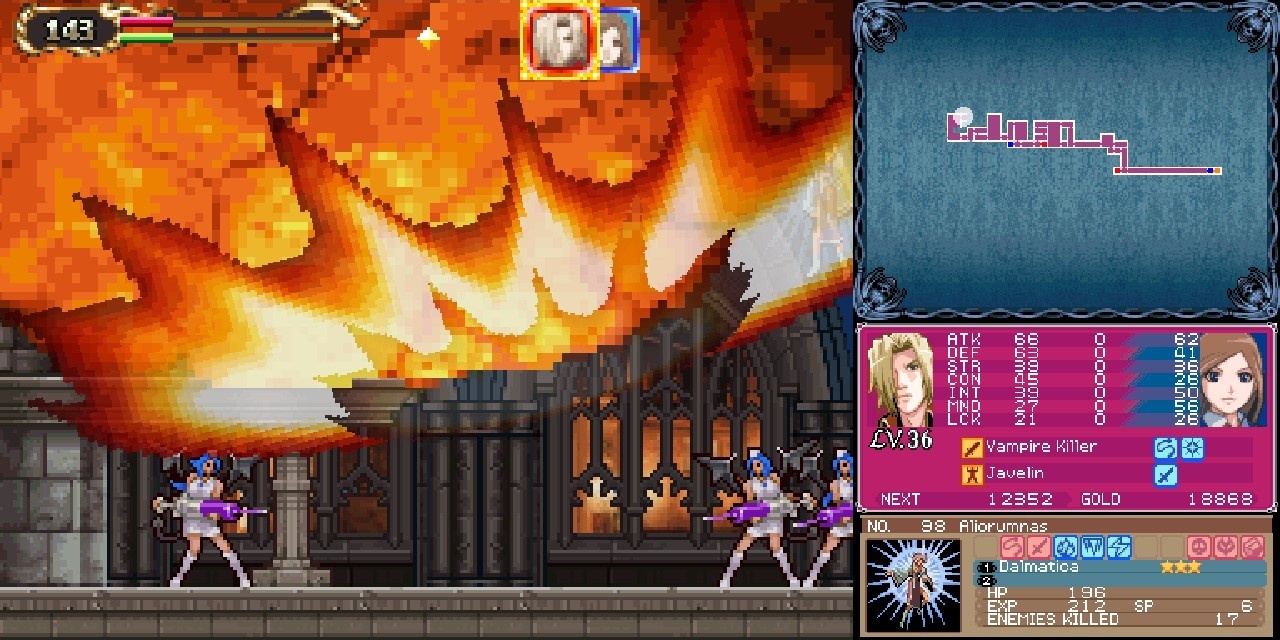
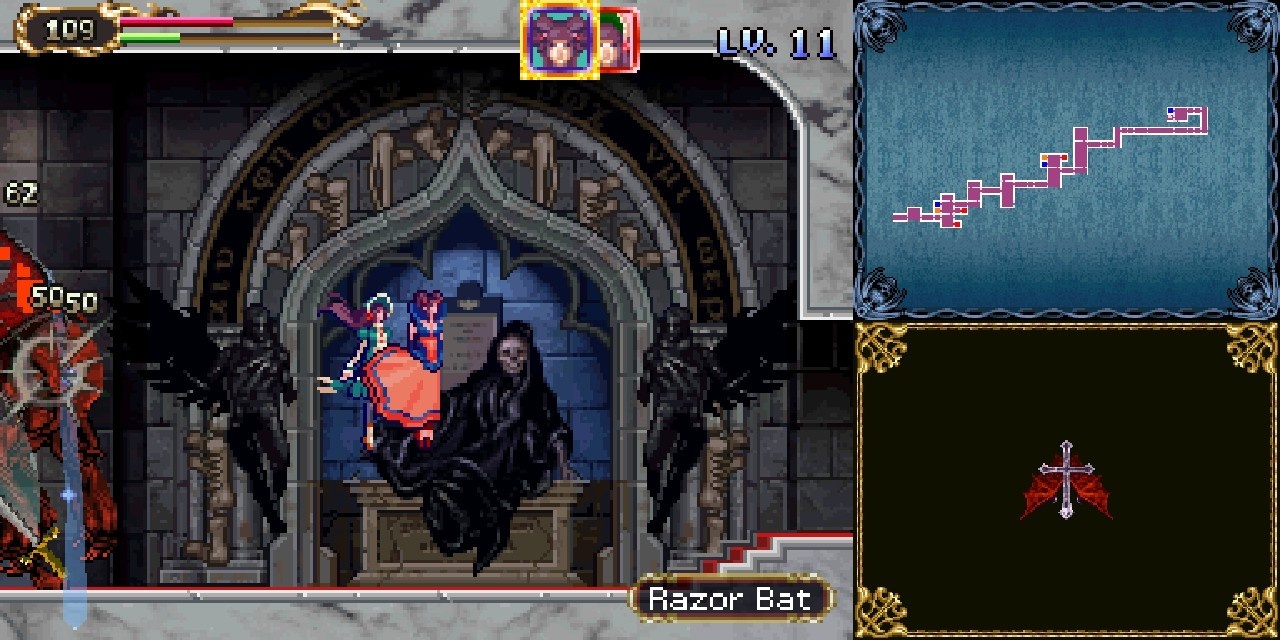
You can also use them together. The person following you will attack enemies and help you out, although they’re not too great at it. They can only attack while on the ground (not in mid air) and will often get stuck or left behind (but will teleport to you). If they get hit, it will cost you MP, which is a good compromise for them not dodging attacks. The first power up you get allows you to make one of them wait, but this is then barely used (probably because they teleport to you if they leave the screen). Their final ability is an MP-consuming special dual attack, with some very strong screen-filling powers.
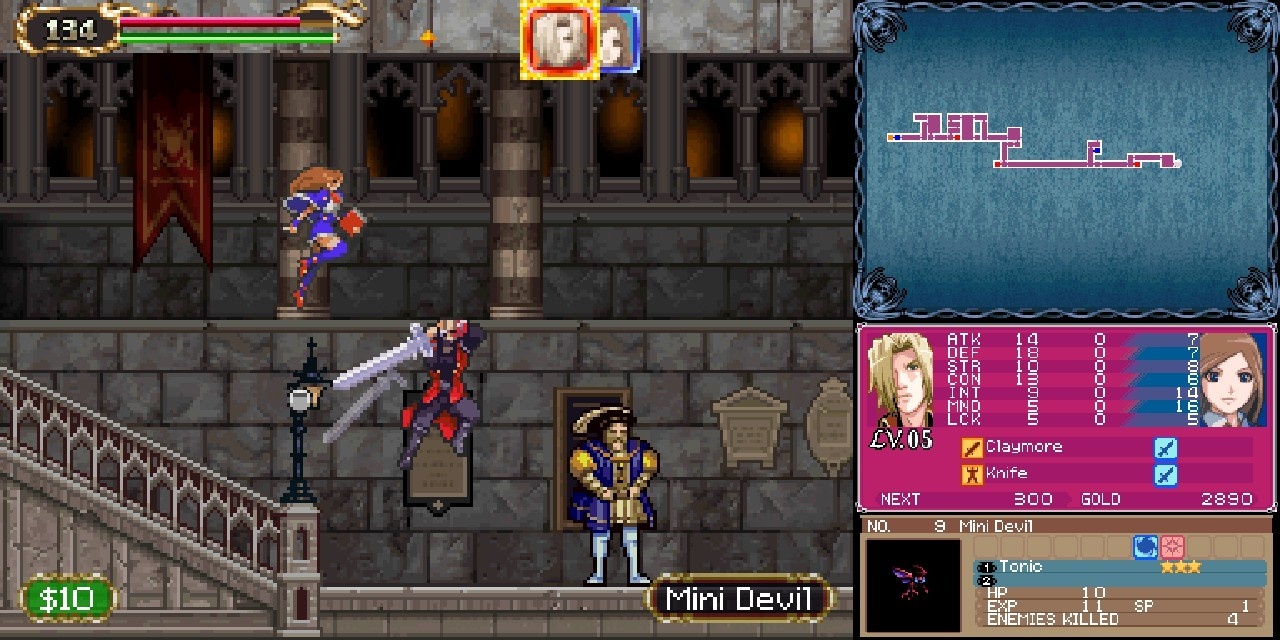
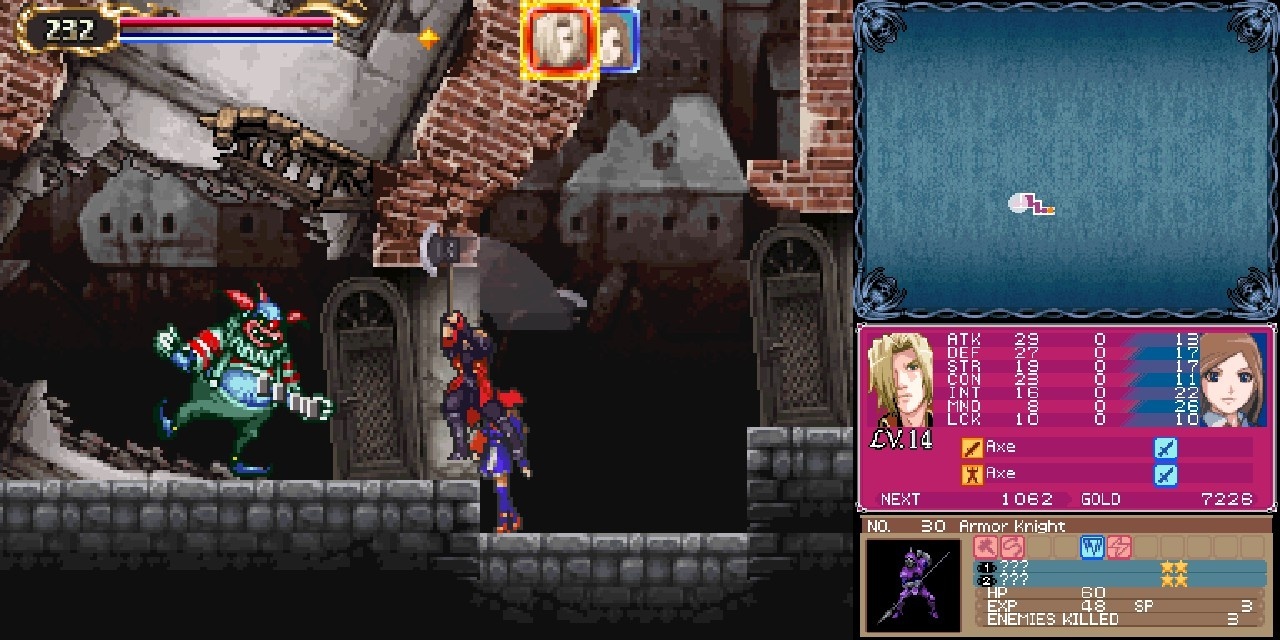
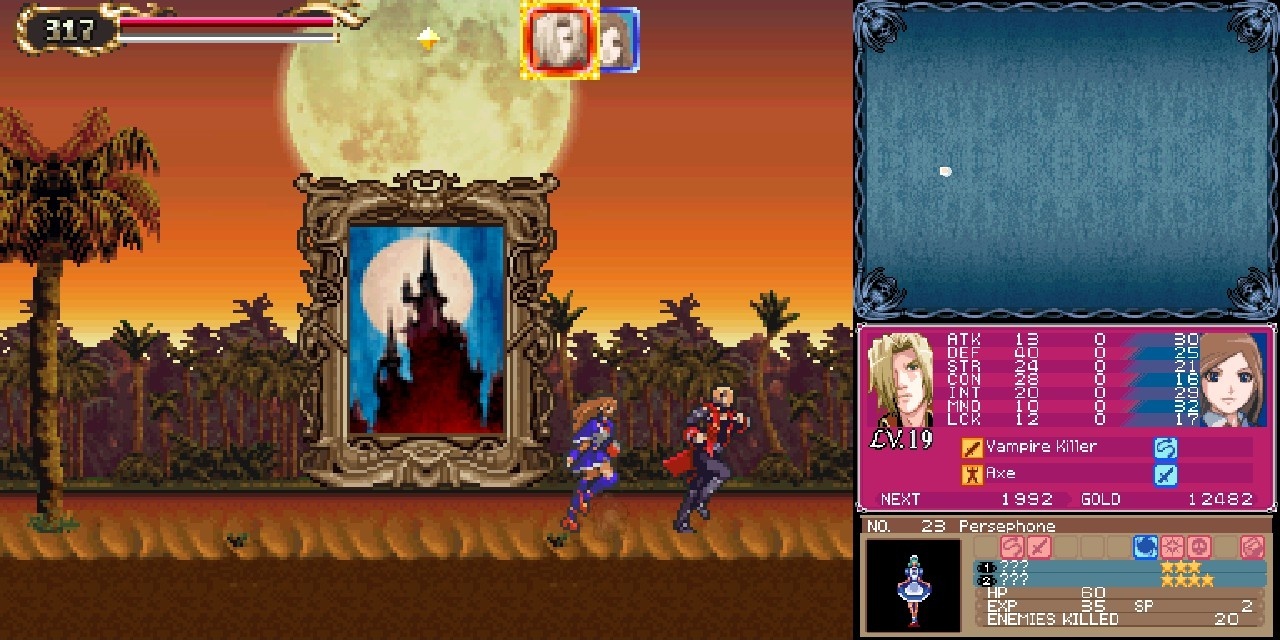
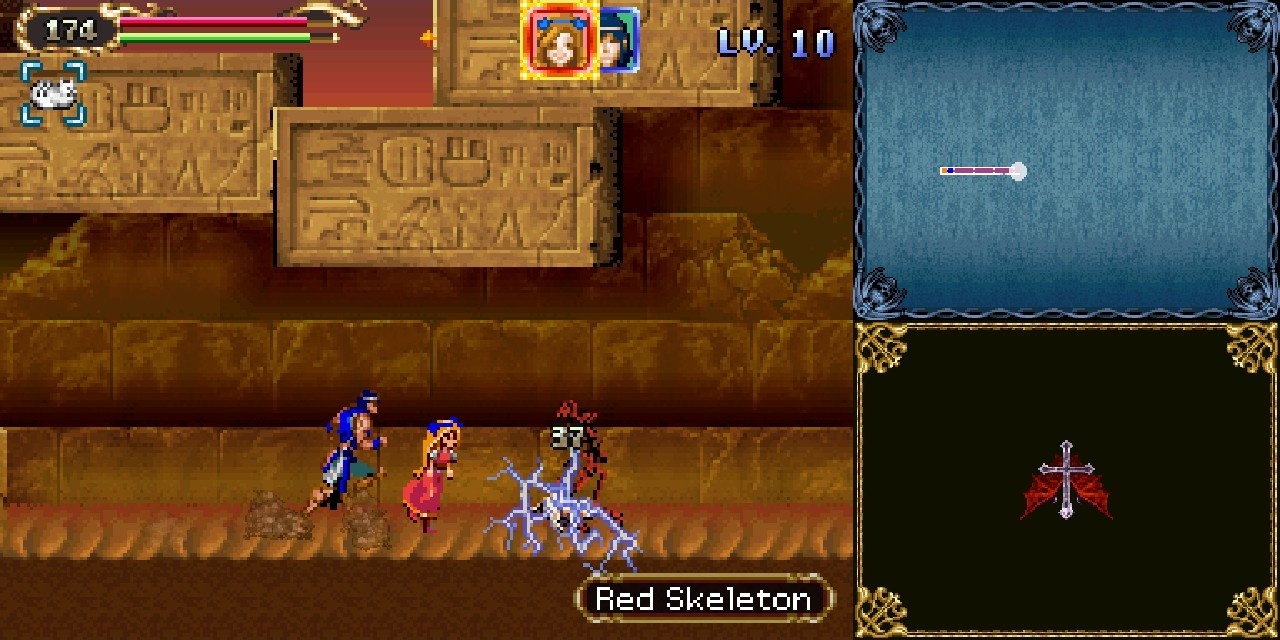
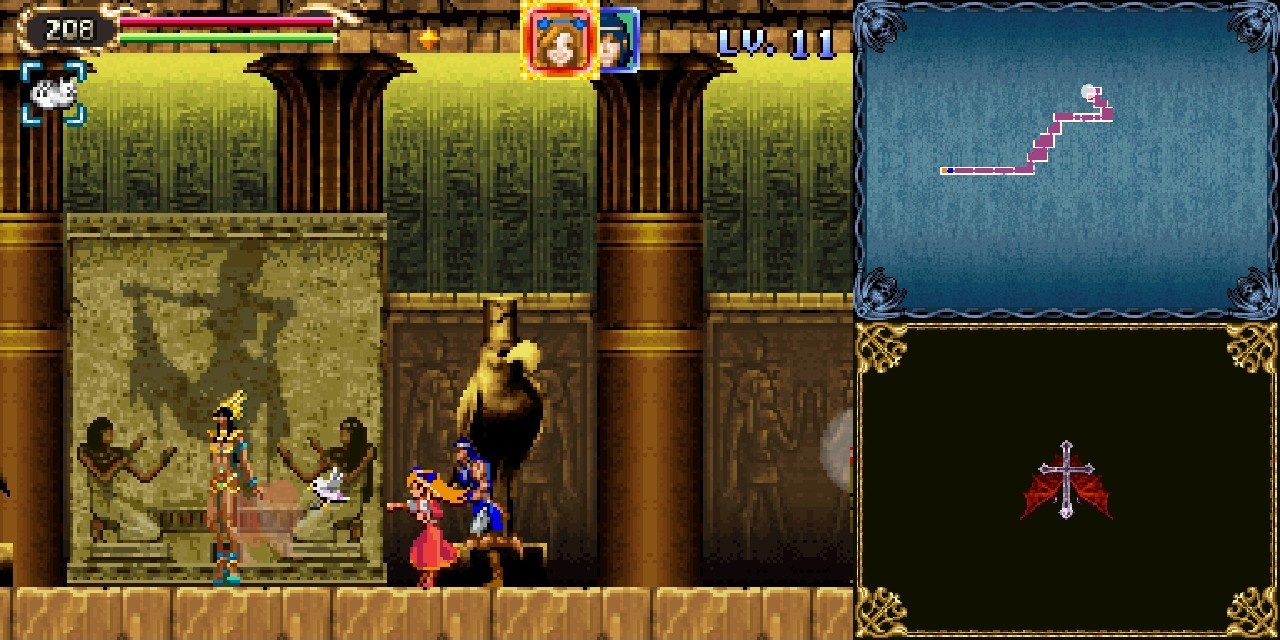
Exploration is a bit different this time, as you’re tracking down portraits that are syphoning Dracula’s power, then entering these portraits. These portraits contain levels which have some fun and unique settings – a Victorian town, an Egyptian temple, a strange circus and a creepy forest. These maps do have alternate routes to find extra power-ups and items, but are generally a lot more straightforward. It also makes the main castle feel more like a hub world than a vast castle. Still, it’s still a ton of fun to explore them and it’s nice to mix things up a bit.
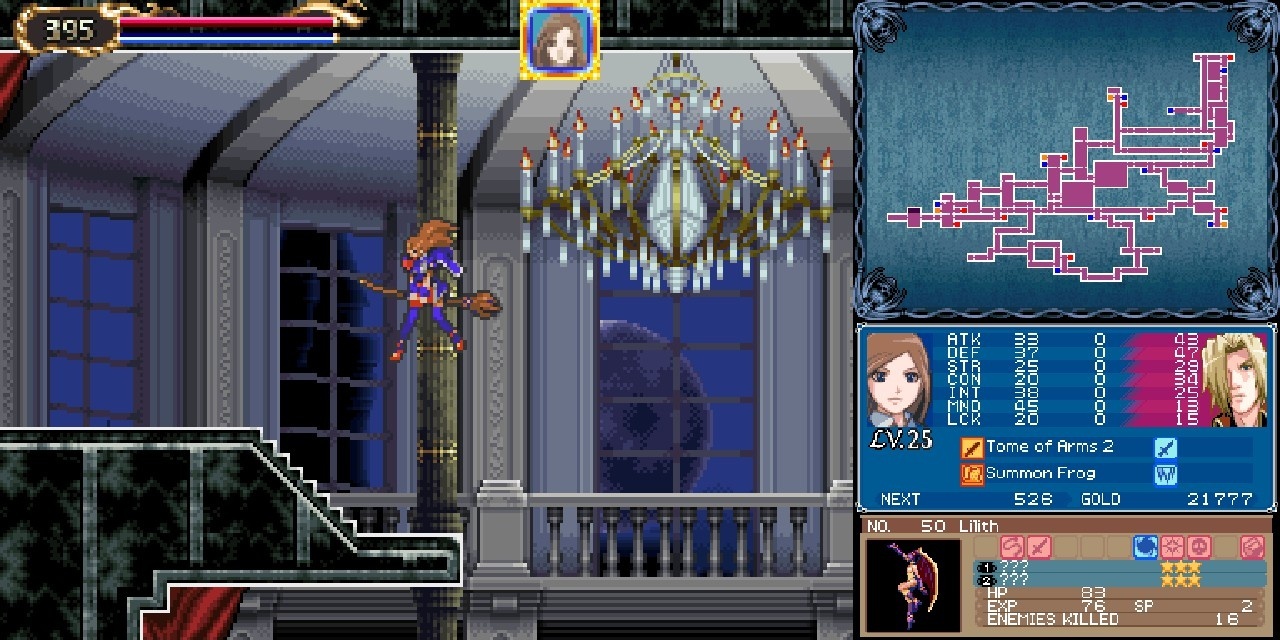
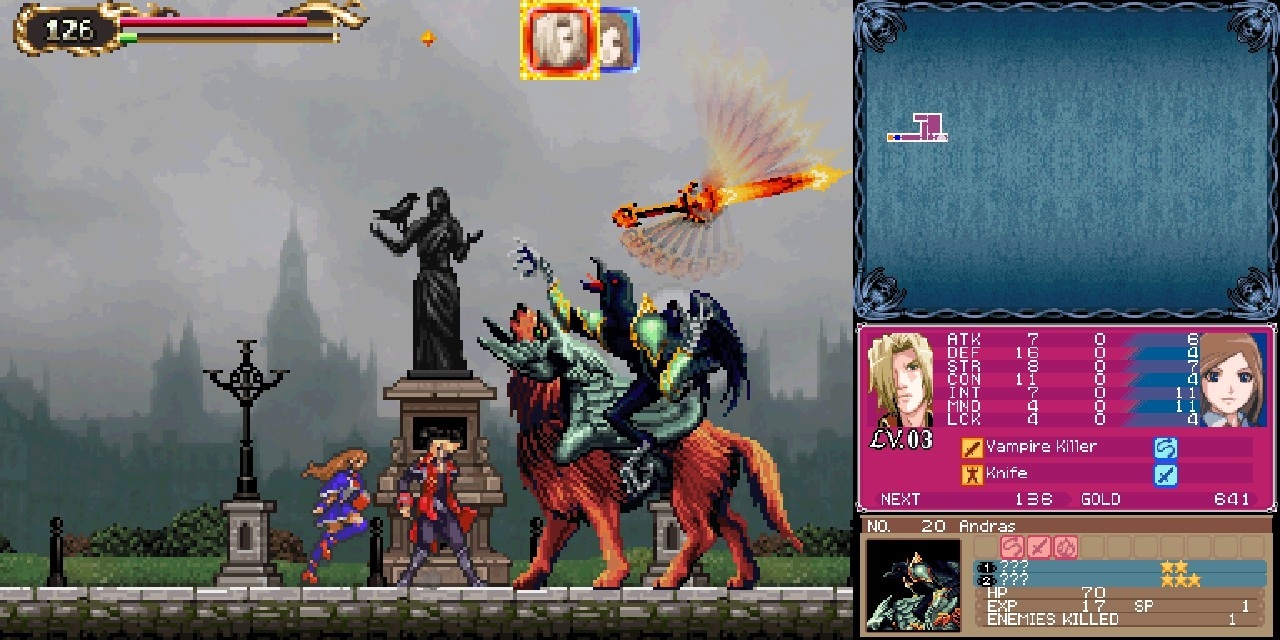
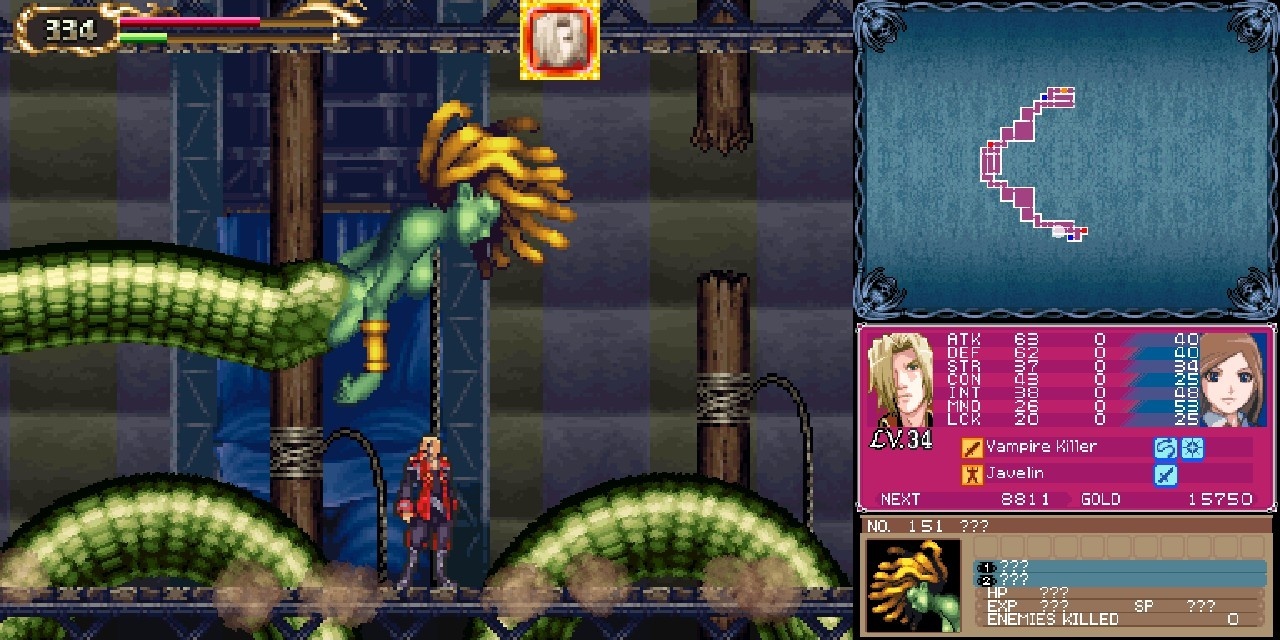
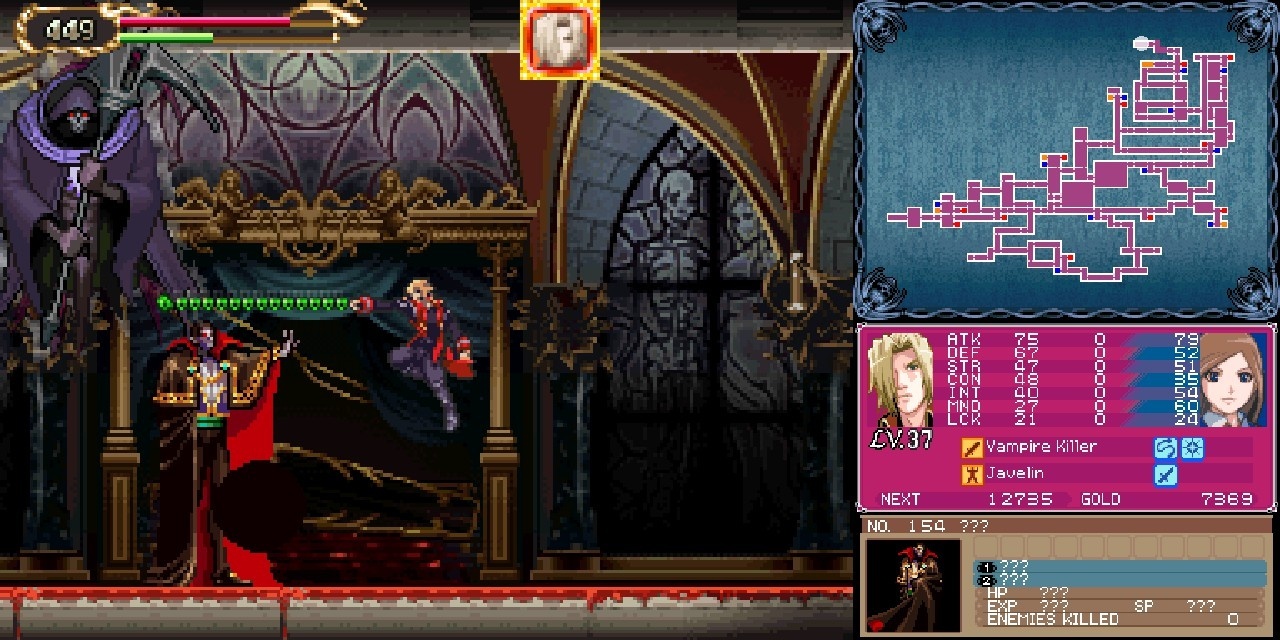
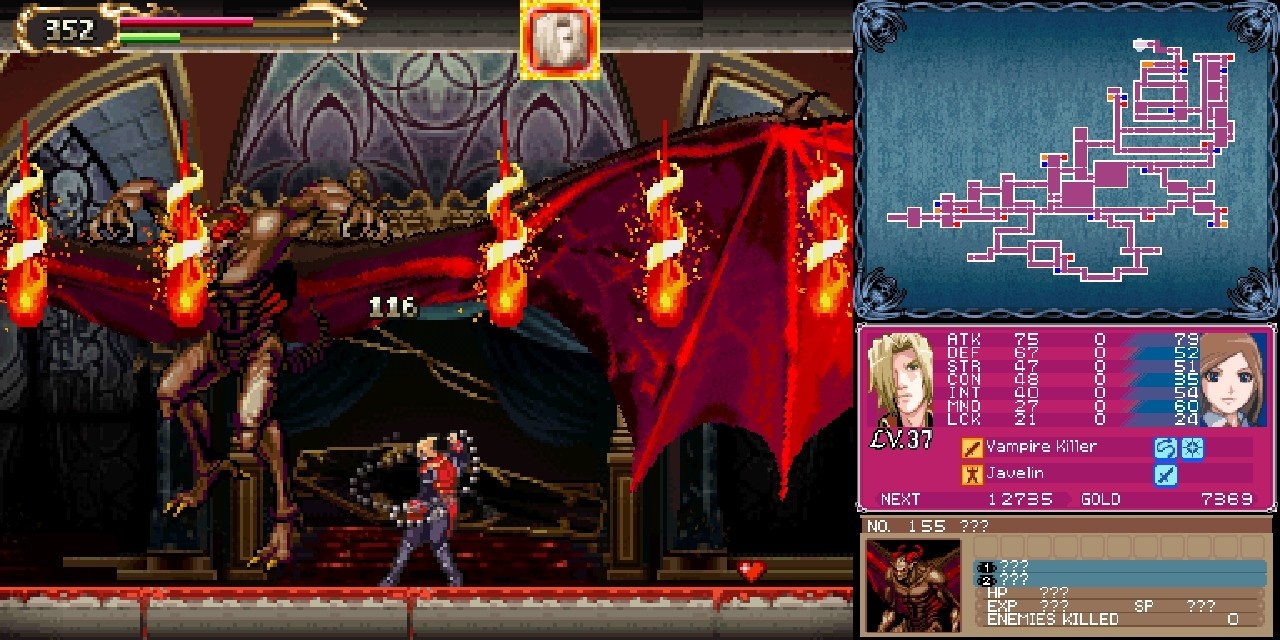
Even without the same sense of exploration, the movement and combat is still a ton of fun and both Jonathan and Charlotte are a joy to play as. There are a lot of bosses and the various abilities and spells offer plenty of ways for you to deal with them. Progression is also a lot less cryptic, with just one well hidden item you need to reach the endgame (which involves playing remixed versions of the portrait areas, but with some classic bosses returning) and quite a satisfying story.
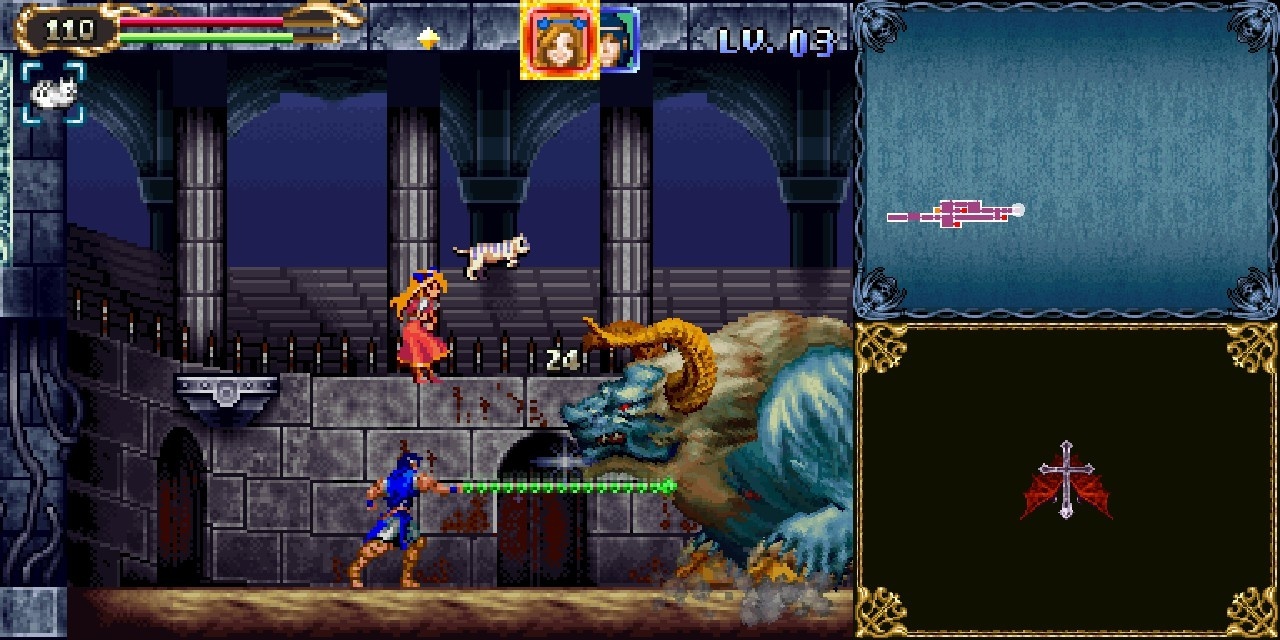
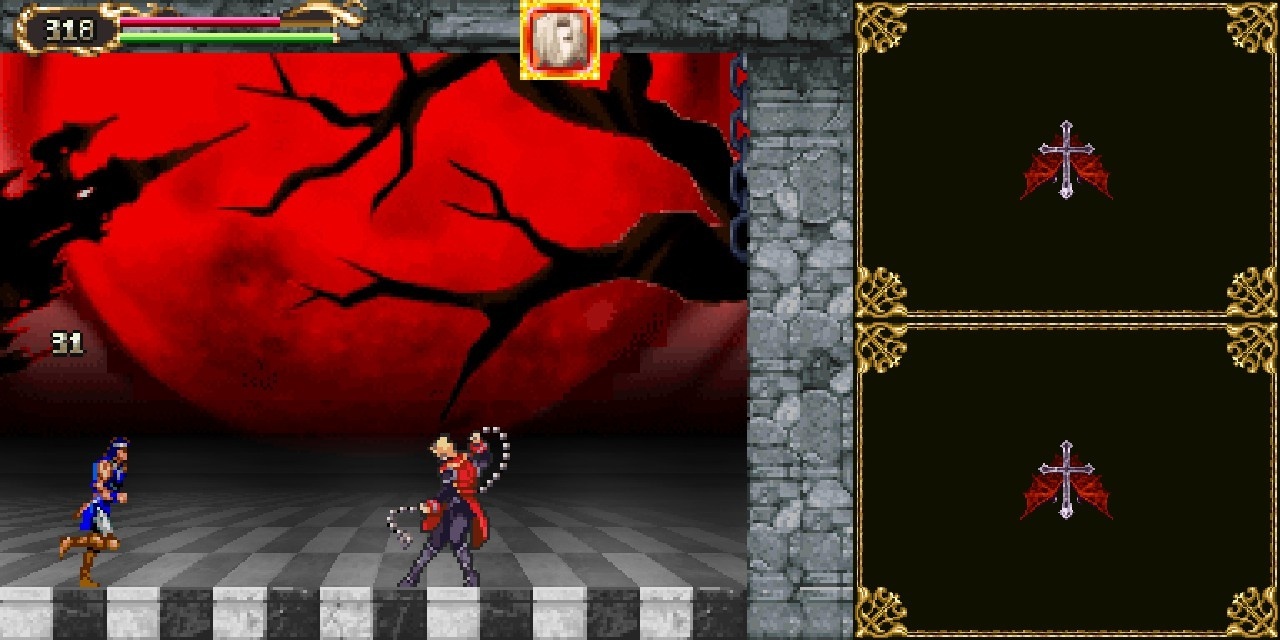
The bonus modes also return. The first lets you play as fan favourites Richer and Maria, using their designs and abilities from Rondo of Blood. There’s no story, but you can still level up the characters (although they’re already very strong to begin with). Once again, Maria is an absolute deligh to play with, using her various enemies to attack opponents. Richer has his classic sub-weapons but is a bit too similar to Jonathan, so this is all about the powerful young witch. There’s no story, so it’s just a really nice extra.
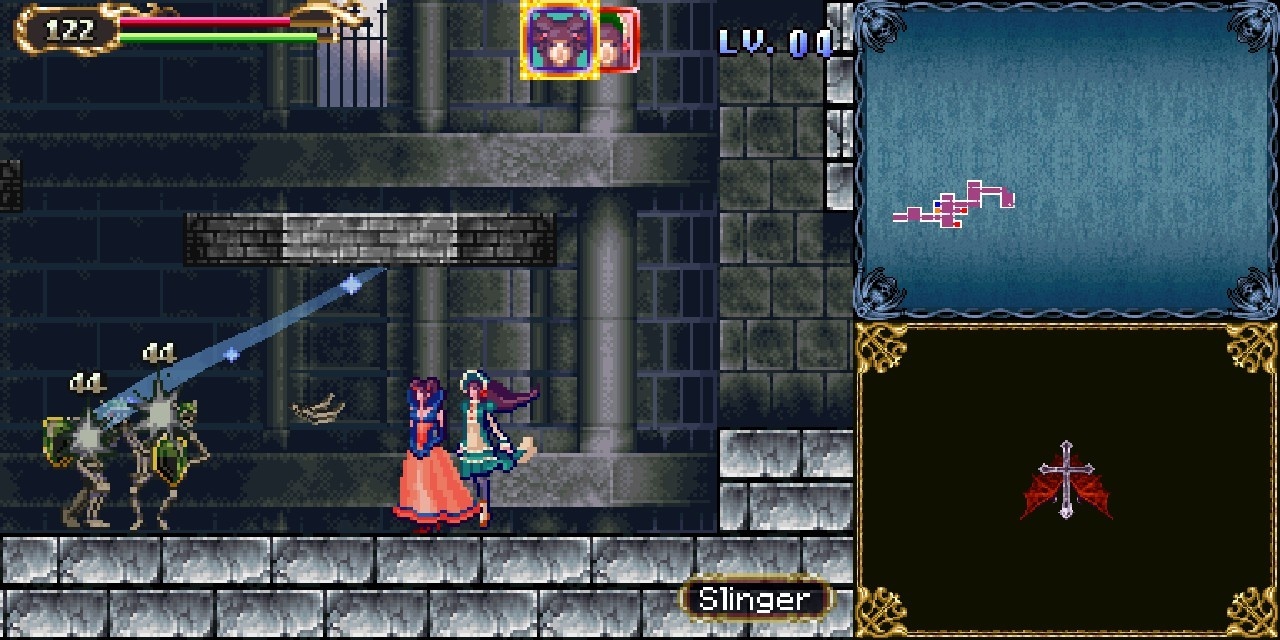
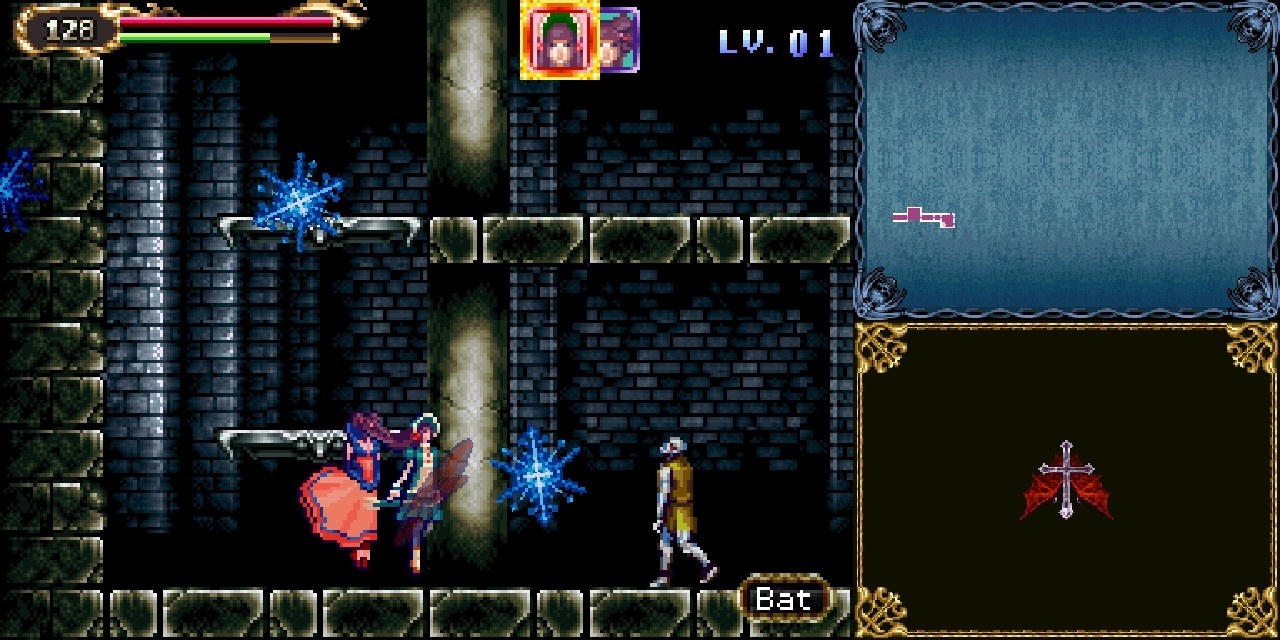
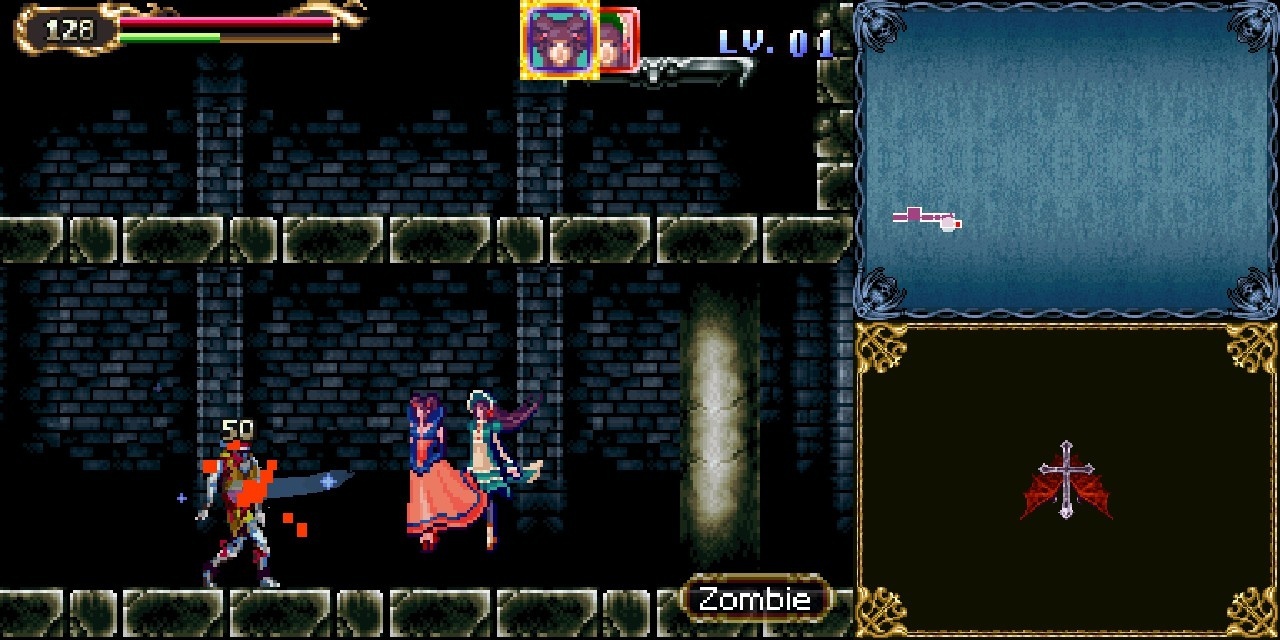
The other mode lets you play as the vampire sisters, Stella and Loretta but before they were vampires. They’re extremely powerful witches capable of flying. This mode is played using the D-pad and the touch-screen. Stella has a slash attack that can be performed by swiping anywhere on the screen, while Loretta has an ice machine gun that fires in the direction you’re pointing in. There’s no left handed mode (even in the Dominus collection you’ll need to remap outside of the game) but it’s still a neat way to play.
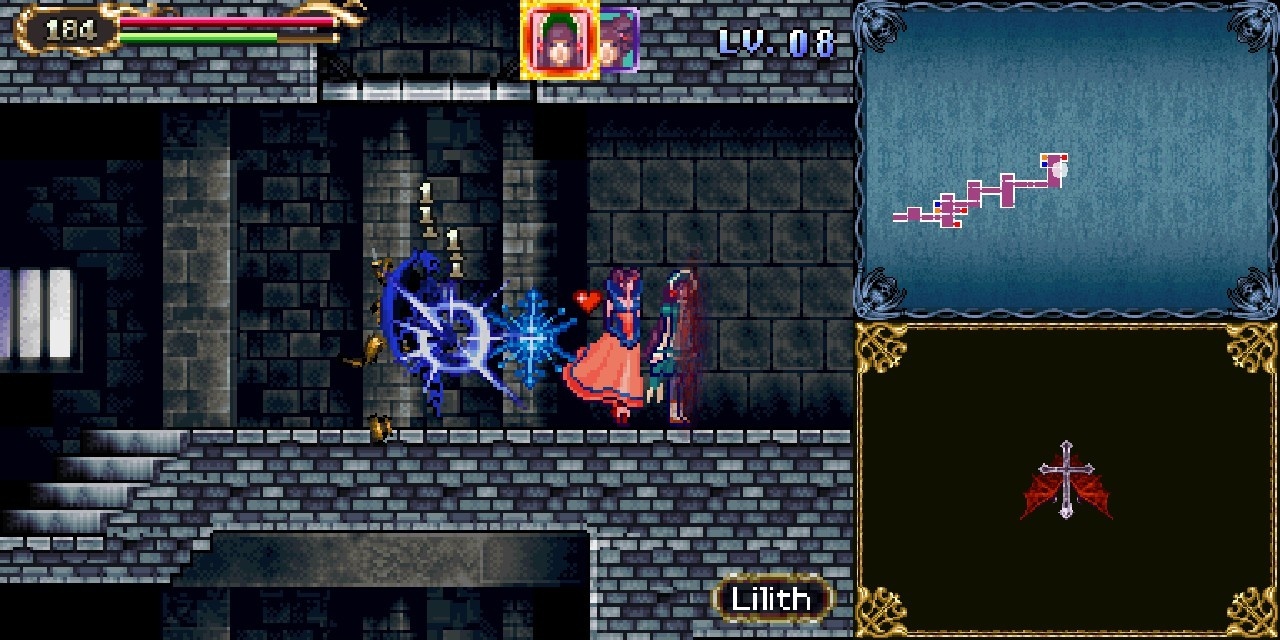
One neat thing about this mode is that it’s not an alternate story, but rather a prequel to the events of the game, making it the first canon bonus mode. There’s a small amount of story, and there’s no actual final boss due to the story taking priority. It makes for one of the better bonus modes, especially due to how much it changes gameplay. There’s a third bonus mode where you can play as an axe armour enemy, but you need to kill a specific enemy 1,000 times.
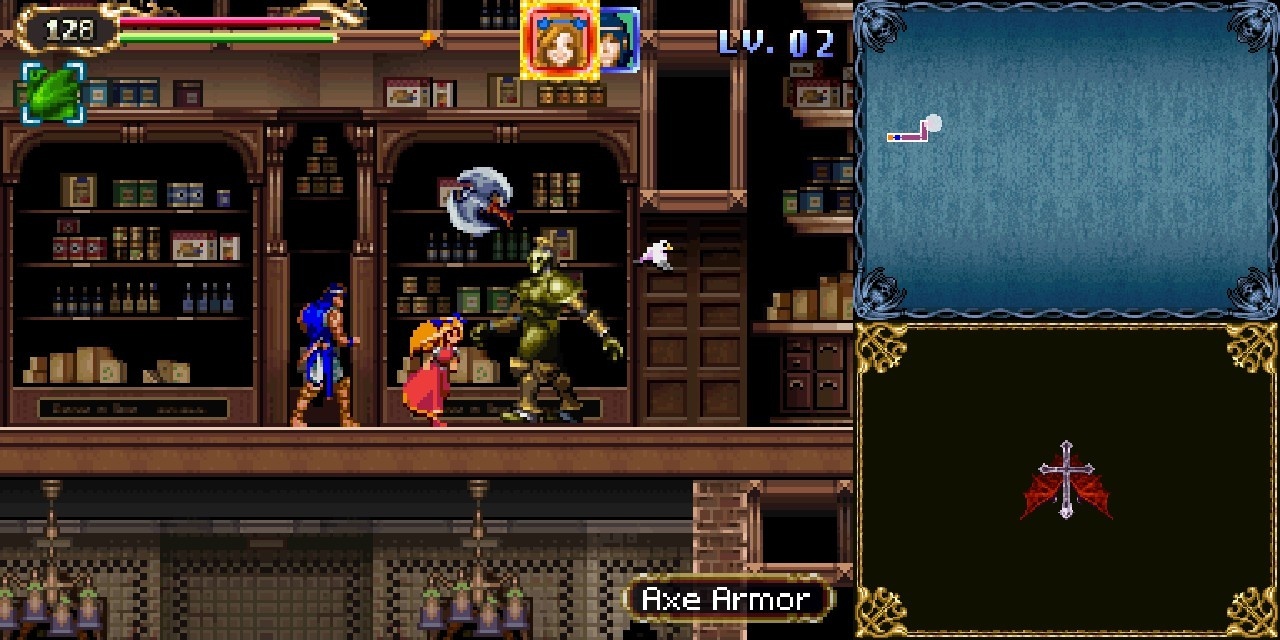
Portrait of Ruin is another great Castlevania that manages to keep things fresh. There’s a ton of stuff to do in it, including bonus quests to get some unique weapons and abilities. You pick up missions that require you to perform specific actions, equip certain equipment or kill the right enemy and it’s a great way to give players the option for doing more stuff. A wonderful package all around.

Fave
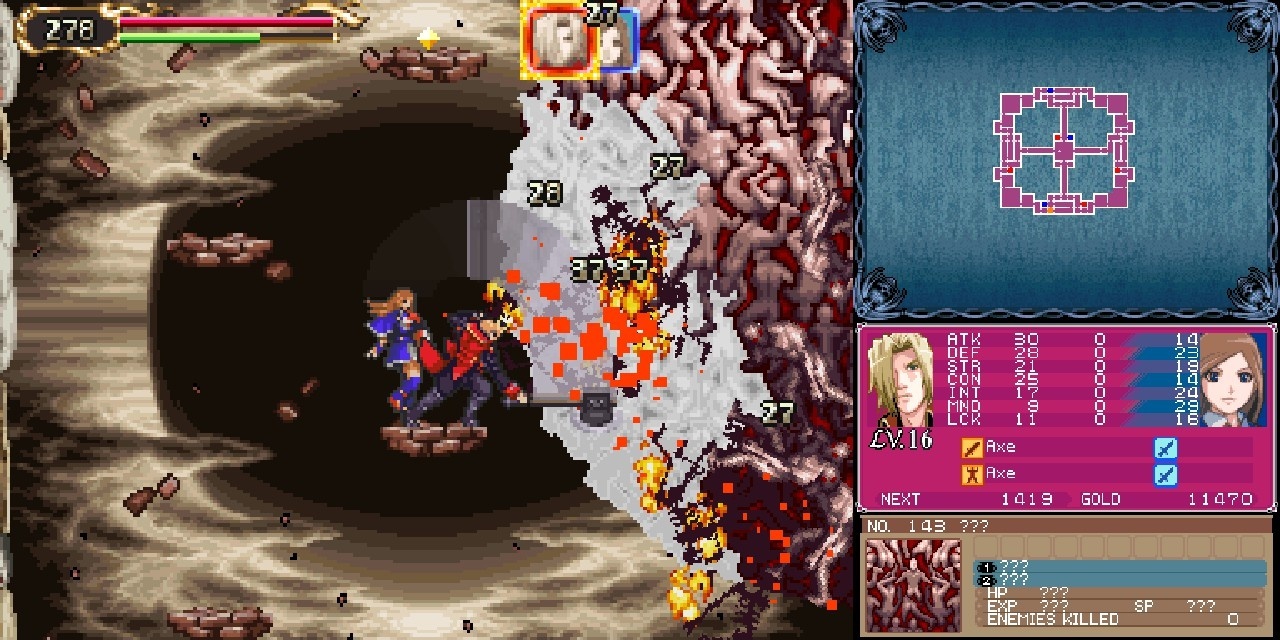
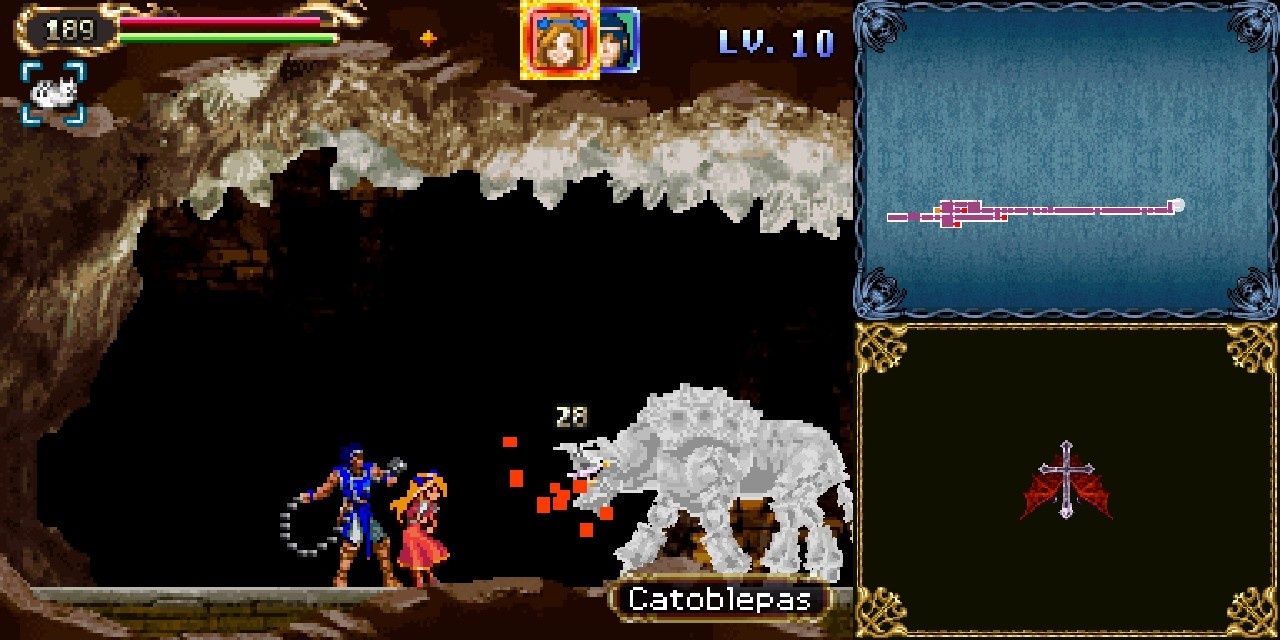
Any game that has you running away from a screen-engulfing, decomposing bull carcass mere minutes into play must warrant some merit for ingenuity at least. By removing the trudging soul collecting form Dawn of Sorrow, this is a more instantly accessible Castlevania; there’s action form the offer and increasingly awesome spells that will both dazzle your eyes and frazzle the bad guys into oblivion.
Matthew Castle, NGamer Magazine #6
Remake or remaster?
The Dominus collection is great for this, but would have been nice to have the unlocks available from the start.
Official Ways to get the game
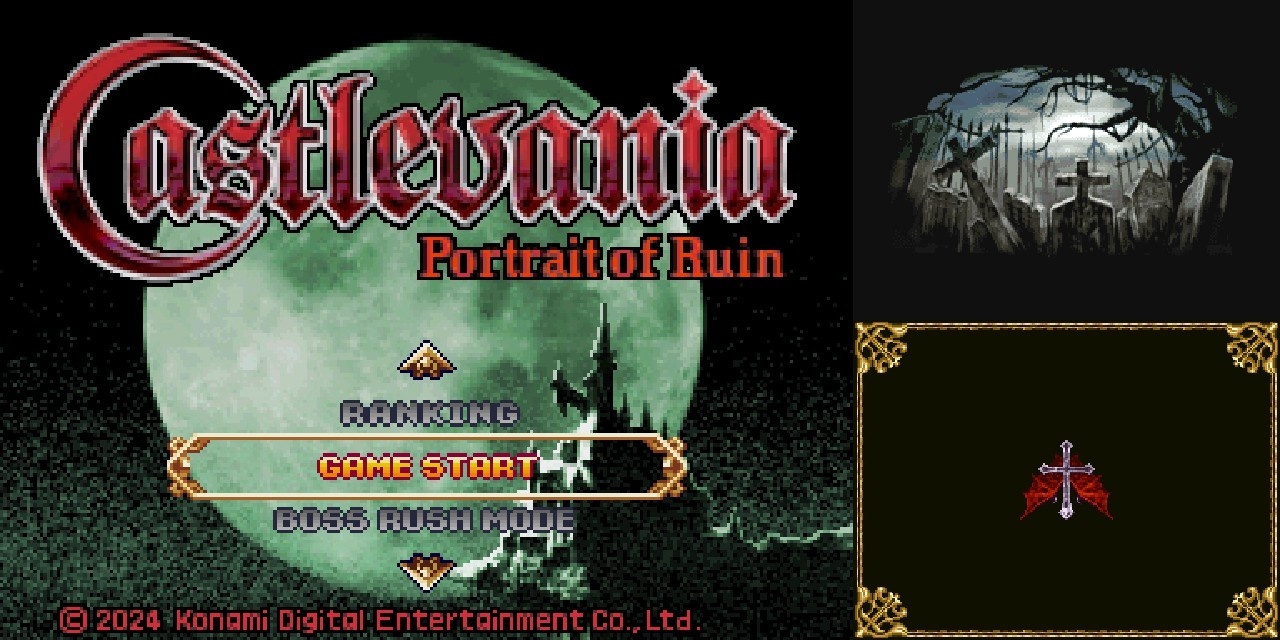
Portrait of Ruin is available in the Castlevania Dominus Collection.
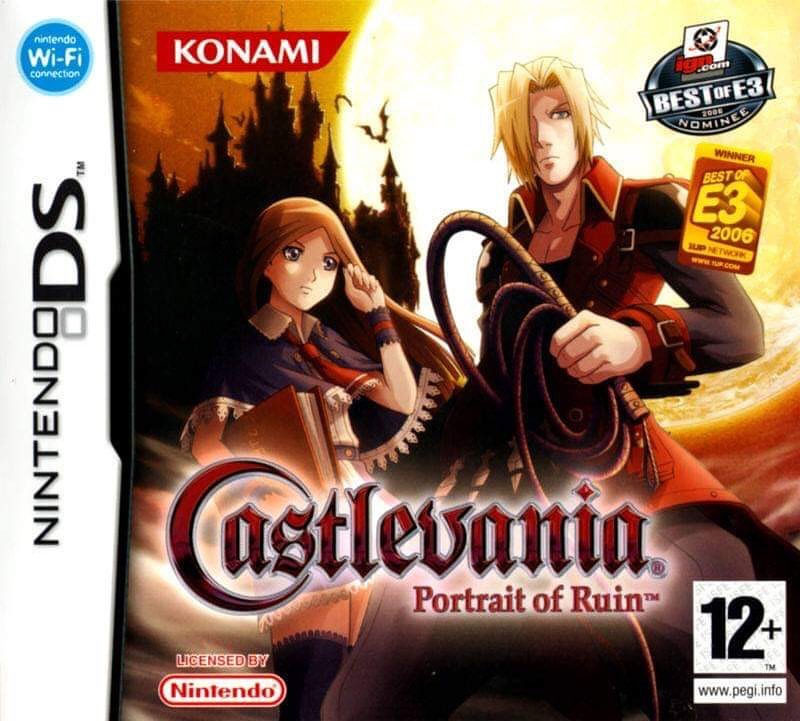
Europe
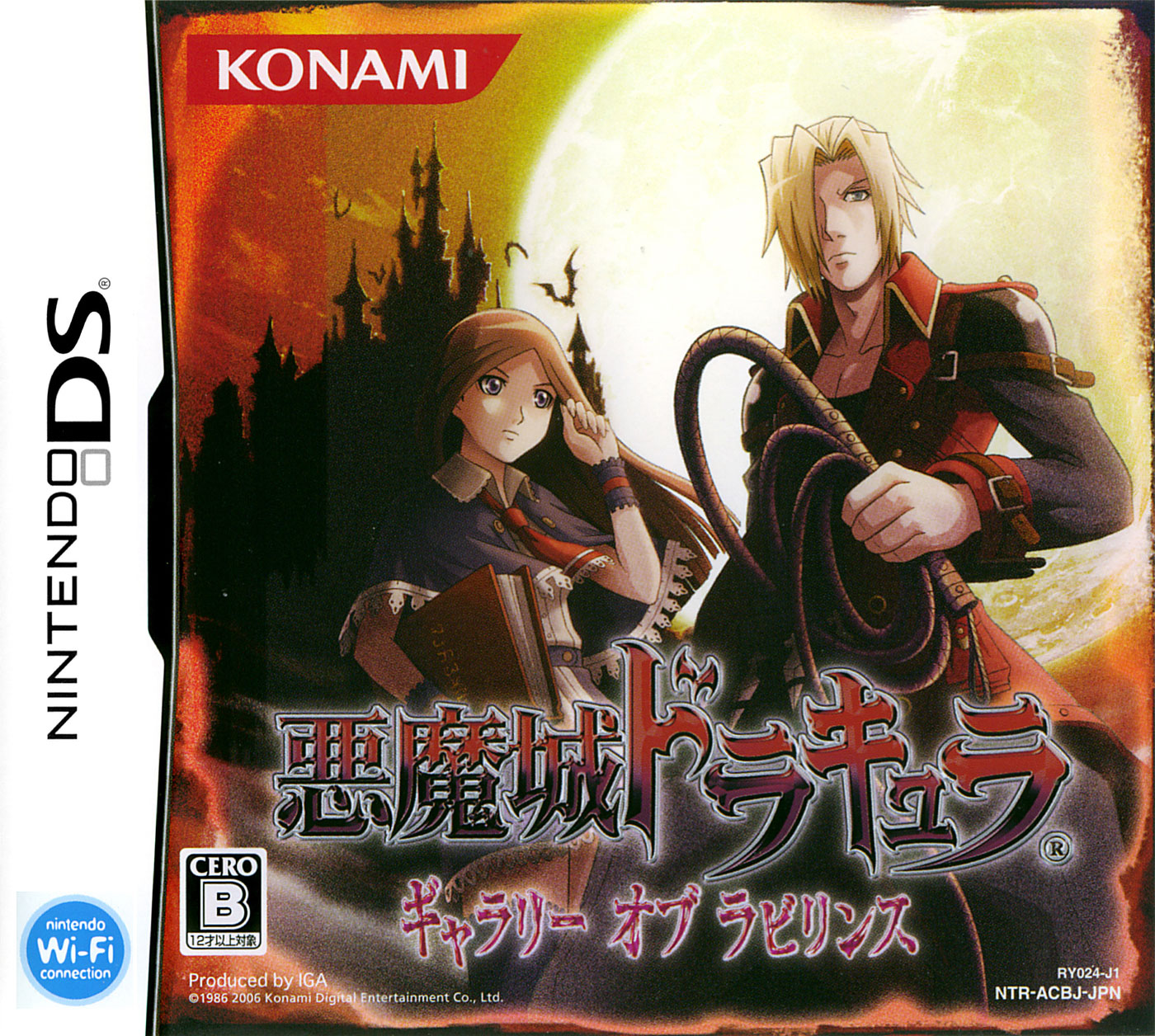
Japan
North America
Castlevania Games by Date
1990, 1991, 1992, 1993, 1994, 1995, 1996, 1997, 1998, 1999
2000, 2001, 2002, 2003, 2004, 2005, 2006, 2007, 2008, 2009