Reach out and Touch the Magic
- JP release: 25th August 2005
- EU release: 30th September 2005
- NA release: 4th October 2005
- Developer: Konami
- Publisher: Konami
- NGC Magazine Review: 4/5
- Platforms: DS
- Version Played: DS (Dominus)
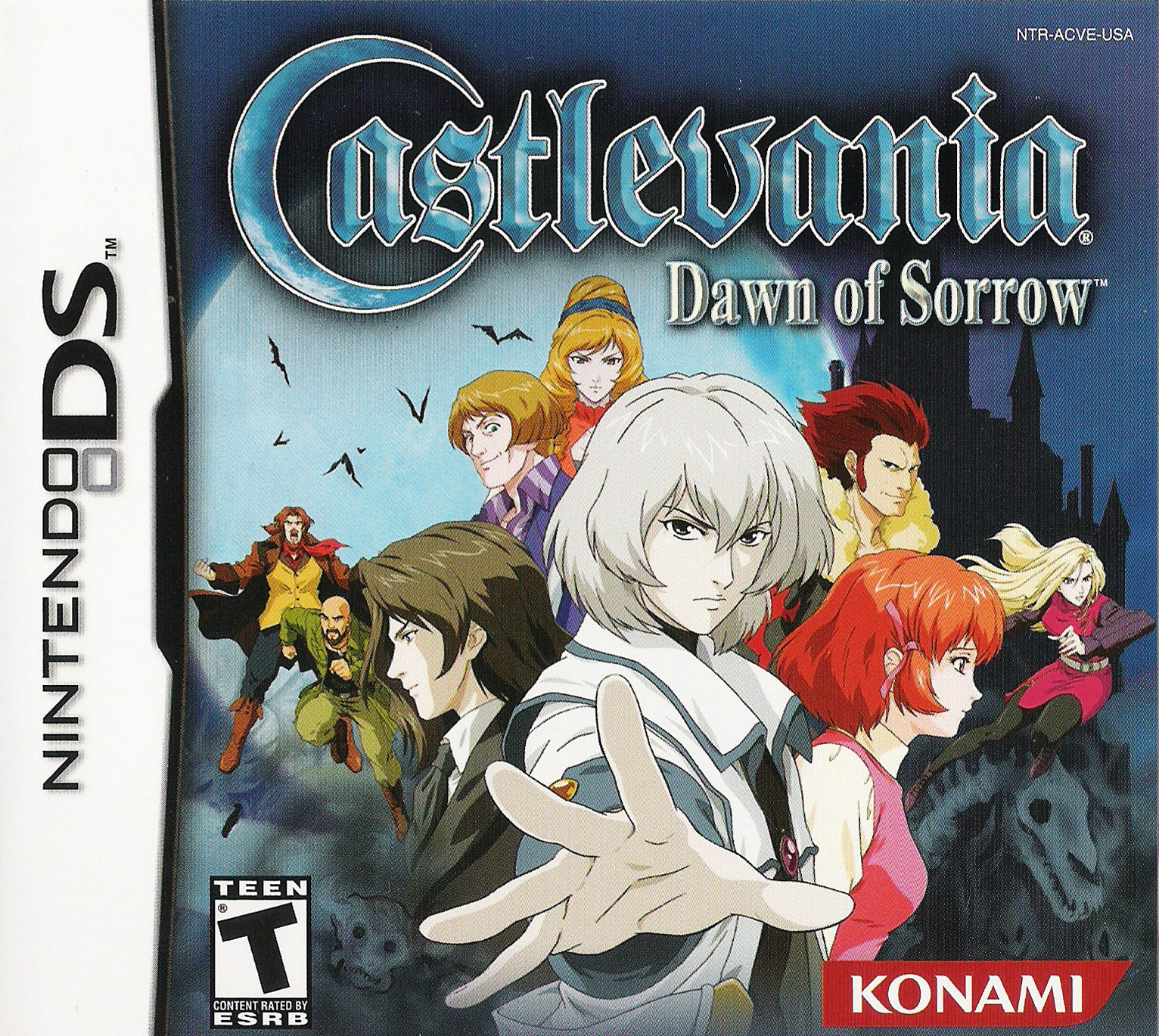
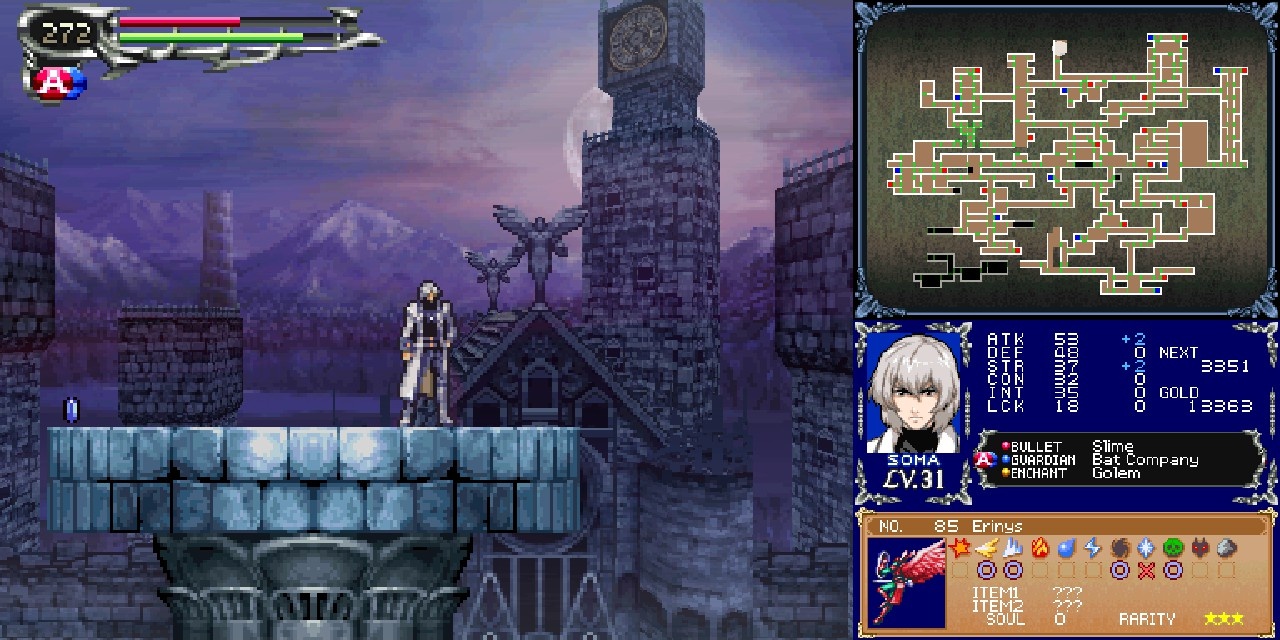
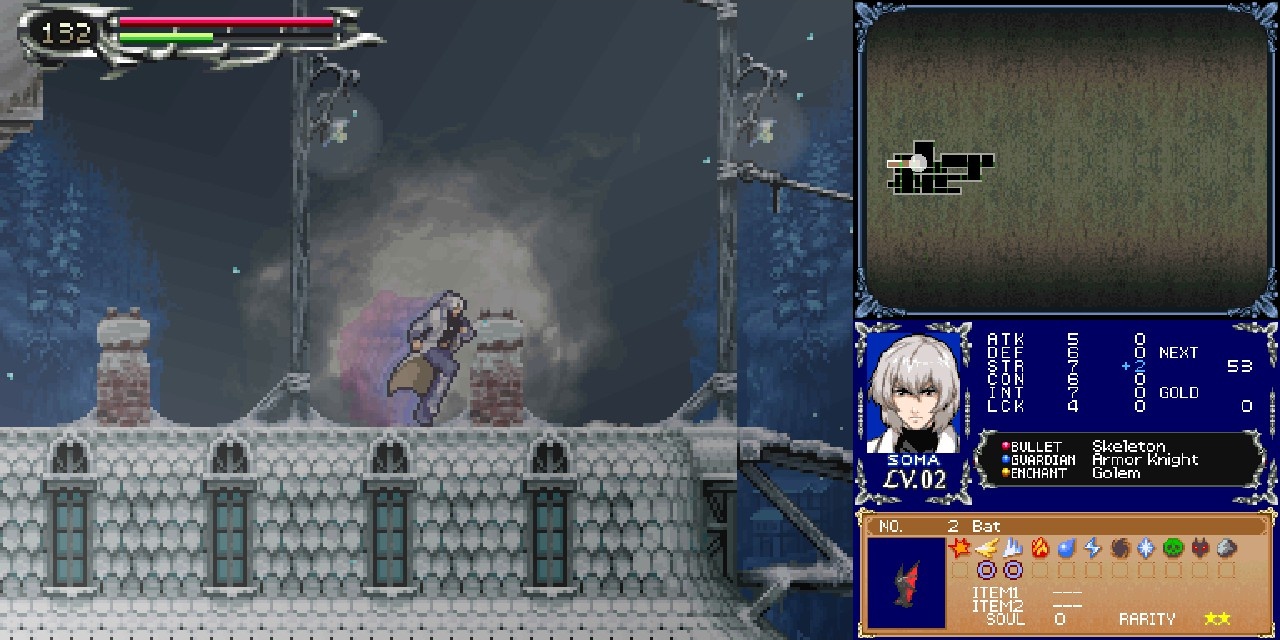
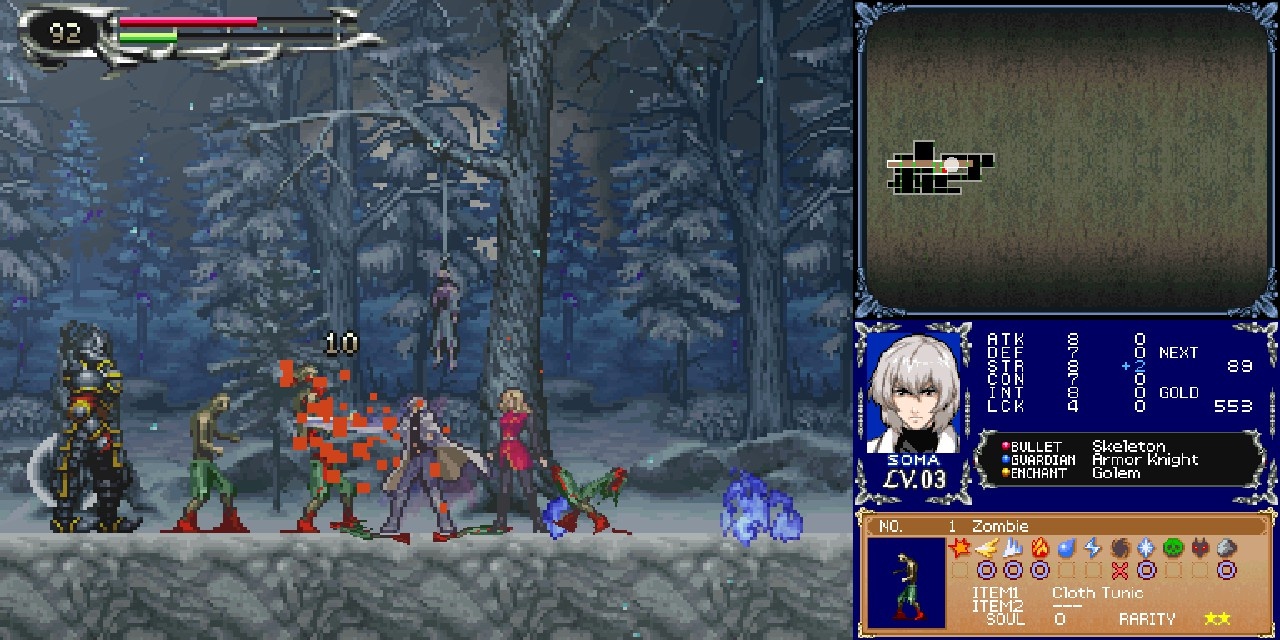
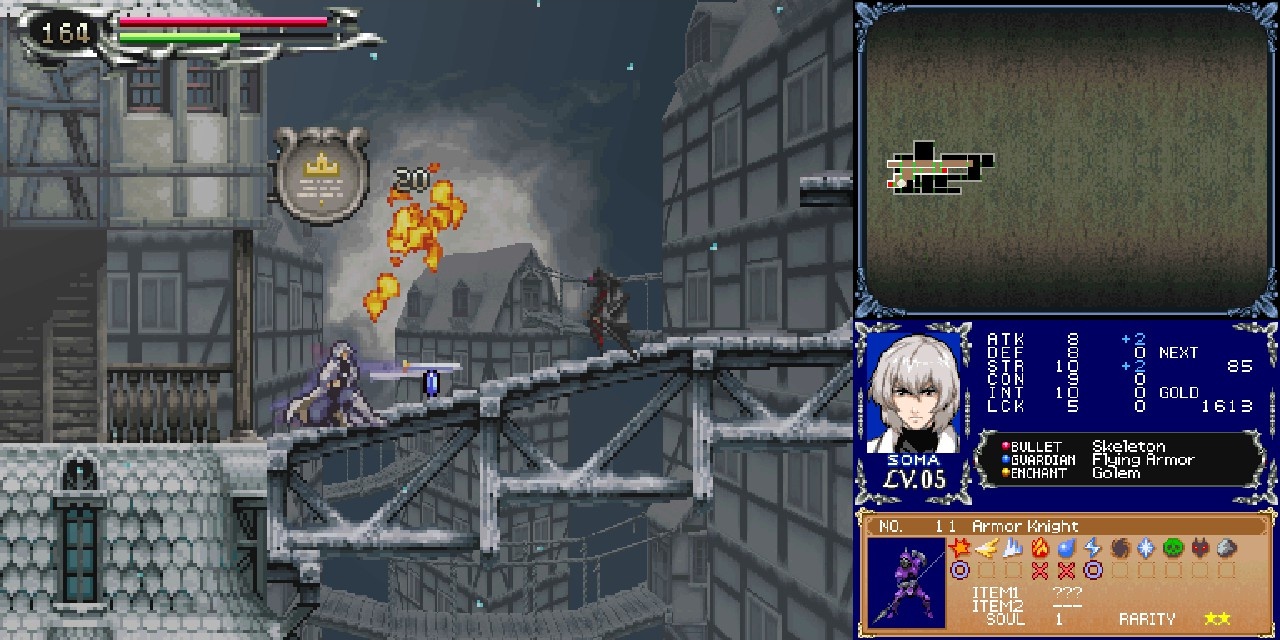
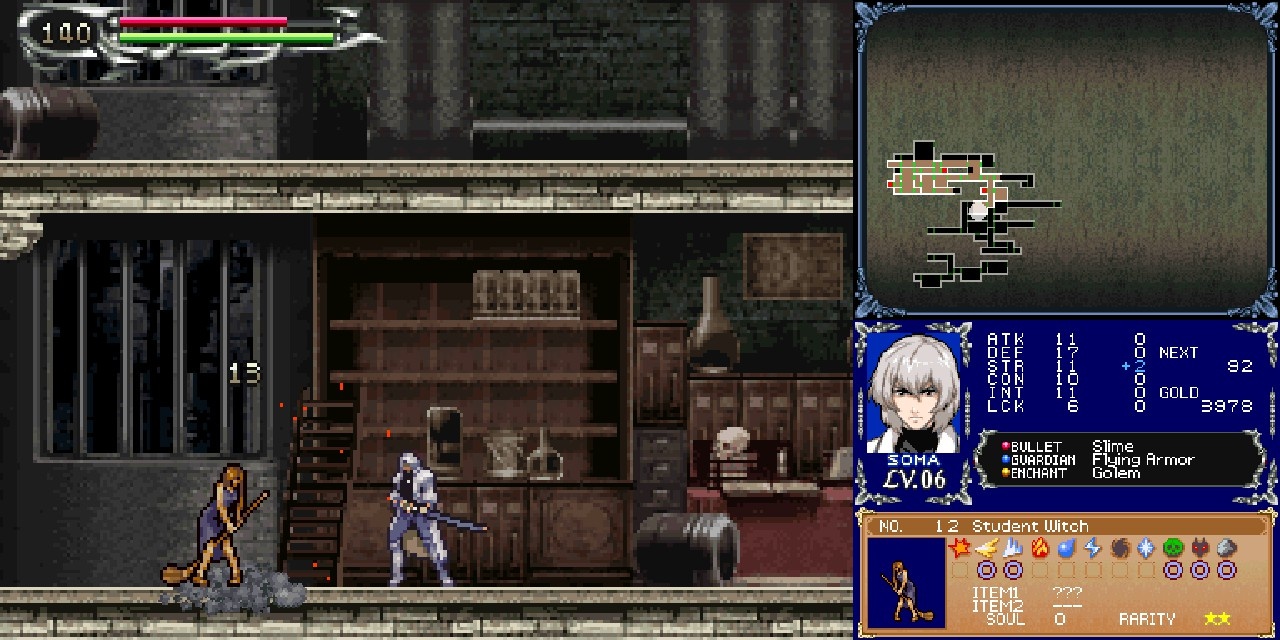
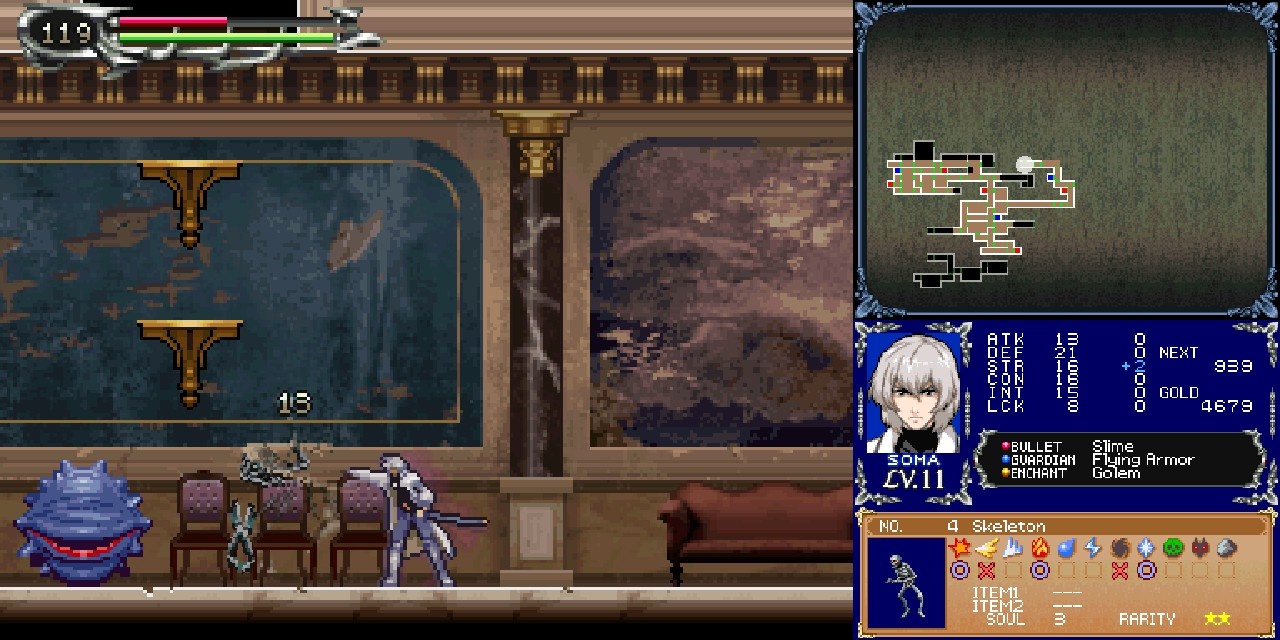
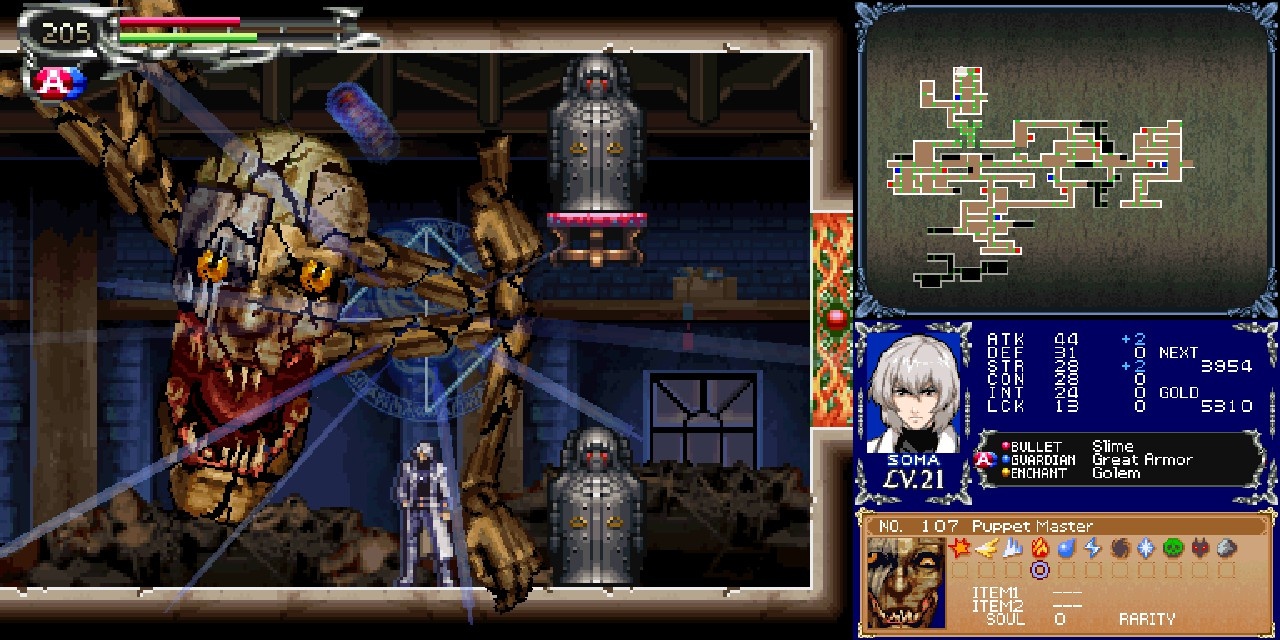
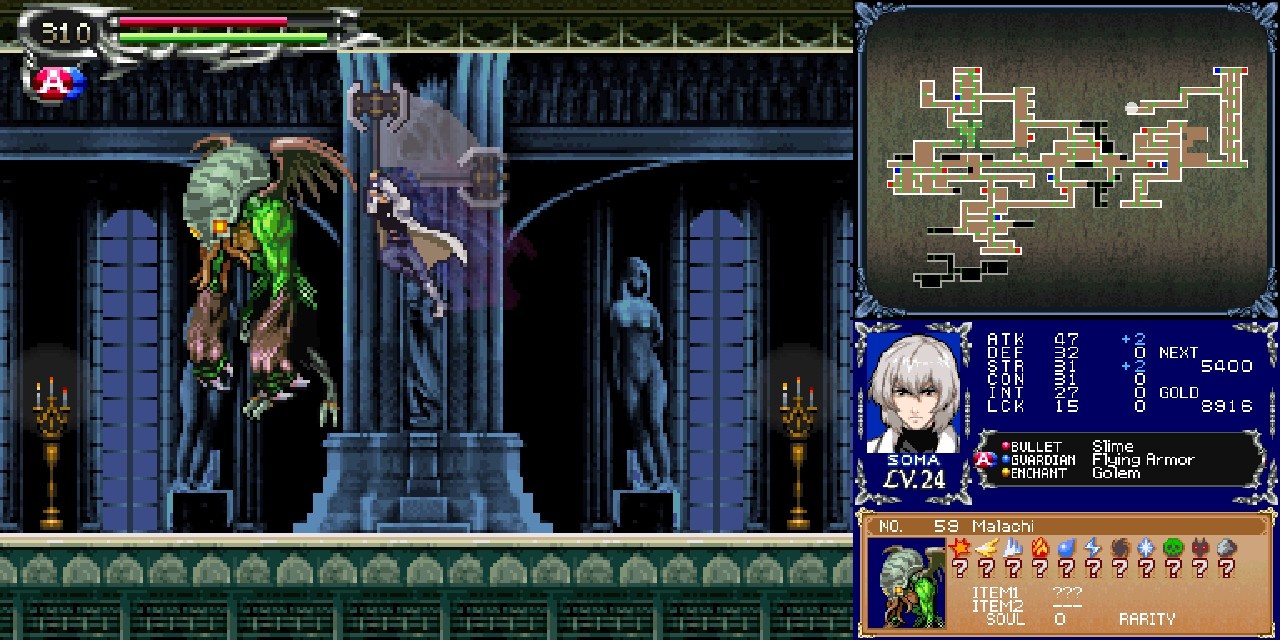
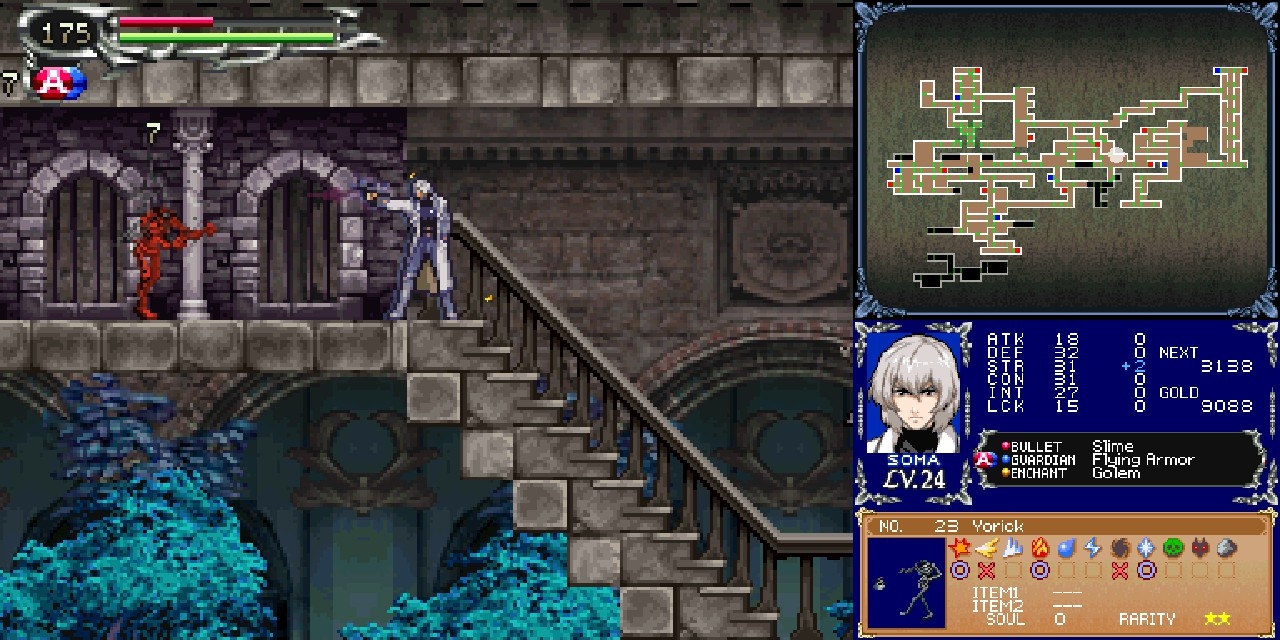
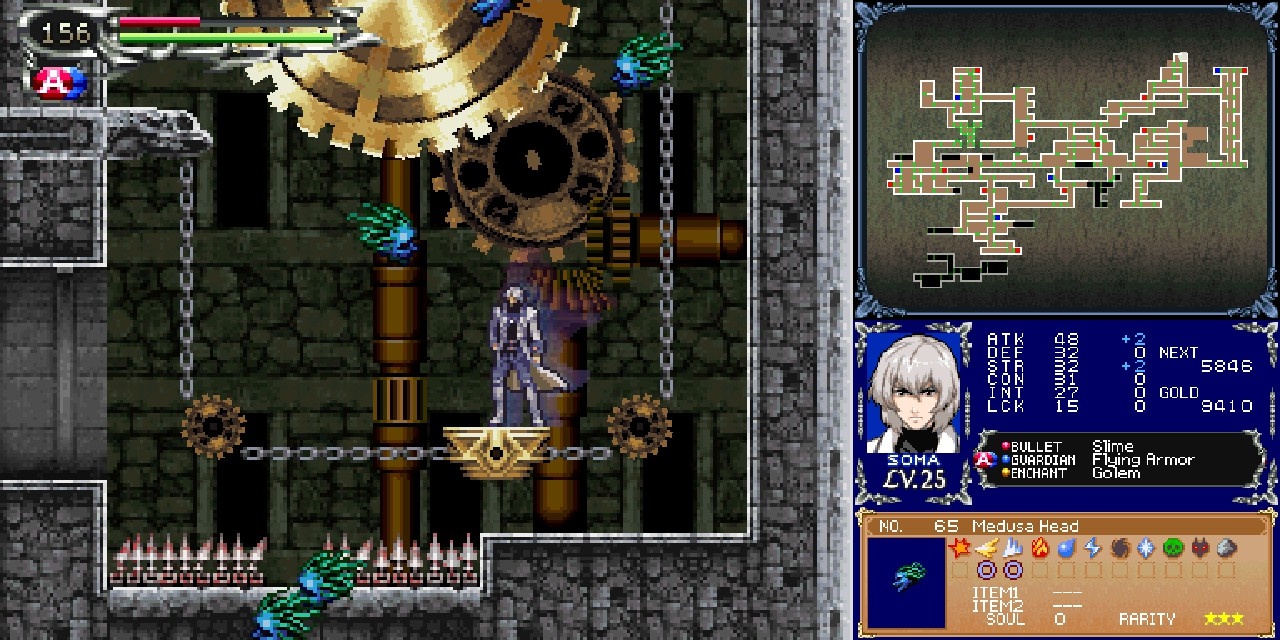
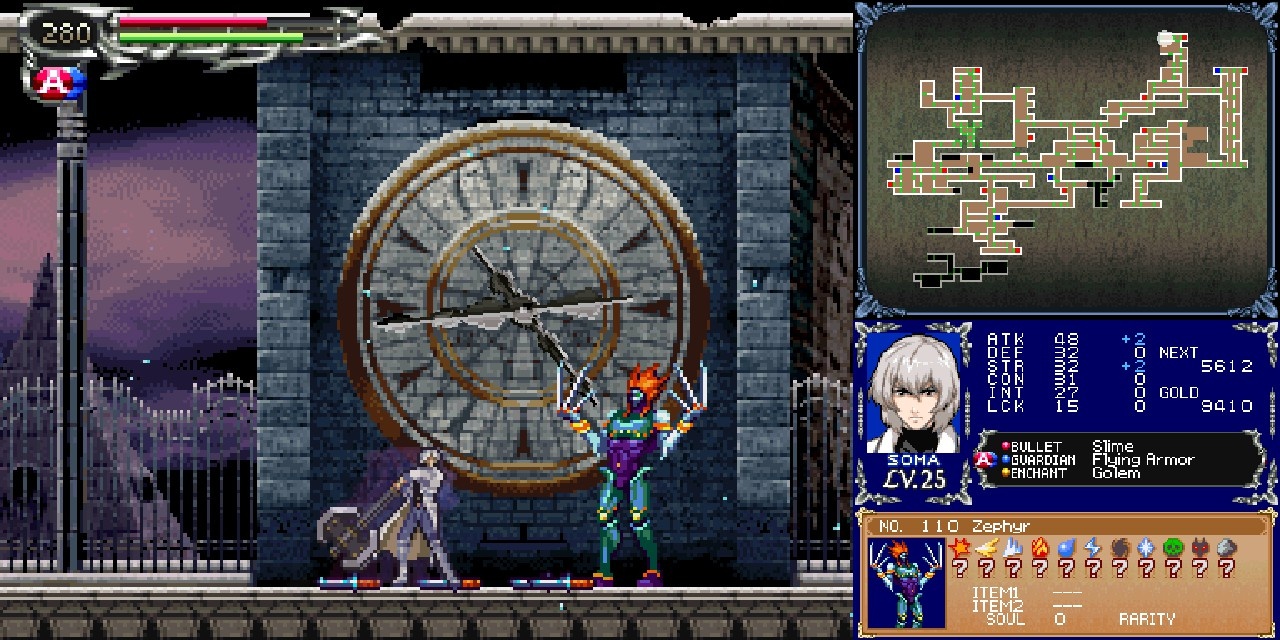
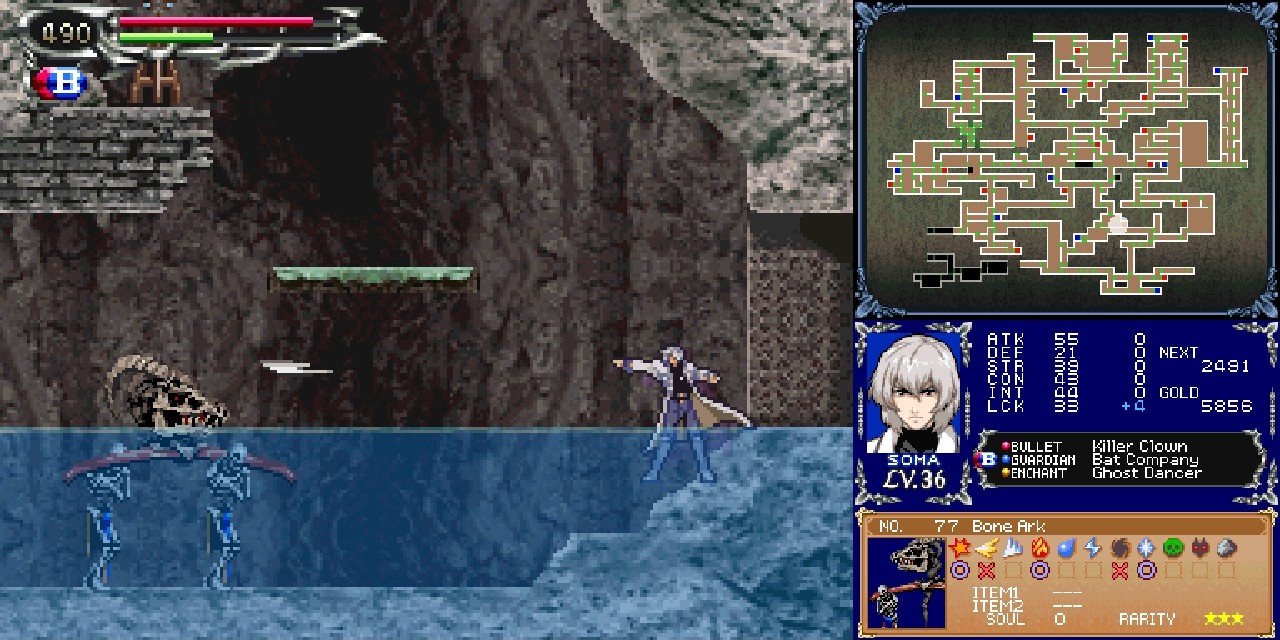
With Castlevania working really well on the GBA, it was only natural for it to continue on with the DS, creating a direct sequel to Aria of Sorrow with Dawn of Sorrow (I really like how the initials are DS). The DS was a dual screen system with a touch screen, and Dawn of Sorrow used the top screen to display either your stats or the map. As the DS never seemed as pixelated as the GBA and there are off colours due to the screen, I decided to play the version in the Dominus Collection, which also supports the touch features on the Steam Deck.
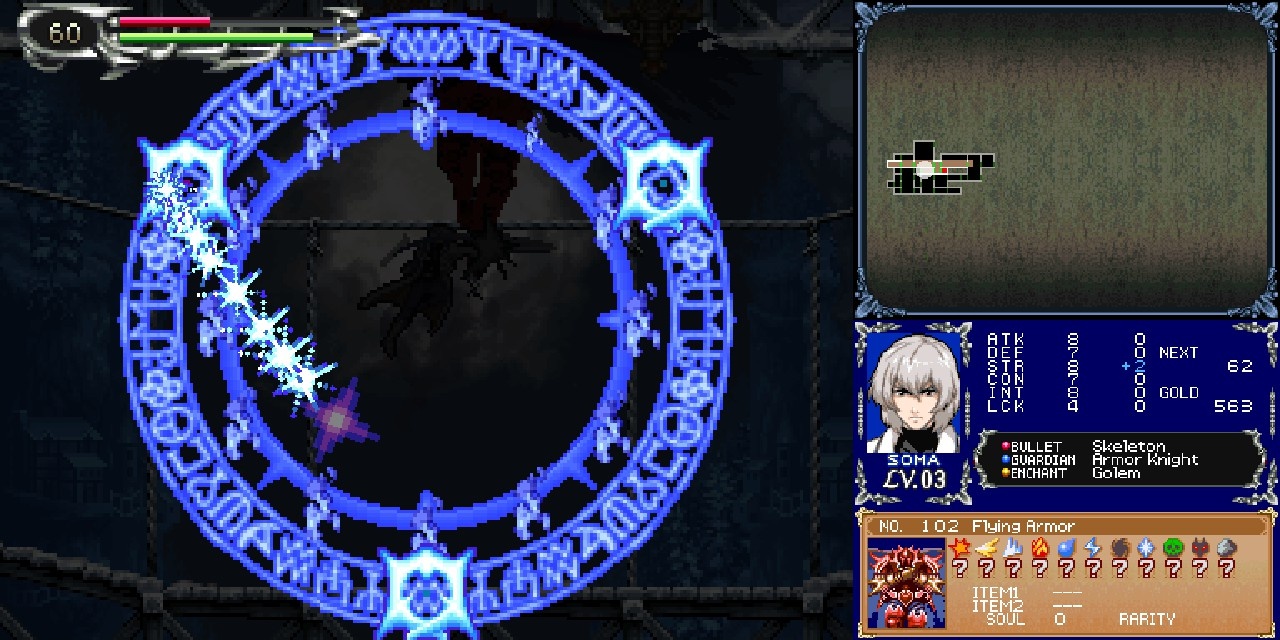
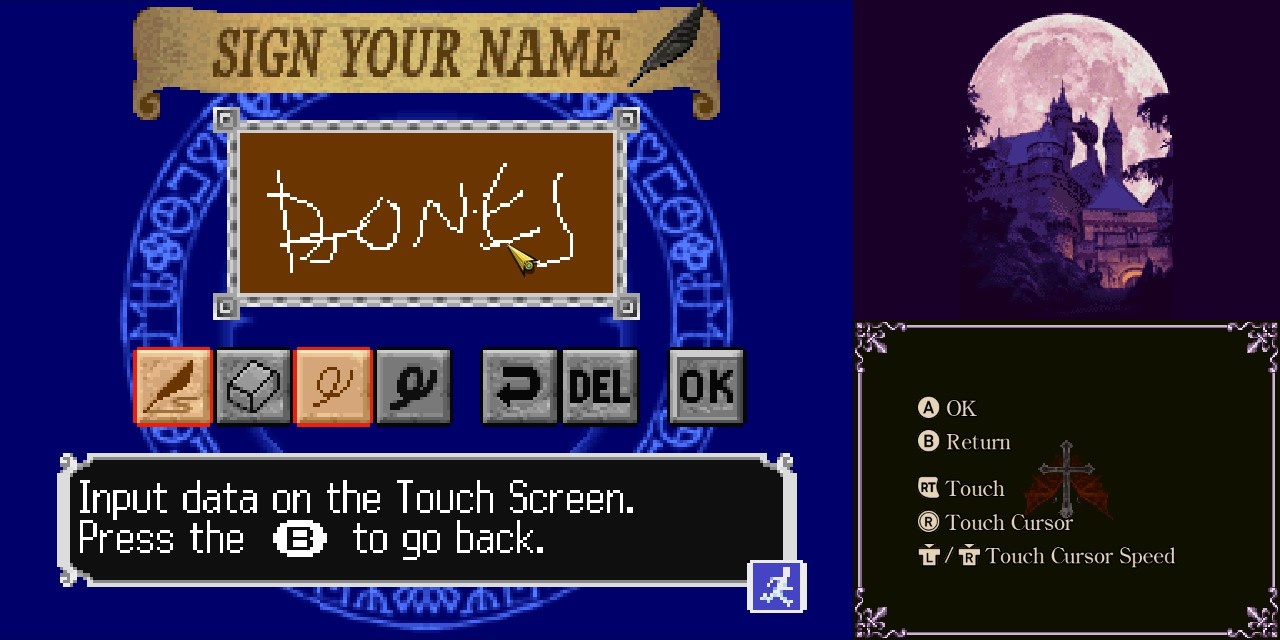
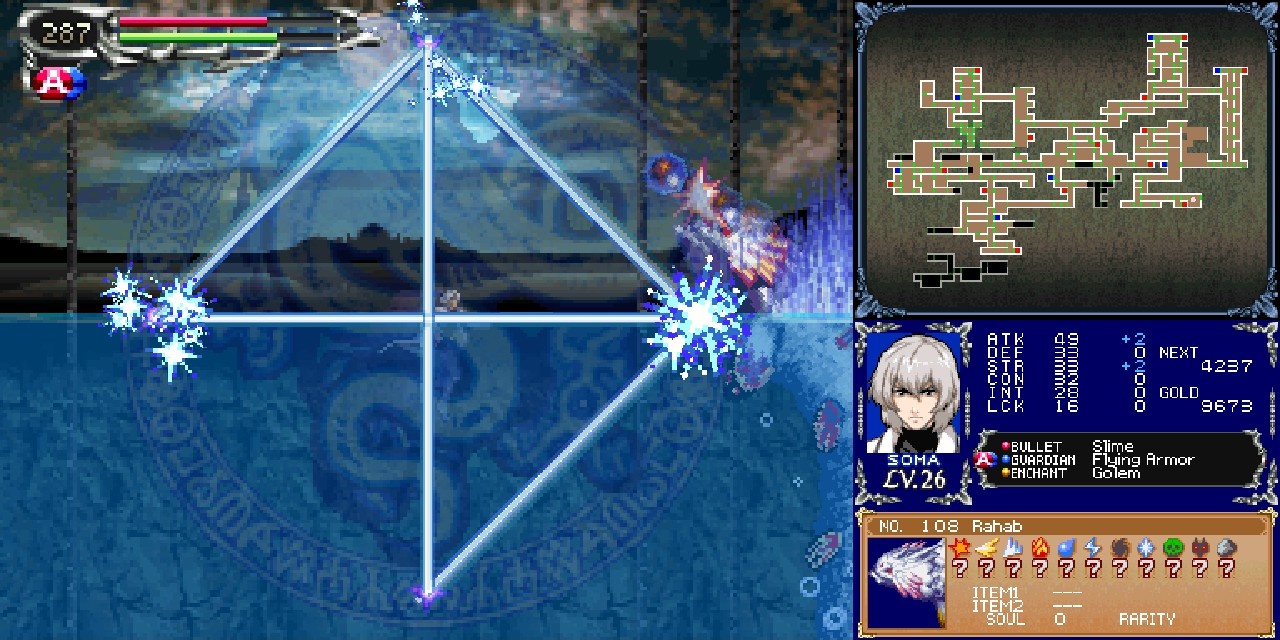
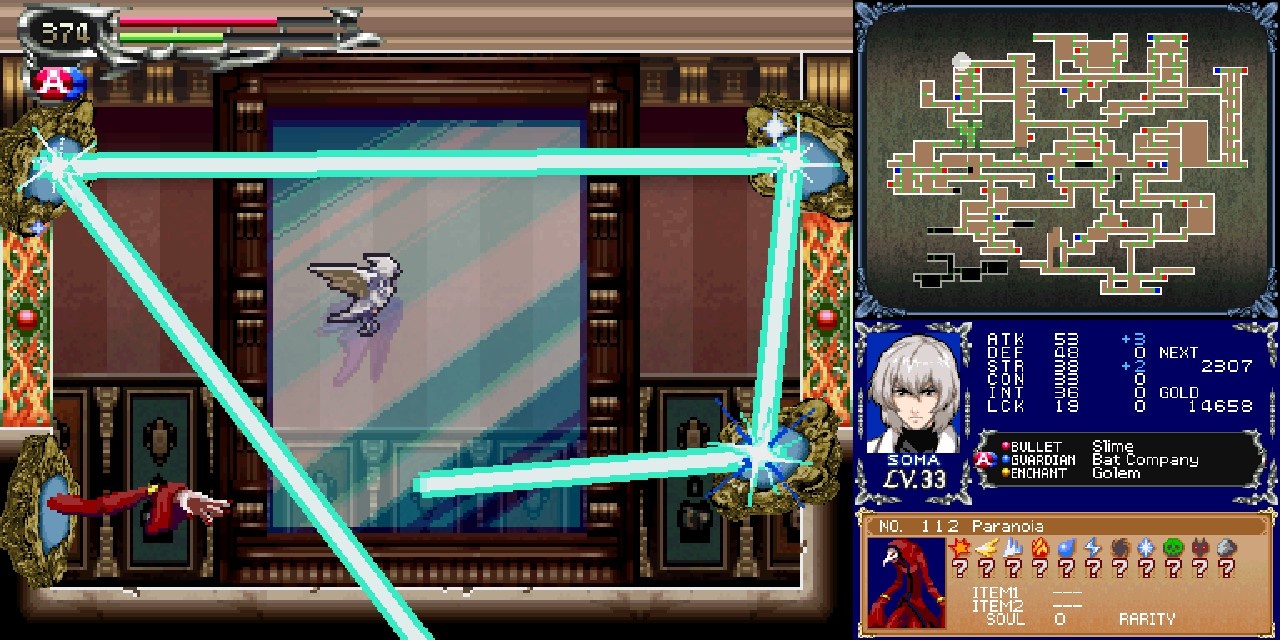
The key touch screen feature is the Magic Seal system. You’ll collect a few throughout the game and, when you defeat a boss, you’ll have to trace out a pattern on the screen. Get it right and you’ll kill the boss, fail and they’ll gain some health. It’s not a bad system, it just feels completely unnecessary and like it’s only there to make use of the touch screen – although there is an ability that lets you destroy certain blocks by touching them.
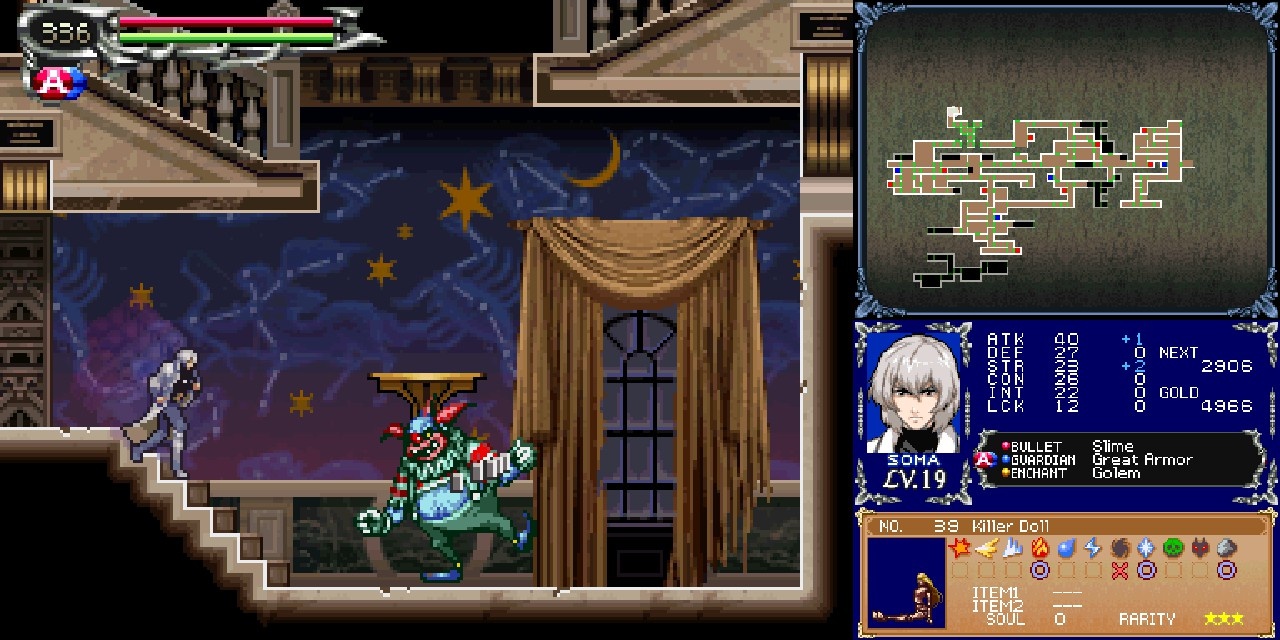
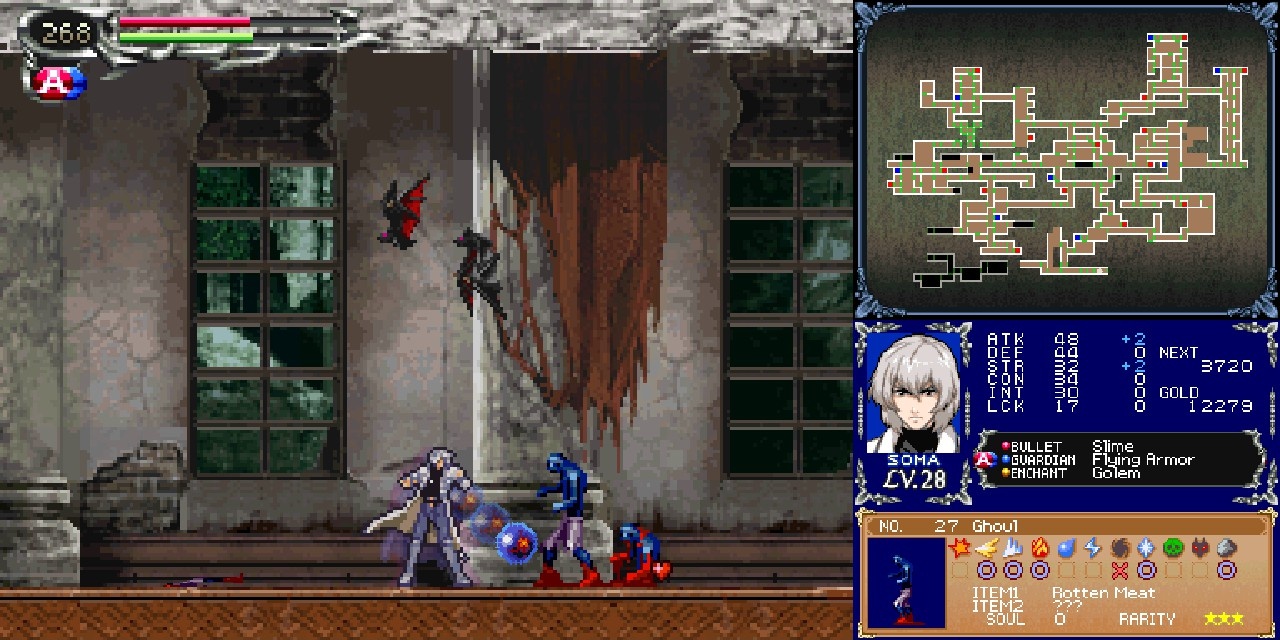
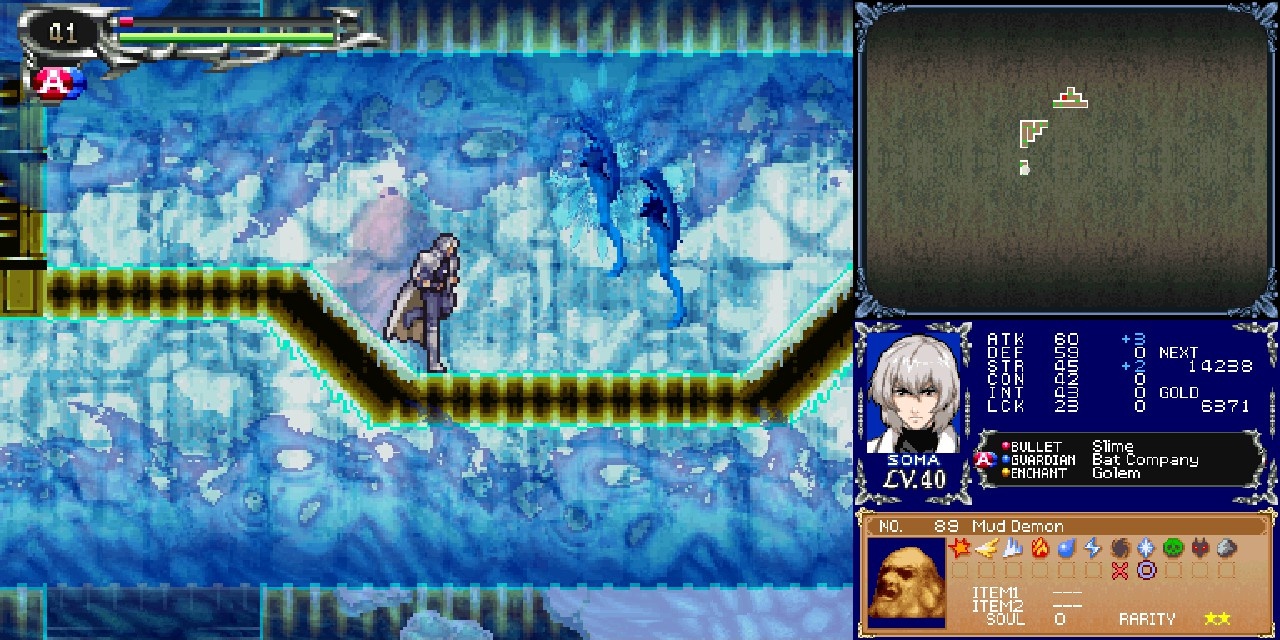
Outside of that, the game feels like a more refined Aria of Sorrow. You play as Soma again, with the abilities to collect the souls of enemies, with three slots to use them in (an Up + B attack, R for various abilities and a stat boost soul). There’s a ton of these to collect and a wide array of abilities to use, although it has the same major problem as the previous game in that the drops can be extremely rare, and this time the final sections of the game require getting through gates that require the souls of specific enemies. Be prepared to take 20 minutes of killing the same enemy over and over to get the soul you need.
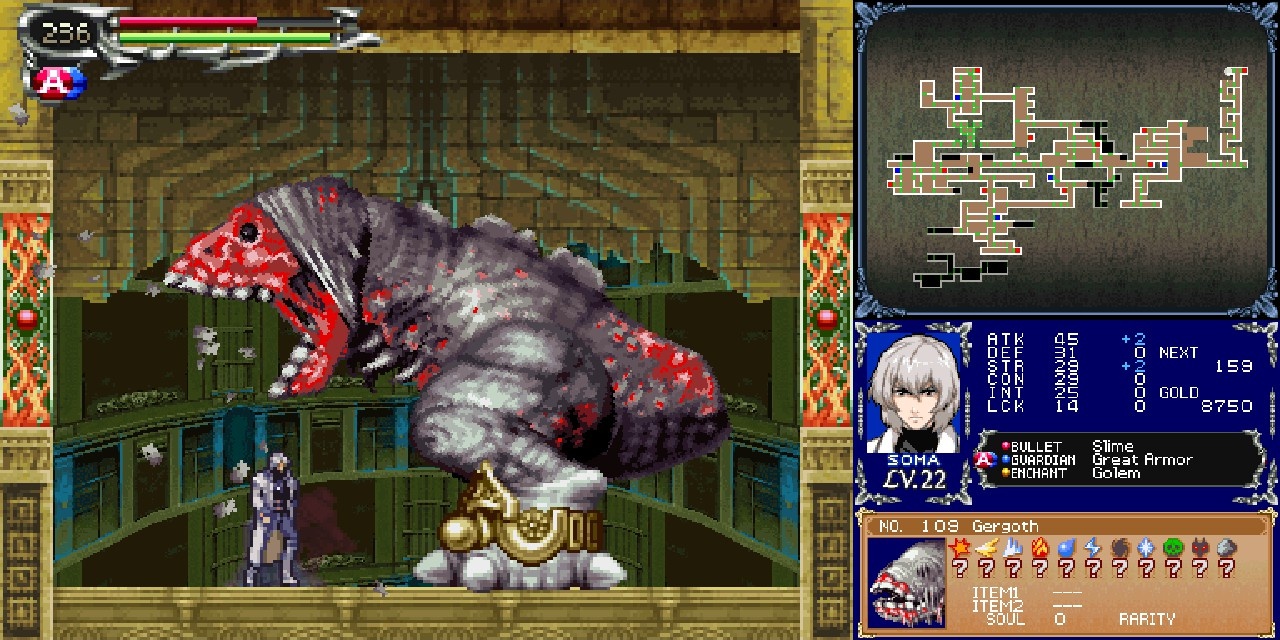
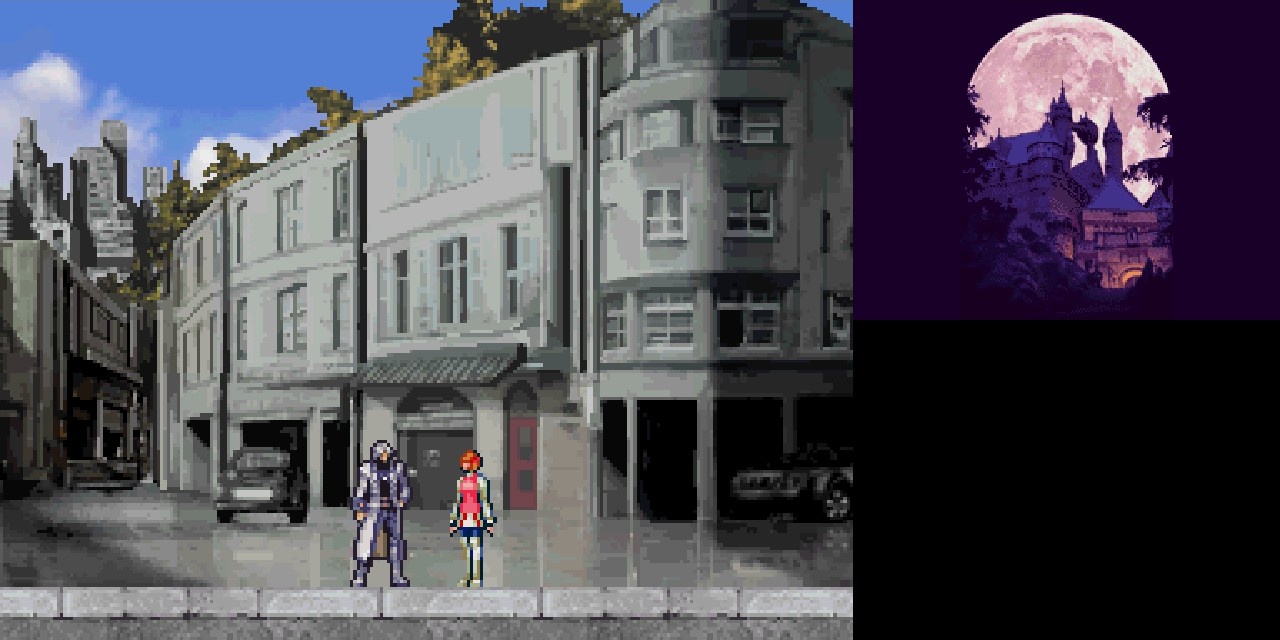
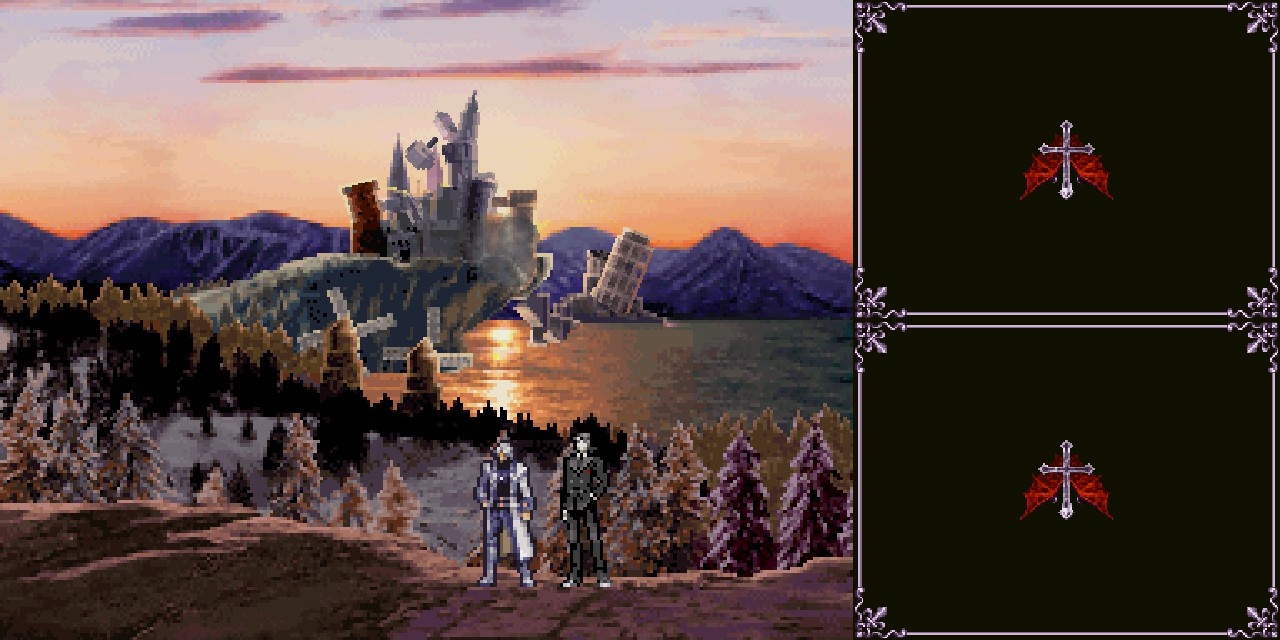
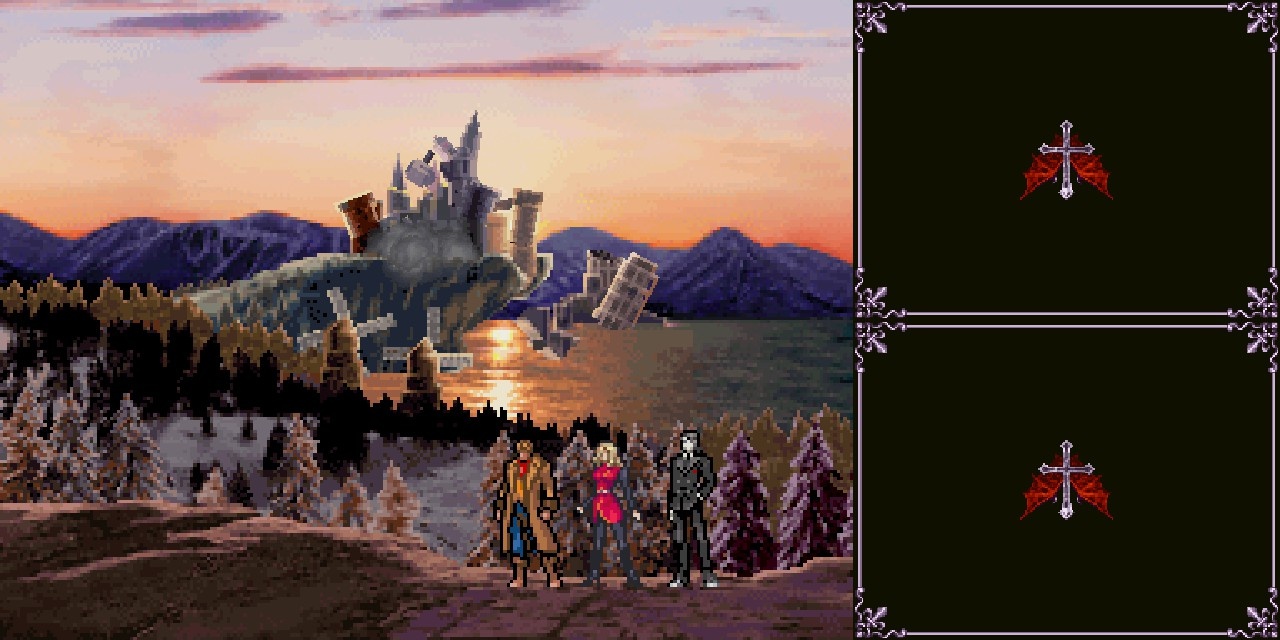
This time, Soma gets attacked while out in public by a cult leader Celia, with his powers reawakening again. He hunts her down to a remote location somewhere in Europe (I suspect built on top of the ruins of a previous Dracula’s Castle), where she had found two candidates to take over the power of Dracula, allowing him to be resurrected once more. The supporting cast of characters also return, and there are some nice moments in the story.
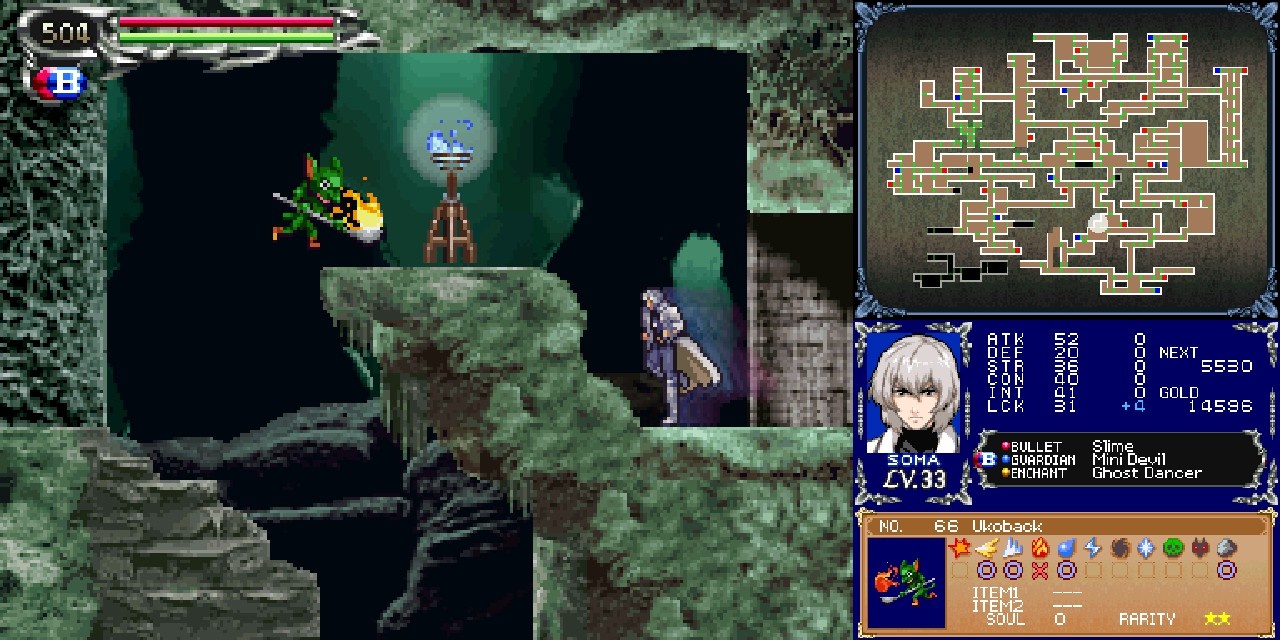
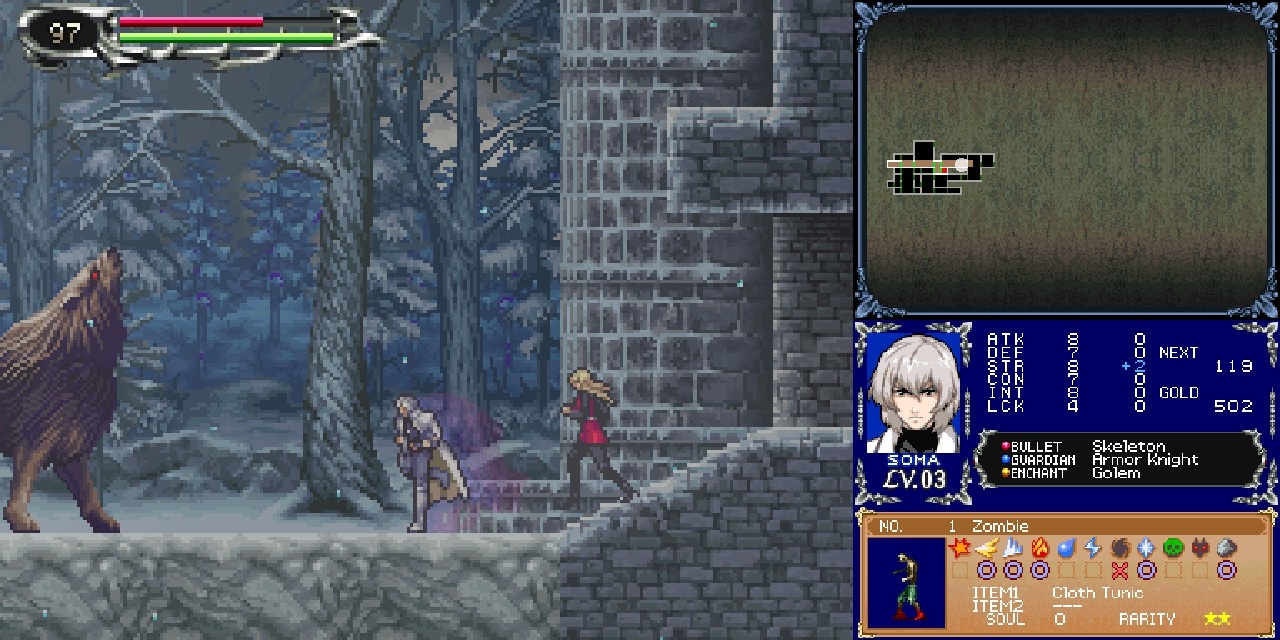
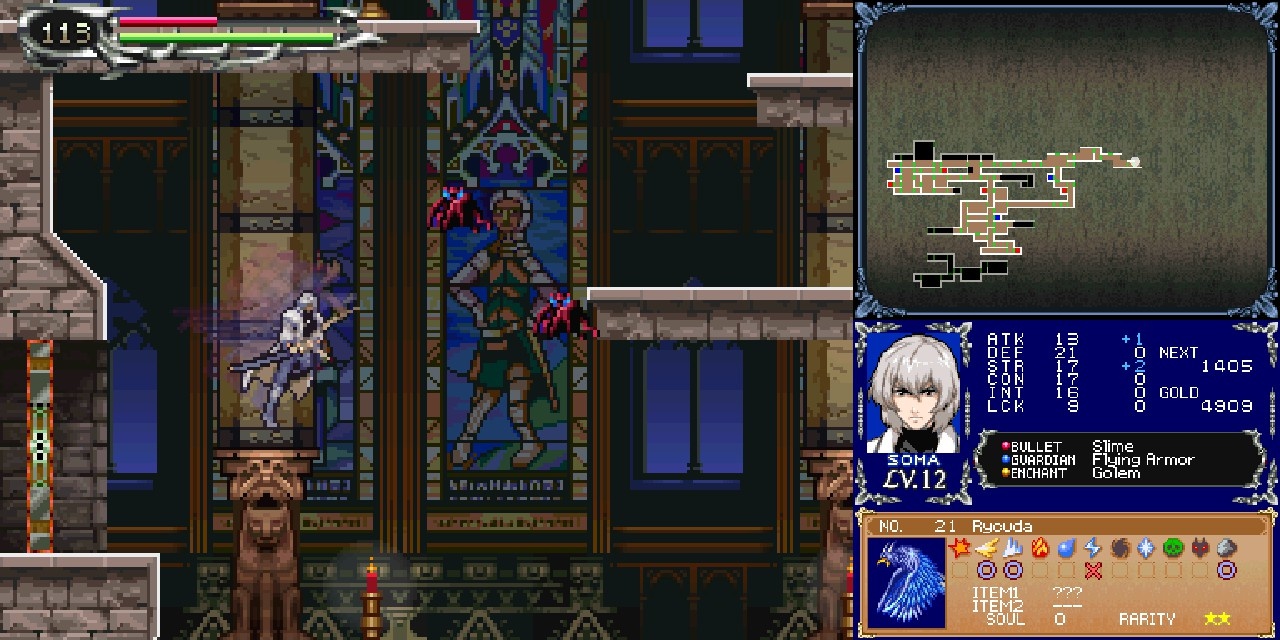
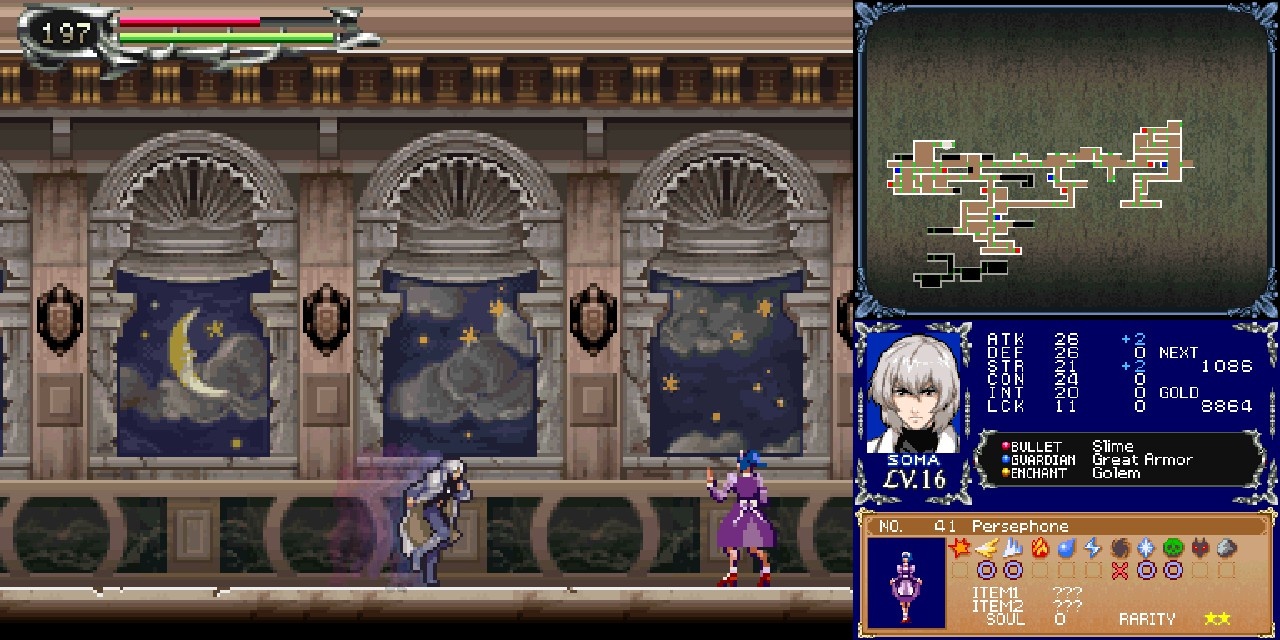
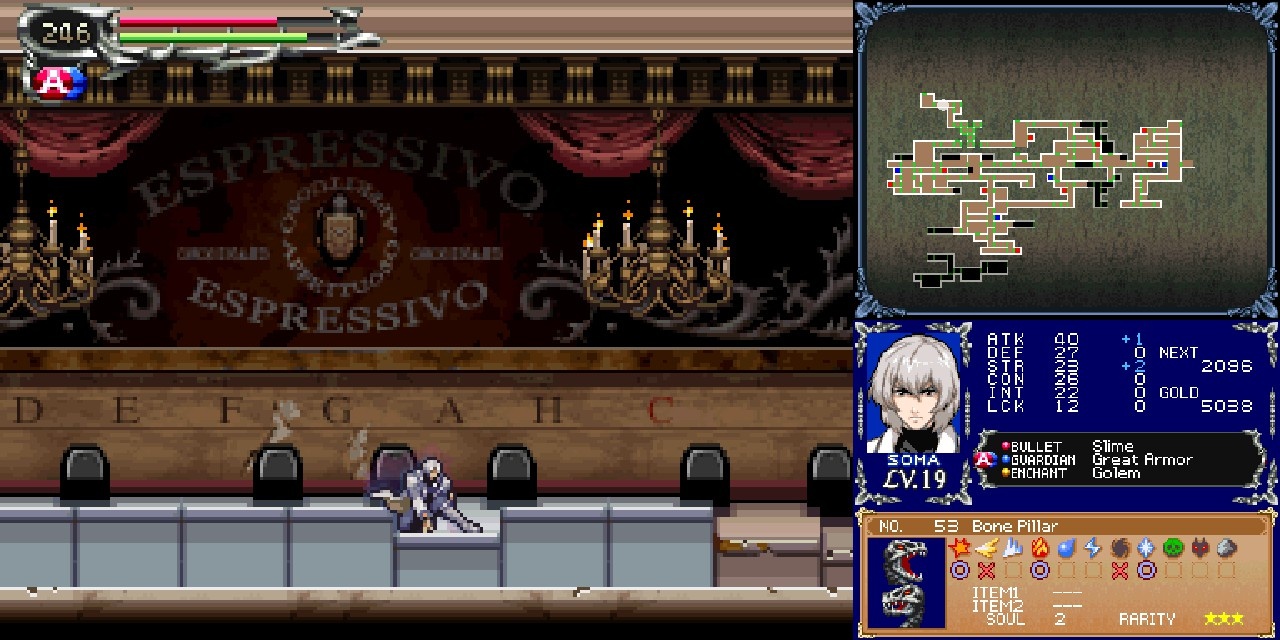
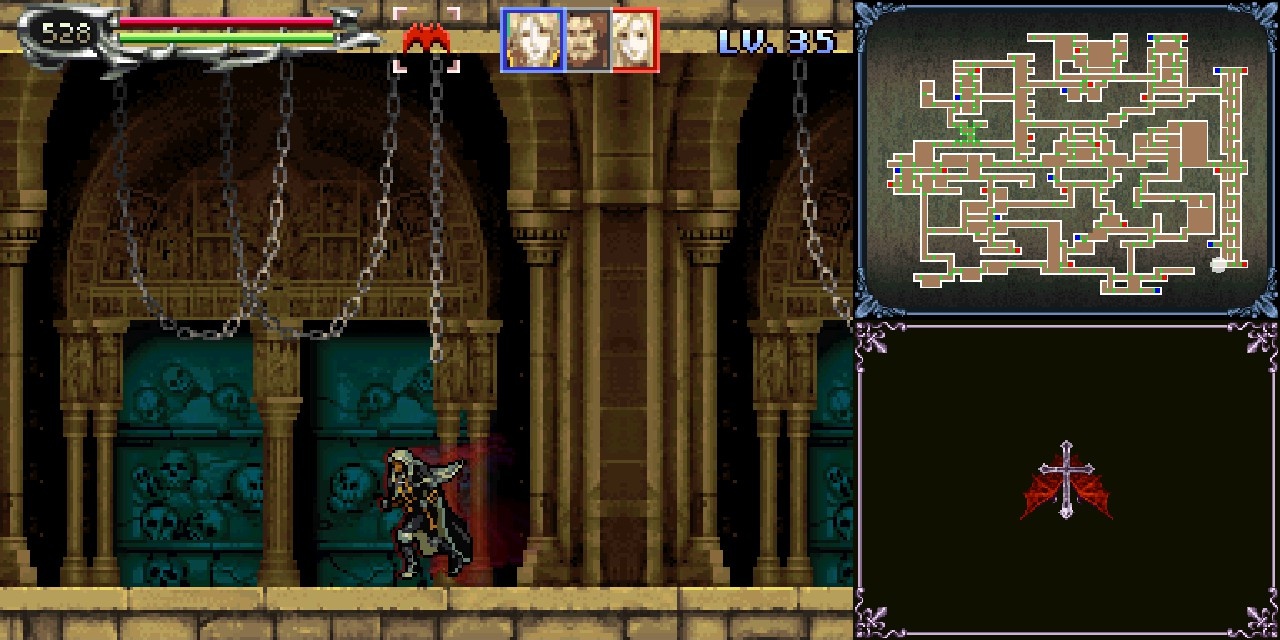
I also really like the area in this game, there’s some diverse looking areas and lots of them look great, having some lovely 3D backgrounds. I also liked exploring this so much more than the previous game, with some interesting abilities to get around obstacles, it’s just the few that require rare soul drops that really hinder the exploration. Part of this is due to luck still being bugged like the first game, so even the equipment that should help still makes it rarer than it should be. But, overall, it’s a great campaign (although I hated the final boss), but that’s not all there is.
With previous games, I thought the bonus modes with other characters were nice bonuses to mess around with a bit, but I just wanted a bit more. You were always at full power, and could run to the final boss, alongside no story whatsoever. In Dawn of Sorrow, this is elevated to something so much more, with multiple characters, having to explore the castle and levelling up.
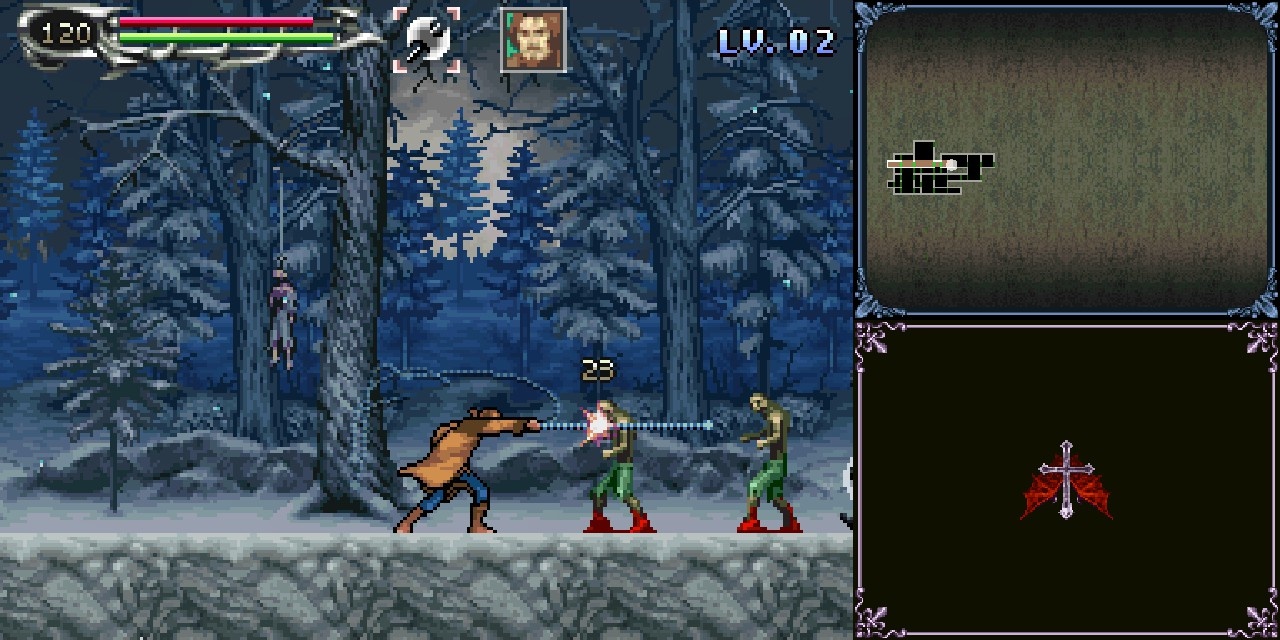
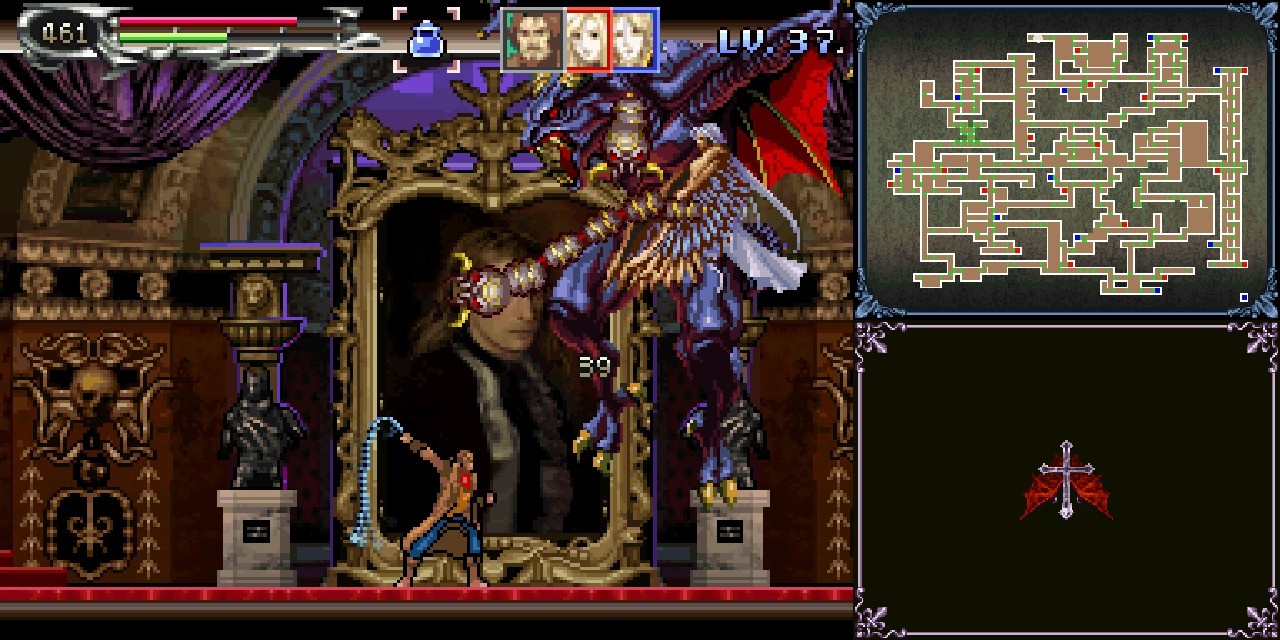
You start off with Julius Belmont, he has the trusty Vampire Killer whip and can rotate through different sub-weapons, which uses up magic power. He’s quite strong and one of his subweapons is a wide reaching cross burst. This is the Belmont that finally fully killed Dracula (sort of), so it makes sense. In this mode, you’re free to explore most of the castle (apart from the final areas), with the goal simply to kill all the main bosses.
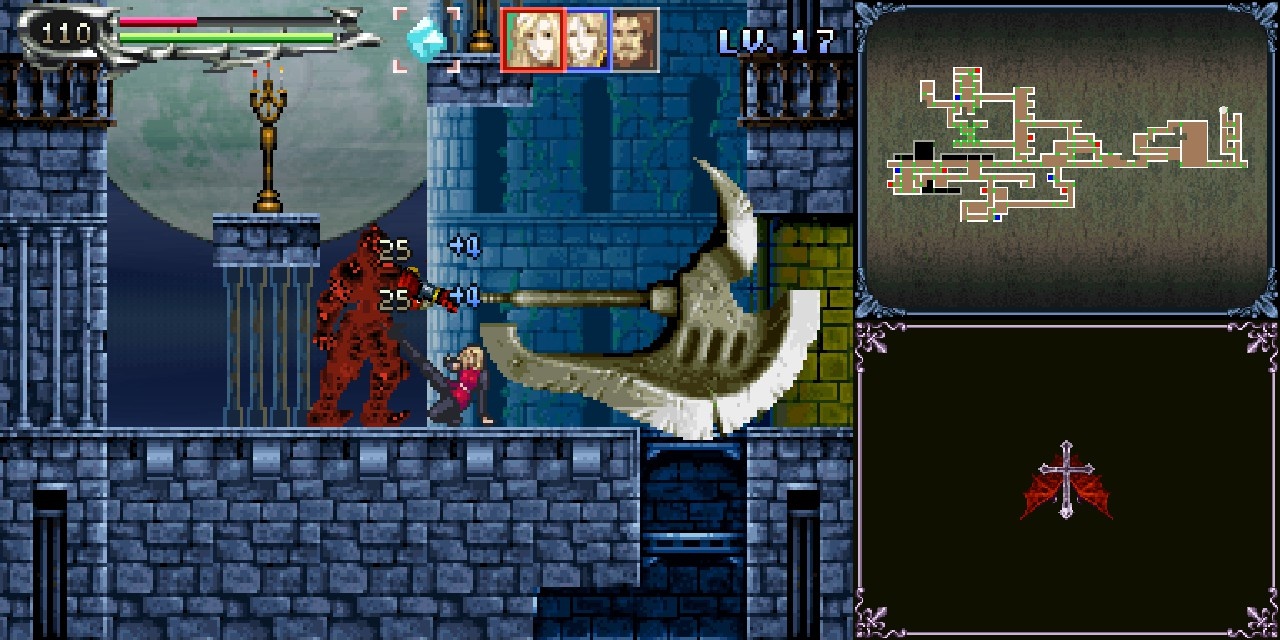
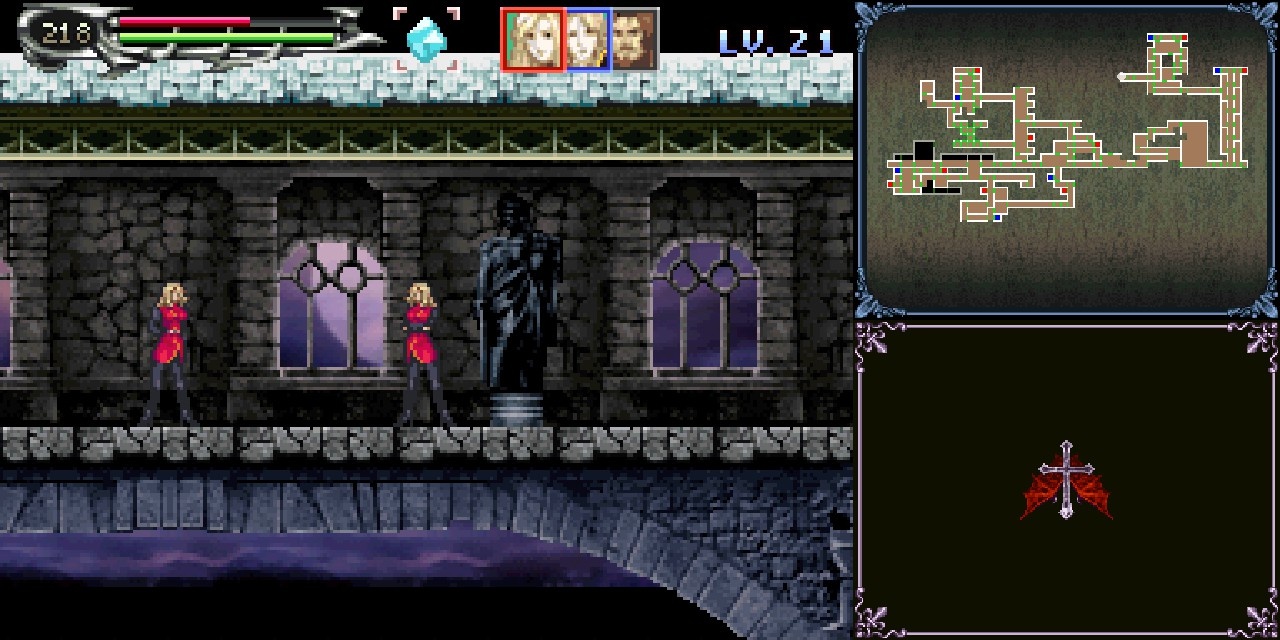
If you visit her soul-merging shop, you can recruit Yoko (sadly, Hammer is just not in his shop, he would be a cool character to play as). Her attacks are weaker and shorter range, but every hit she makes will heal you (the health bar is shared across all characters), making up for the lack of items in this mode, and she also has some nice magic spells. Killing enemies will level up all your characters, increasing your health, attack and, in the case of Yoko, how much she heals.
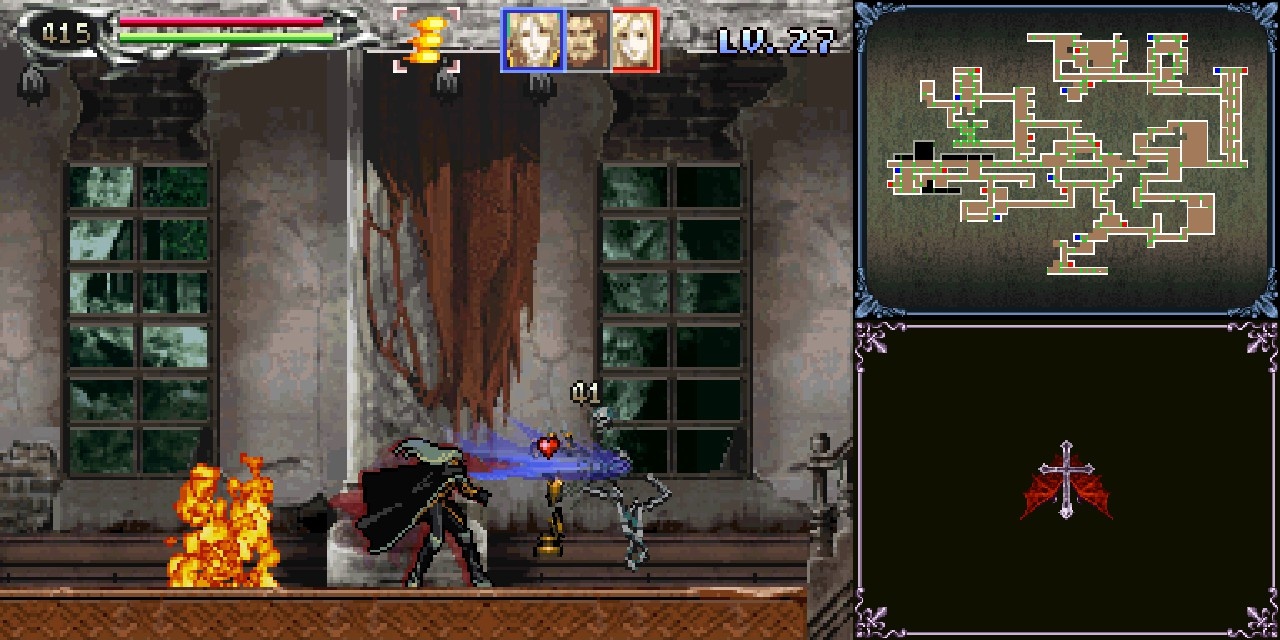
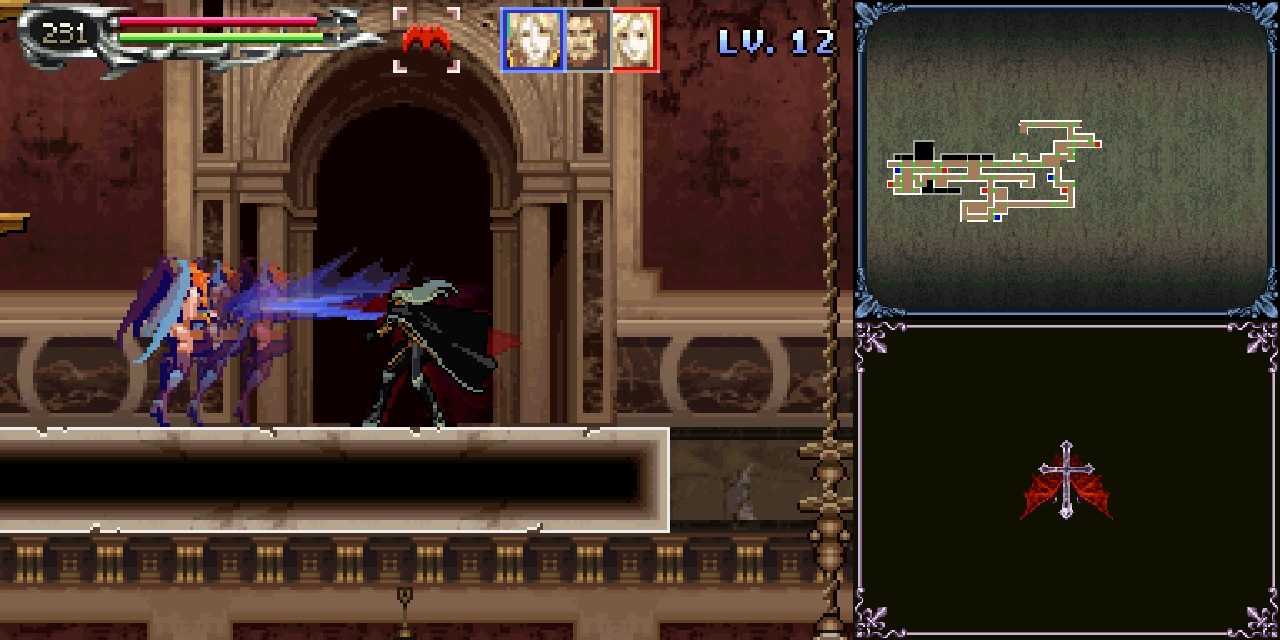
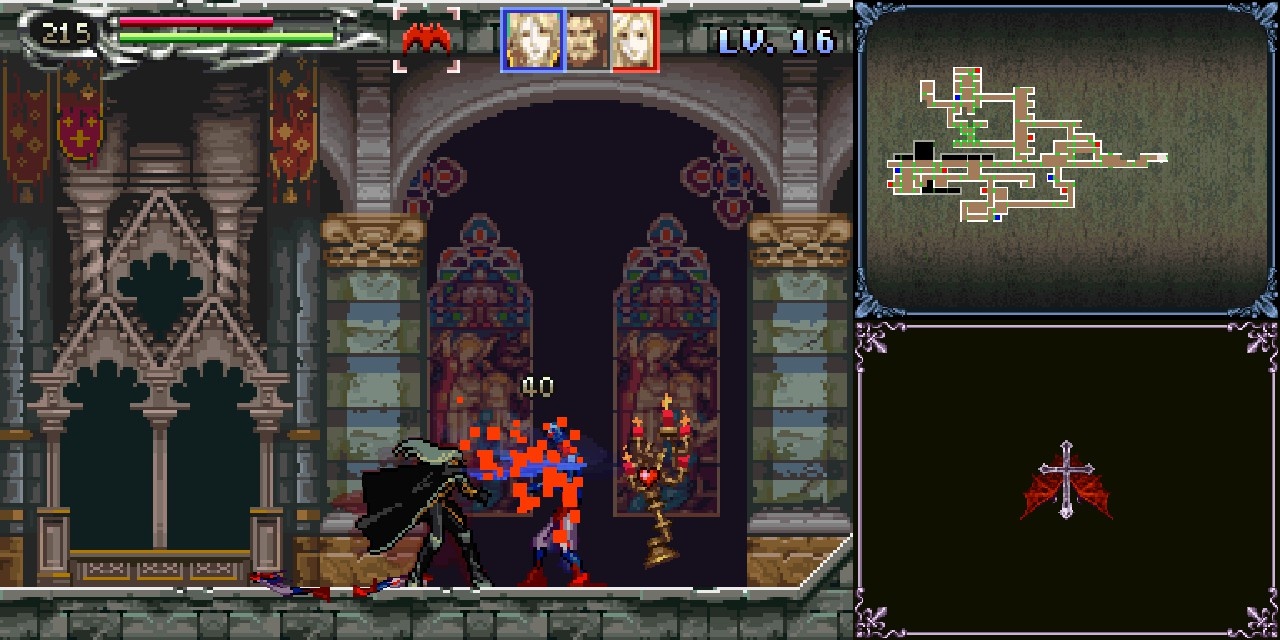
Finally, you can find Alucard moping around and he’ll also join you, with a fast paced sword attack, Dracula’s fireball and the ability to turn into a bat (which means finding Alucard is the only gated ability impeding travel). He controls great, yet oddly can’t do a slide attack, but it’s neat to play as him again. Really, all three characters feel useful in different ways and I found myself swapping between them quite regularly.
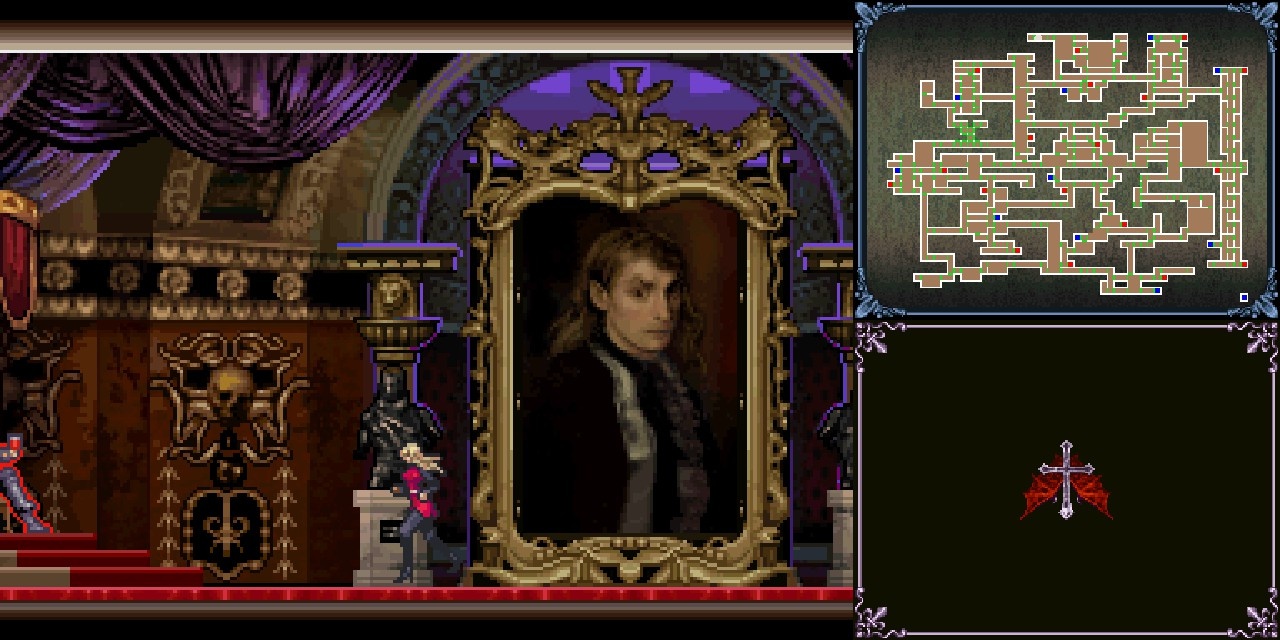
There’s even a small amount of dialogue when you meet each character, and a few of the rooms have been altered to account for a couple of Soma’s powers that aren’t replicated in this mode. Another change is that the Magical Seals are automatically performed and the final boss is replaced with a new one. This is what I’ve wanted from these bonus modes, and it feels great – I even like it more than the main campaign and gameplay like this (with abilities to unlock) would make for a great basis for a new Castlevania.
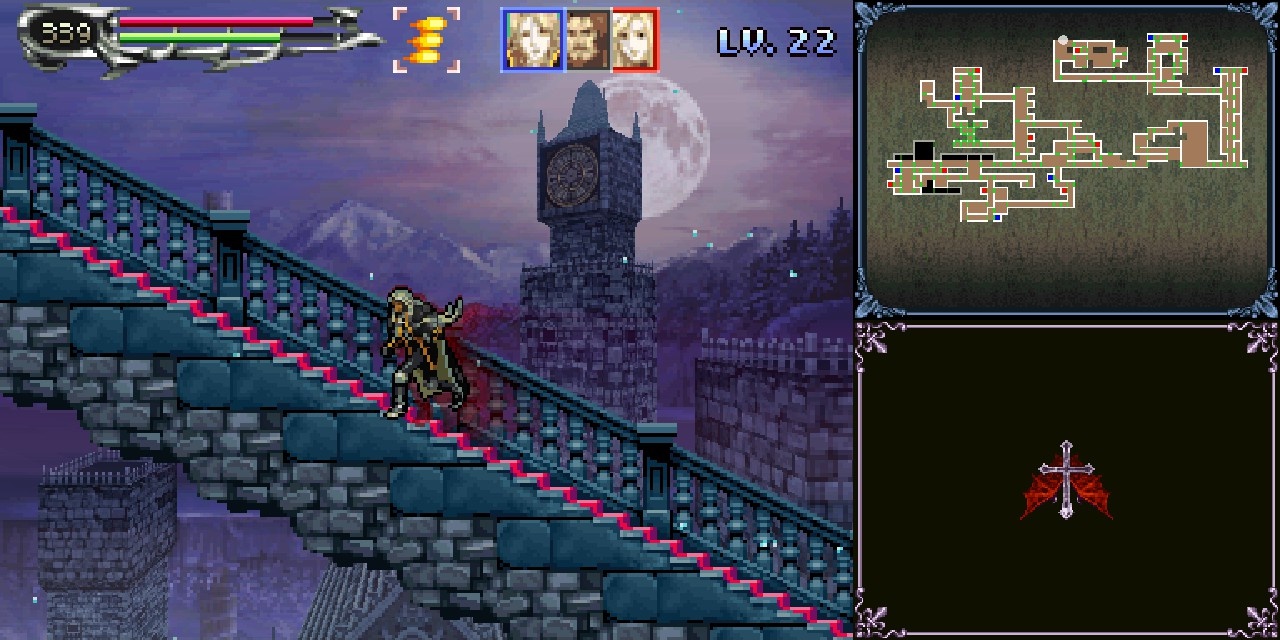
Which makes Dawn of Sorrow a pretty wonderful package, featuring a lovely map, great main campaign and an even better bonus campaign. It’s an amazing start for Castlevania on the DS, and the bonus mode is a nice blend of Symphony of the Night and Castlevania III.

Fave
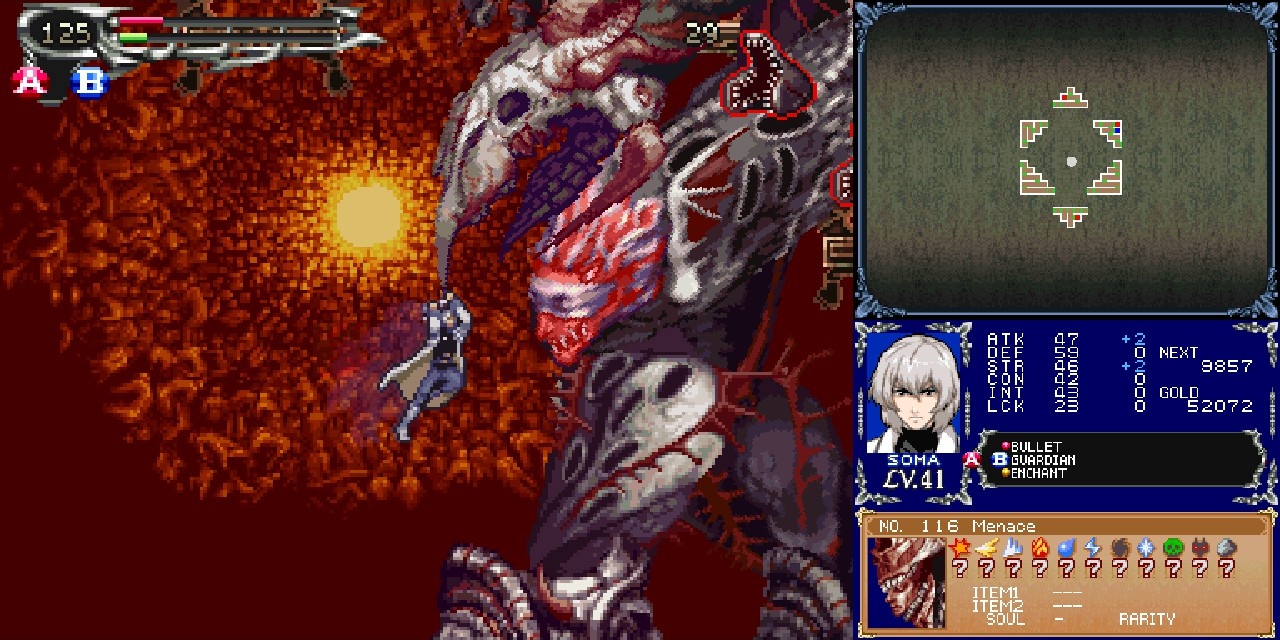
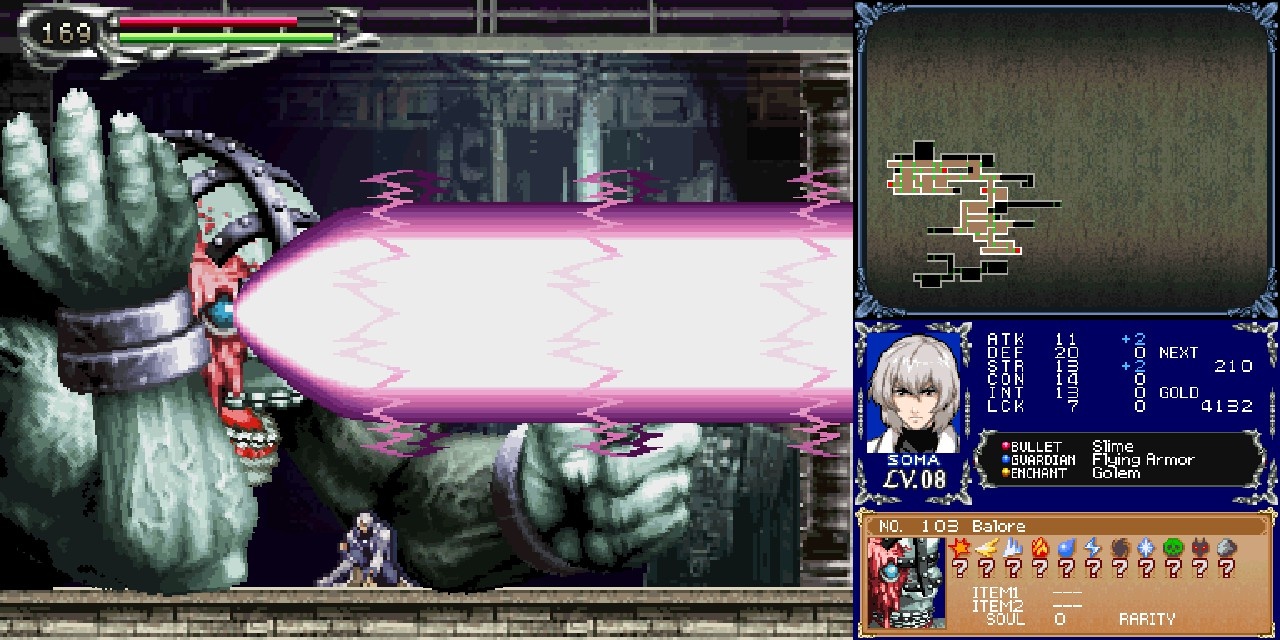
Having a map on the bottom screen that you can check without having to pause is something of a luxury, albeit a small one, and the DS’s extra power is frequently used to its advantage. For example, when fighting enemies, there are some lovely sprite scaling and rotation effects – These are particularly good in the boss battles, and area where DOS excels.
Geraint Evans, NGC Magazine #112
Remake or remaster?
This just needed the luck issue sorted, and perhaps have the bonus mode unlocked form the start.
Official Ways to get the game
Dawn of Sorrow is available in the Castlevania Dominus Collection.
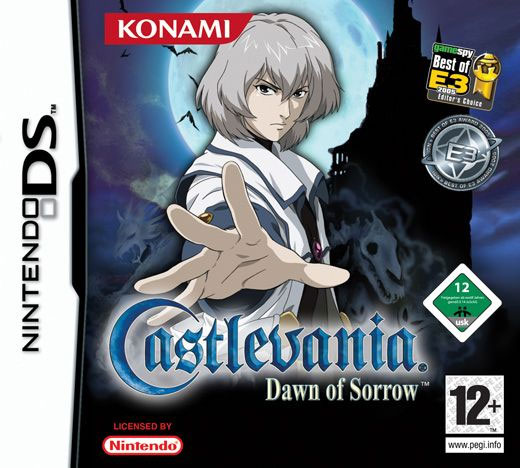
Europe
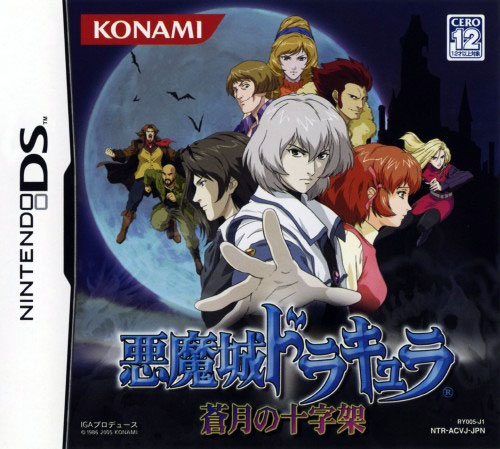
Japan
North America
Castlevania Games by Date
1990, 1991, 1992, 1993, 1994, 1995, 1996, 1997, 1998, 1999
2000, 2001, 2002, 2003, 2004, 2005, 2006, 2007, 2008, 2009