
Tetris Worlds is everything you love about Tetris and more.
- NA release: 26th June 2002
- EU release: 27th September 2002
- JP release: 20th December 2002
- Developer: Radical Entertainment
- Publisher: THQ (NA/EU), Success (JP)
- NGC Magazine Score: 38%
- Mods Used: None


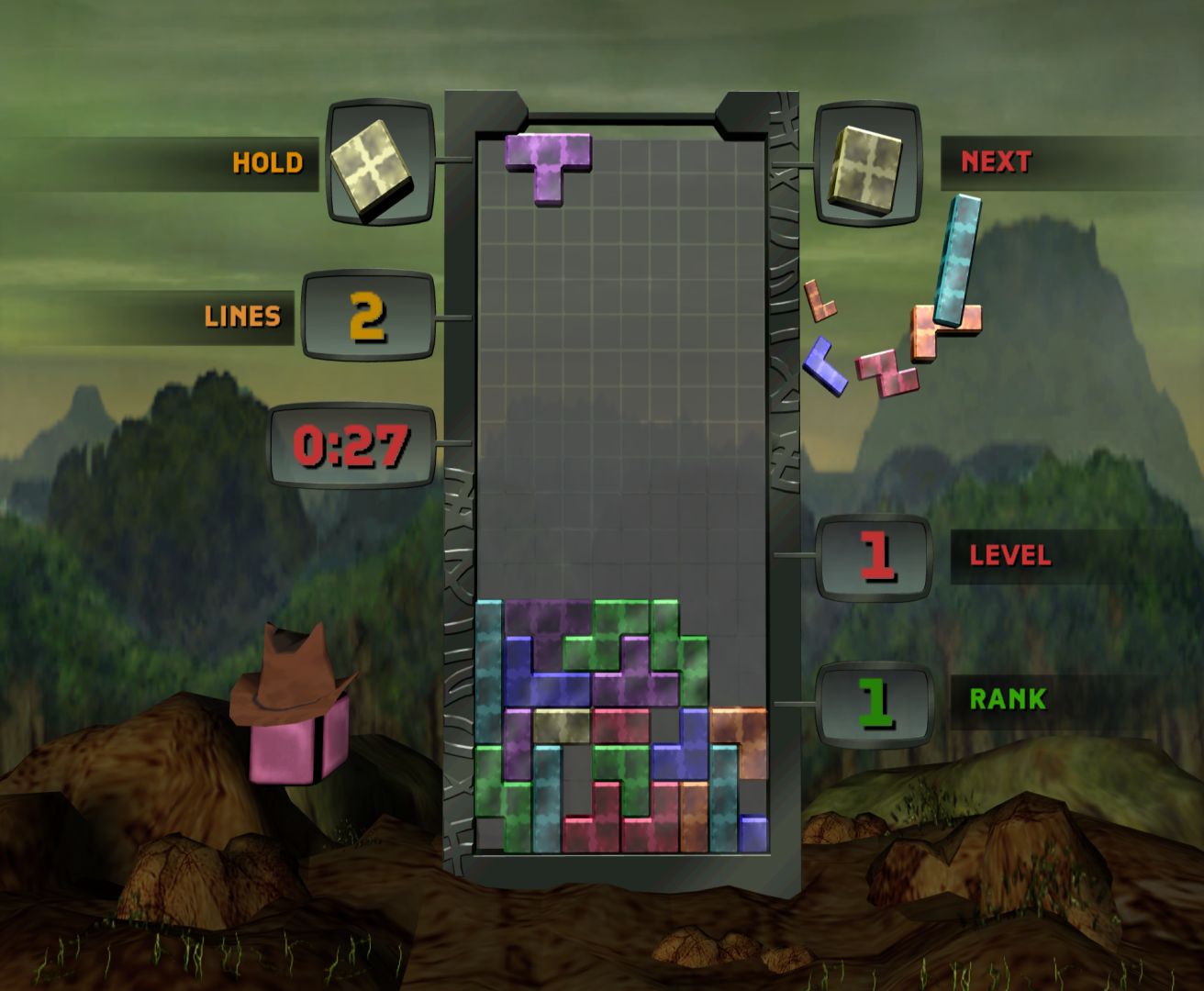
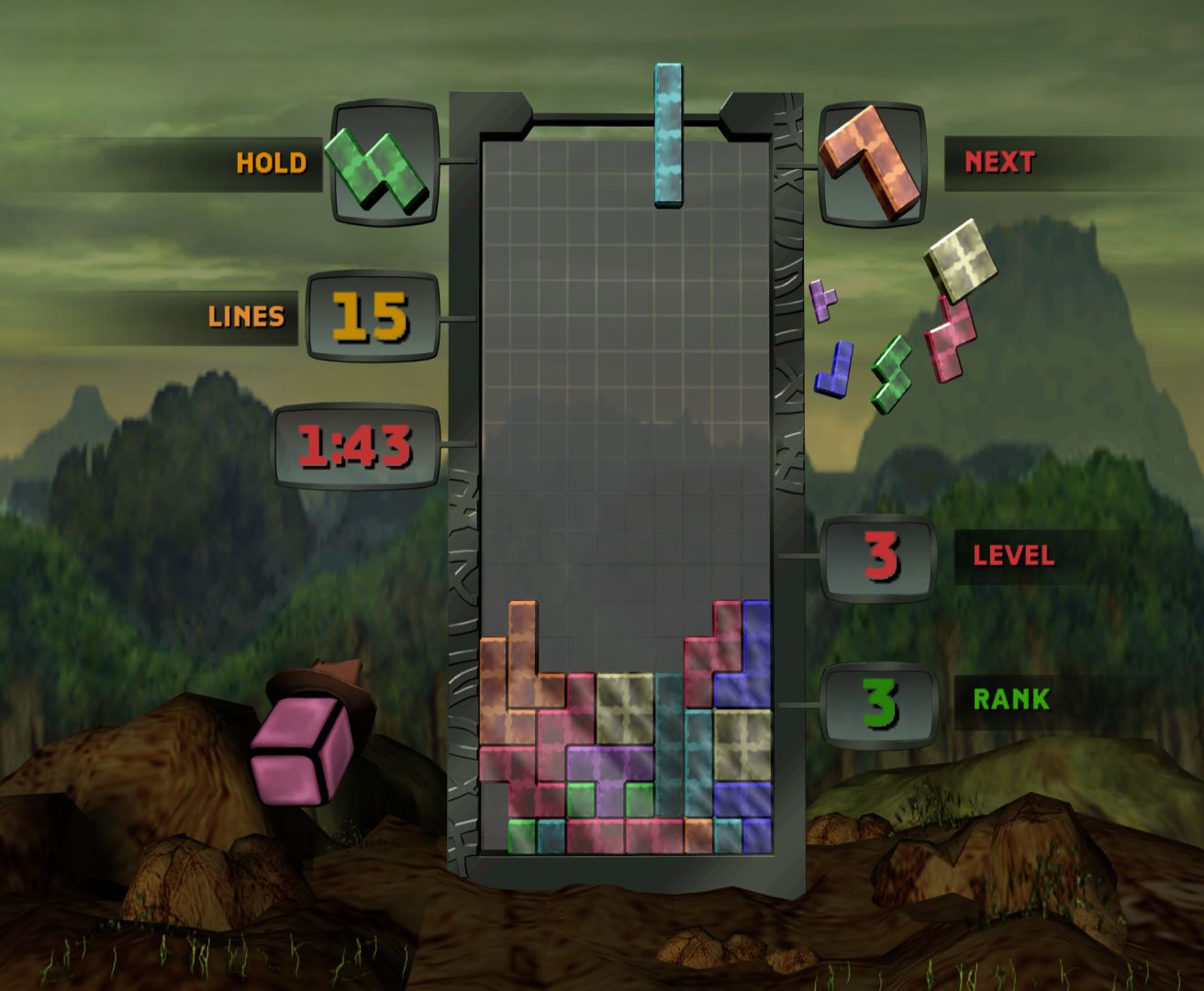
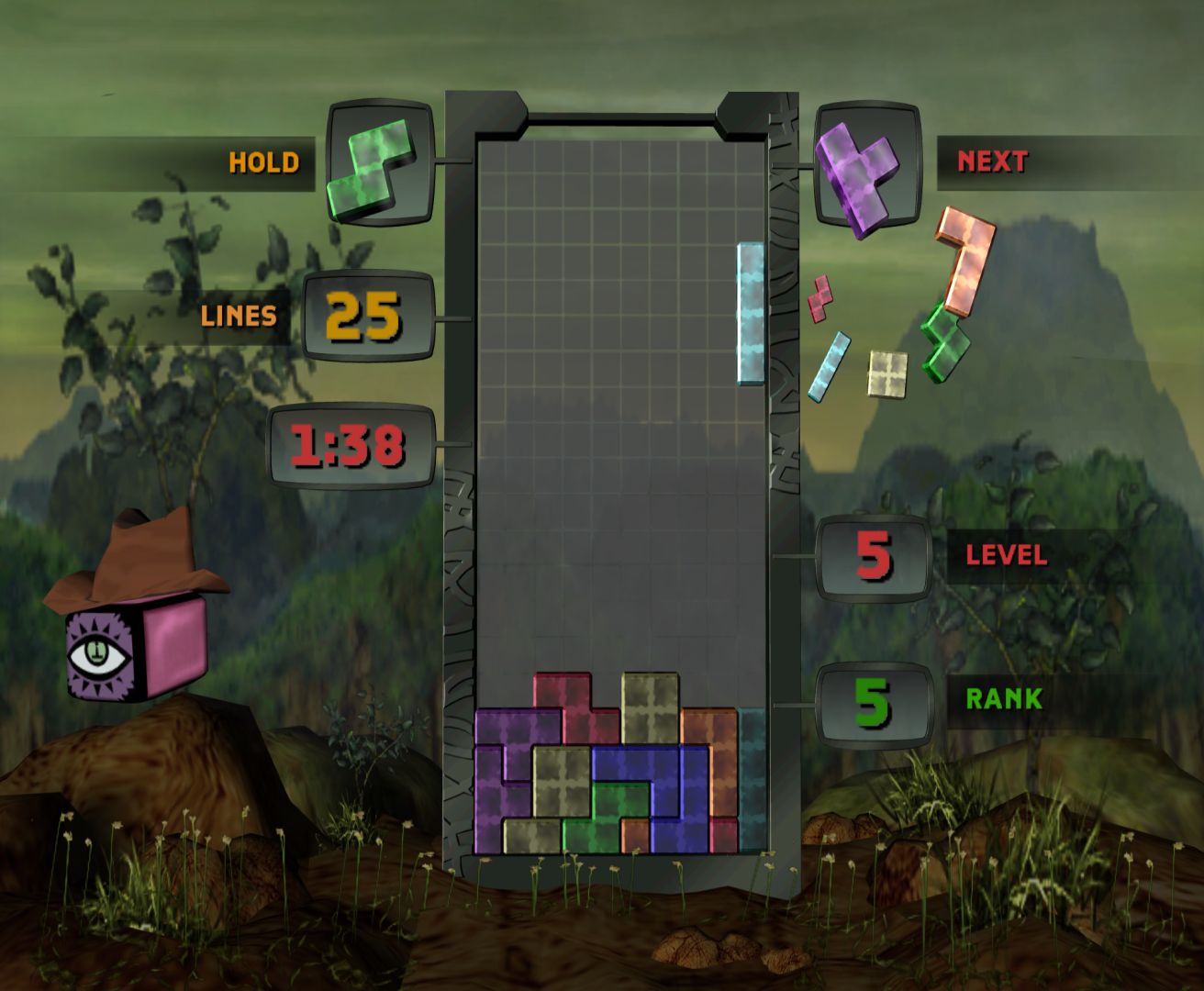
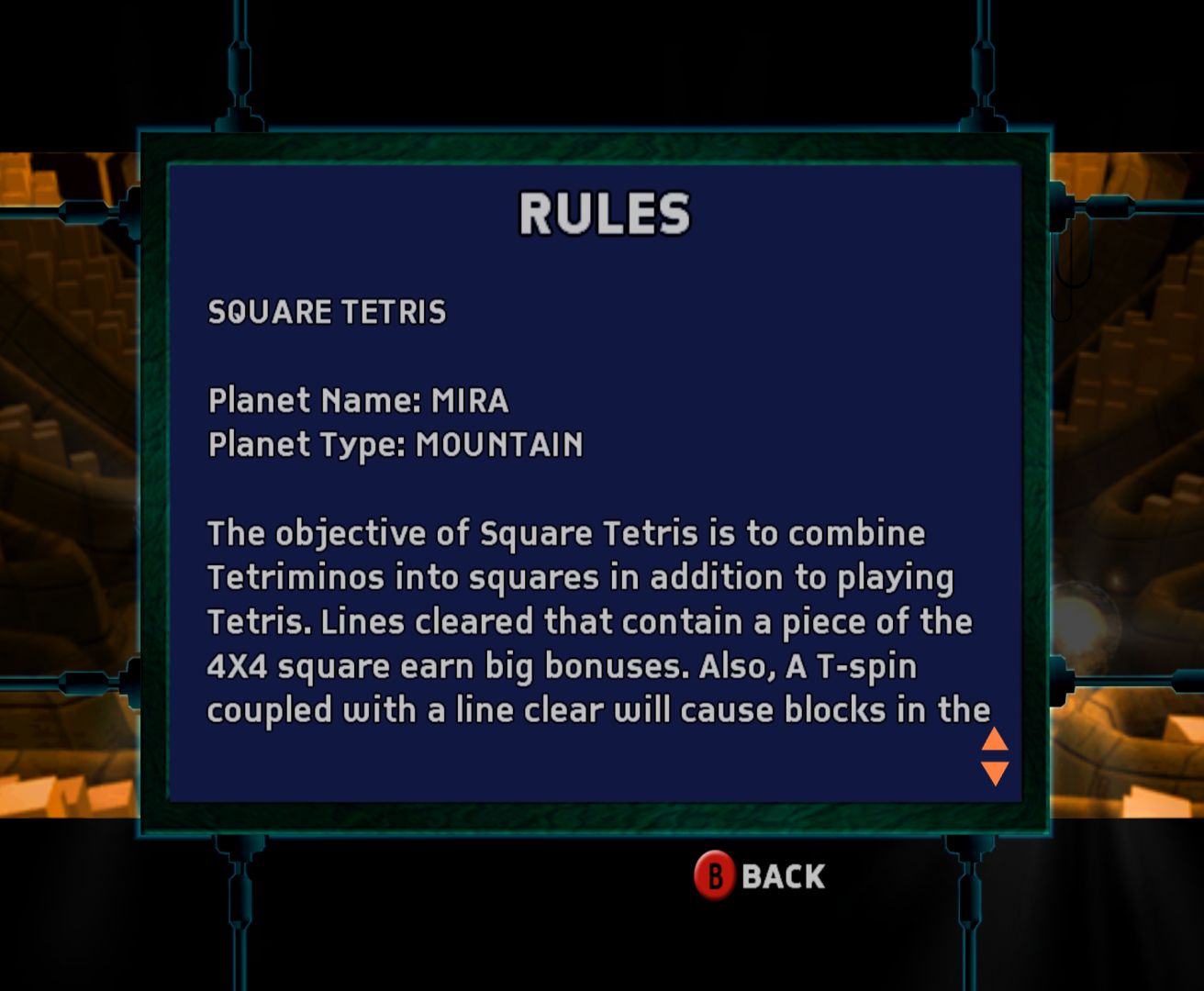
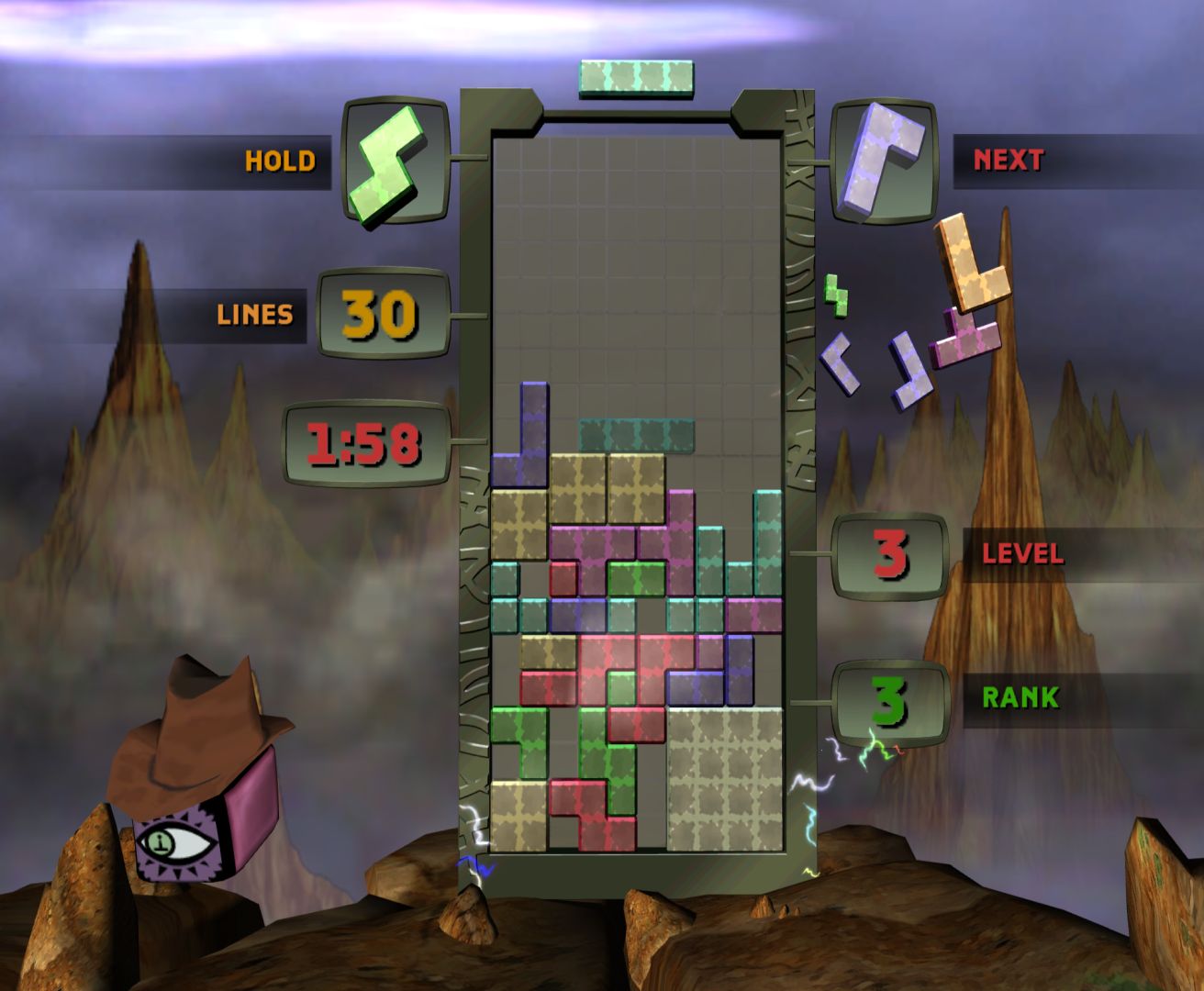
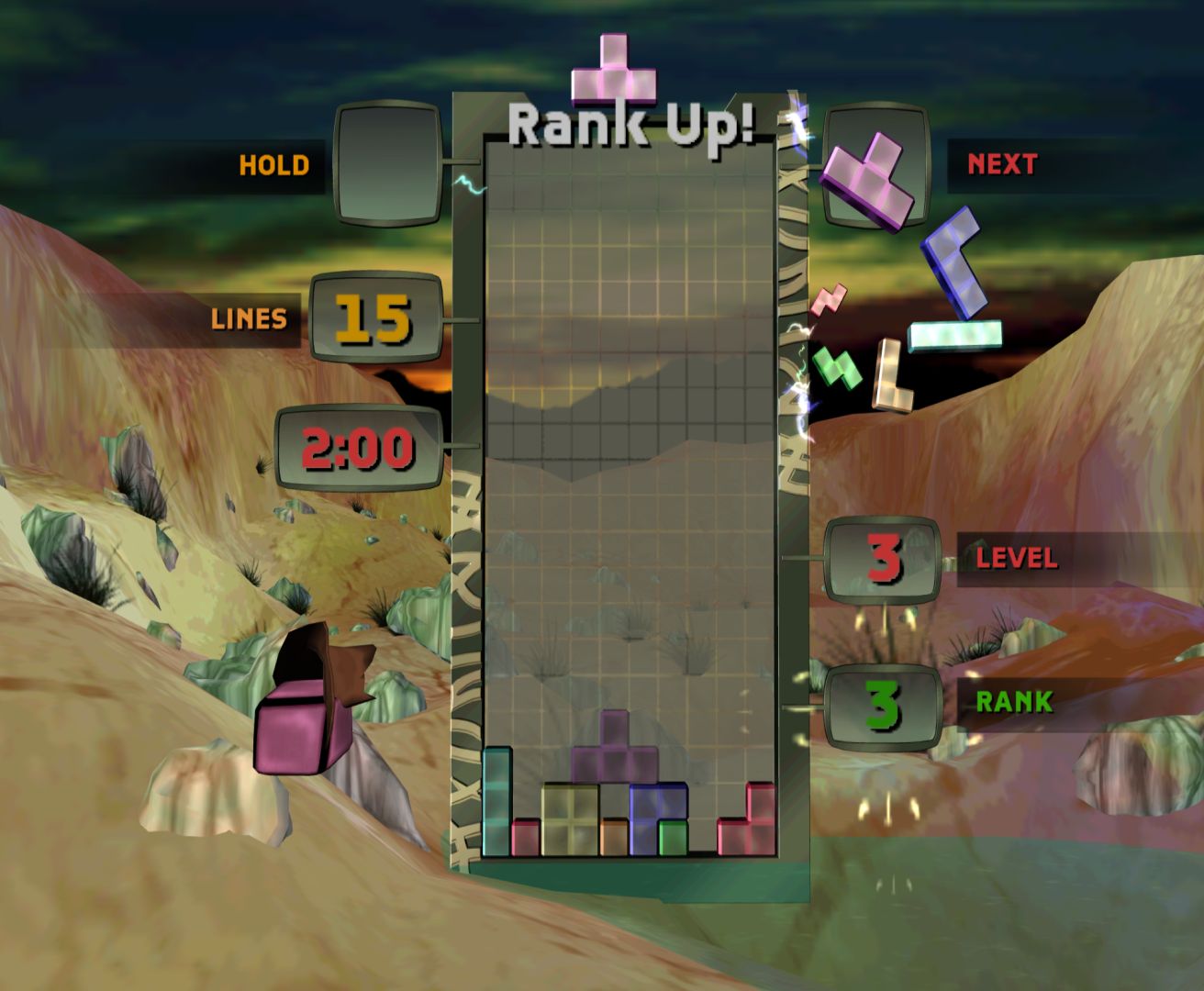
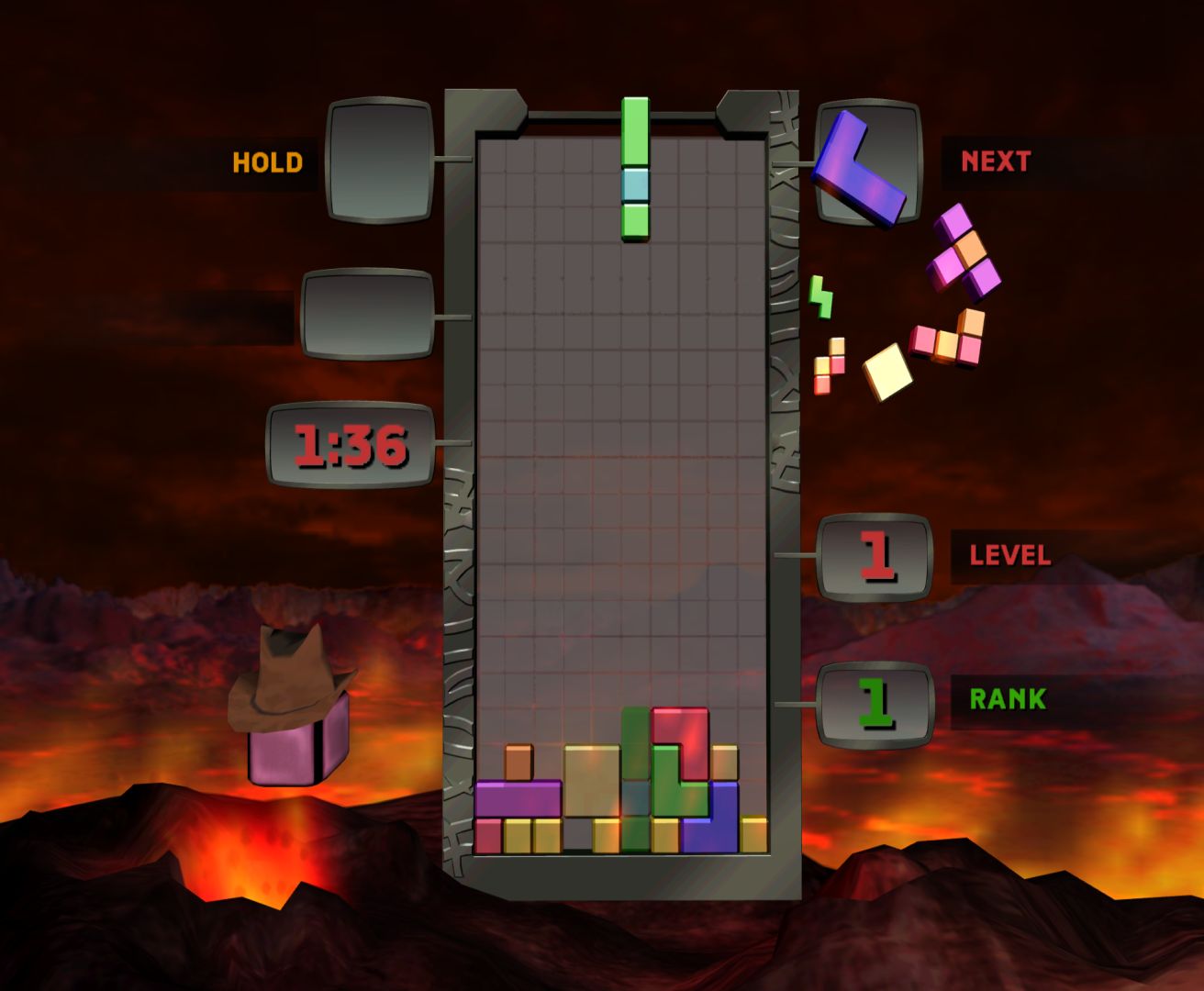
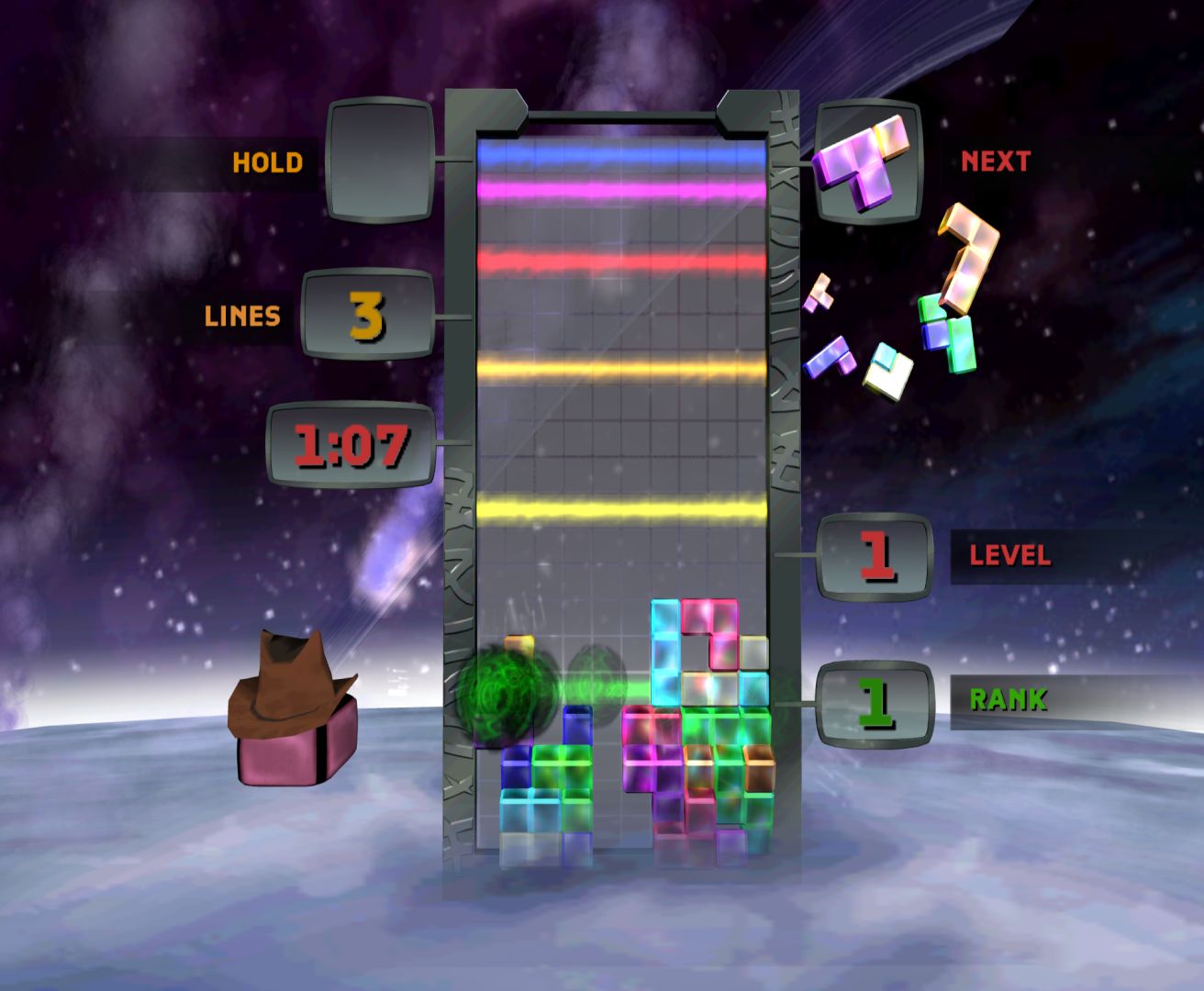
On the surface, Tetris Worlds seems like a great idea: six different forms of Tetris in a single package. Regular Tetris is the most well known puzzle game ever made. Square Tetris is the gameplay from The New Tetris. Cascade Tetris allows tetrominos to fall down into gaps after lines have been cleared. Sticky Tetris has special tetrominos in multiple parts, which can individually fall down into gaps. Hotline Tetris has you focusing on clearing specific rows. Finally, Fusion Tetris has you trying to connect atom blocks to the fusion block in the bottom corner. What could go wrong?
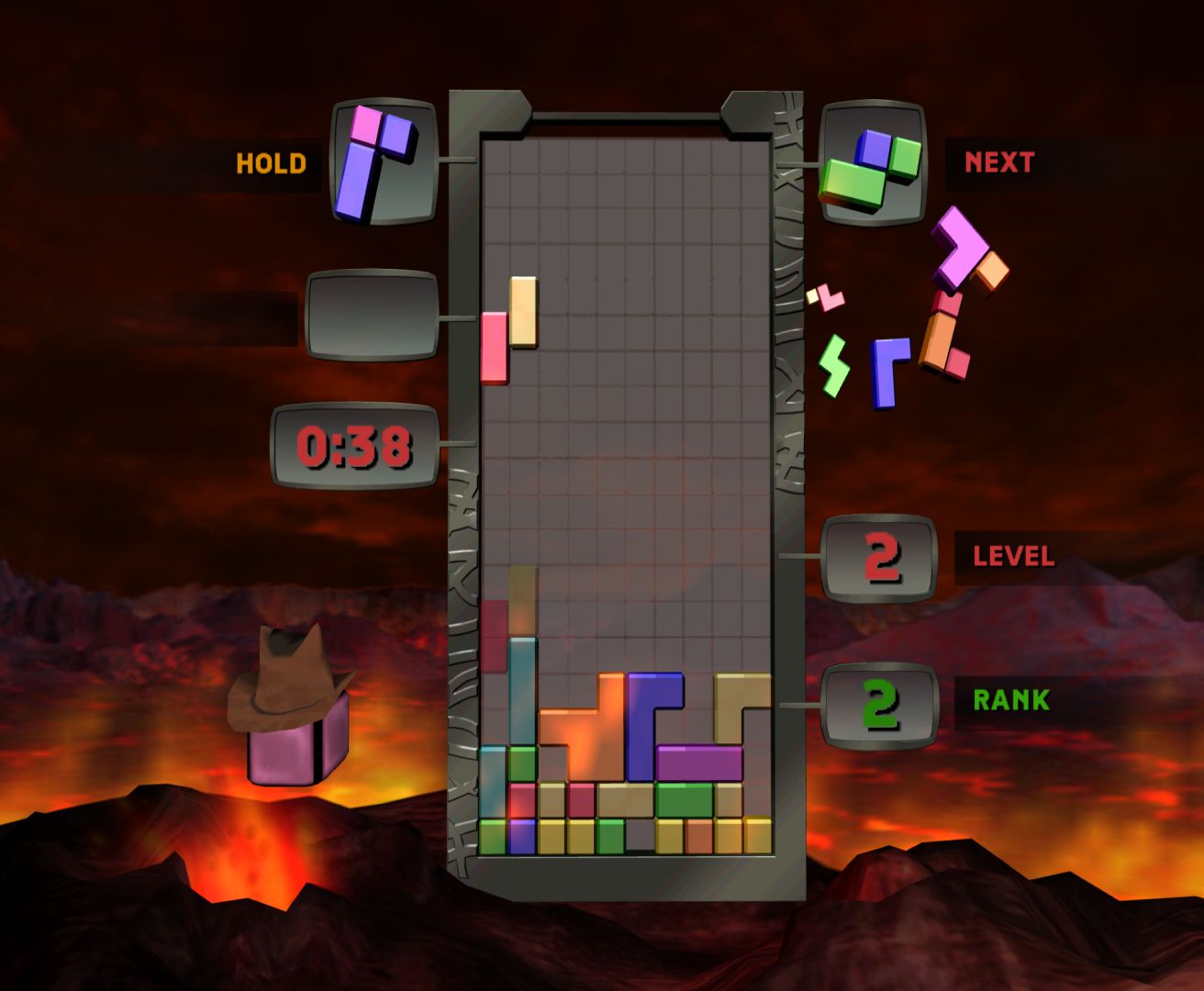
Tetris World starts off with a rather overproduced FMV cutscene. The square residents of Minos have to power portals to escape their planet before a supernova, which naturally involves playing different forms of Tetris. The backgrounds are all various planets, but are all rather bland. The story mode being the main focus also means that each form of Tetris has a definitive end of reaching a certain rank. You gain ranks by gaining enough lines within a 2 minute interval, with your score reset when the timer runs out.
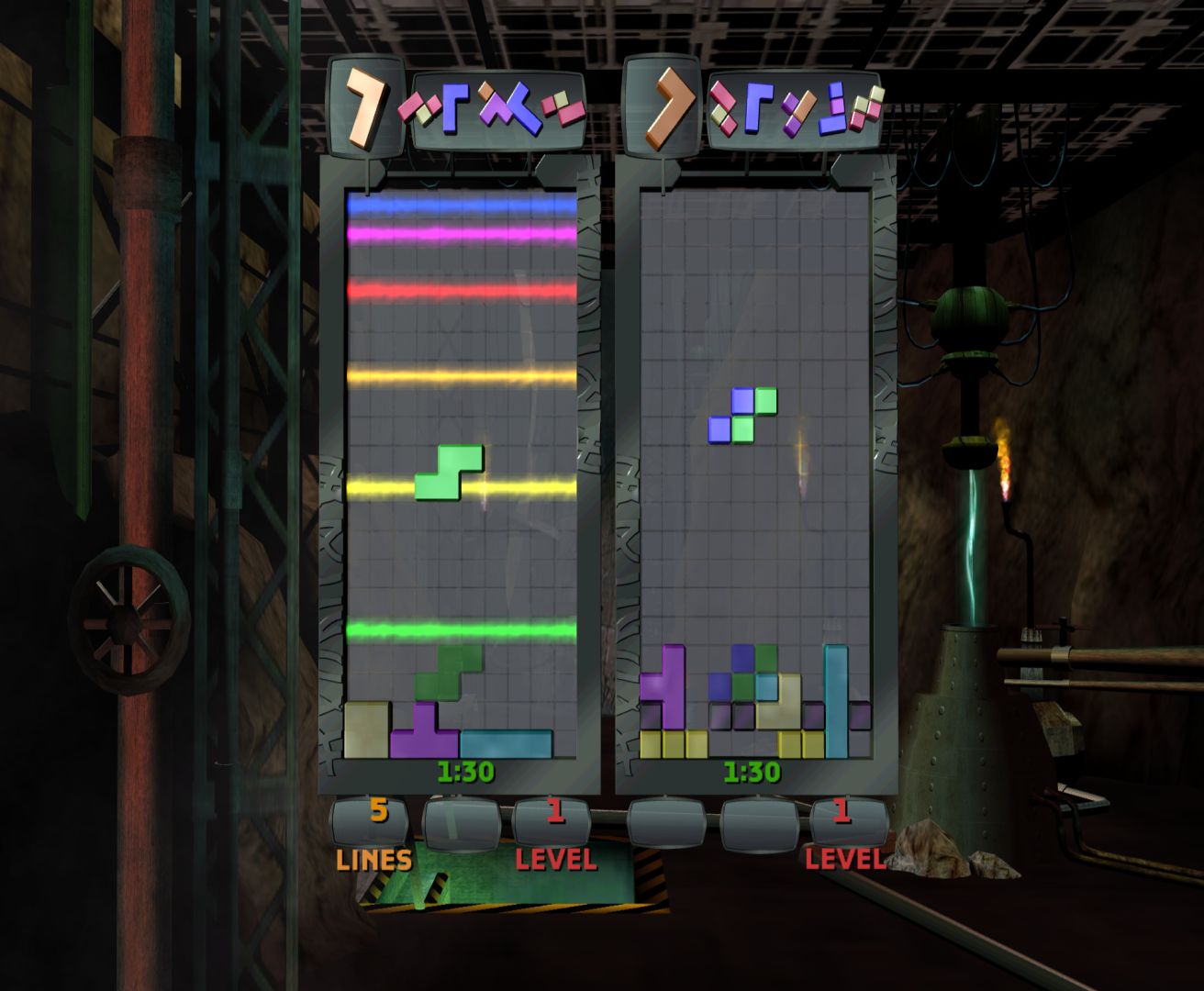
If this was just for the story mode, then it would be fine, but the same applies to the arcade mode (which does allow multiple people to play their own game of Tetris, using different modes if they choose). This essentially means that there’s no marathon mode and no high score or leaderboards outside of the two minute limit. Which seems like a pretty major thing to not include in a Tetris game.

Poor
There’s no flow to this game. There’s no intensity. You no longer have the incentive of watching your score balloon to 170-pls lines while you brain reaches melt-down. In one swift, stupid move, Tetris has changed for the worse.
Geraint Evans, NGC Magazine #73
Remake or remaster?
Having the various modes in a big Tetris game is a good idea.
Official Ways to get the game
There is no official way to get Tetris Worlds.

Europe

Japan
North America
GameCube Games by Date
2002: Jan, Feb, Mar, Apr, May, Jun, Jul, Aug, Sep, Oct, Nov, Dec
2003: Jan, Feb, Mar, Apr, May, Jun, Jul, Aug, Sep, Oct, Nov, Dec
2004: Jan, Feb, Mar, Apr, May, Jun, Jul, Aug, Sep, Oct, Nov, Dec
2005: Jan, Feb, Mar, Apr, May, Jun, Jul, Aug, Sep, Oct, Nov, Dec
2006: Jan, Feb, Mar, Apr, May, Jun, Jul, Aug, Sep, Oct, Nov, Dec


Tetris Worlds is actually a very important version of Tetris, since it was the very first Tetris game to implement the modern Tetris Guideline.
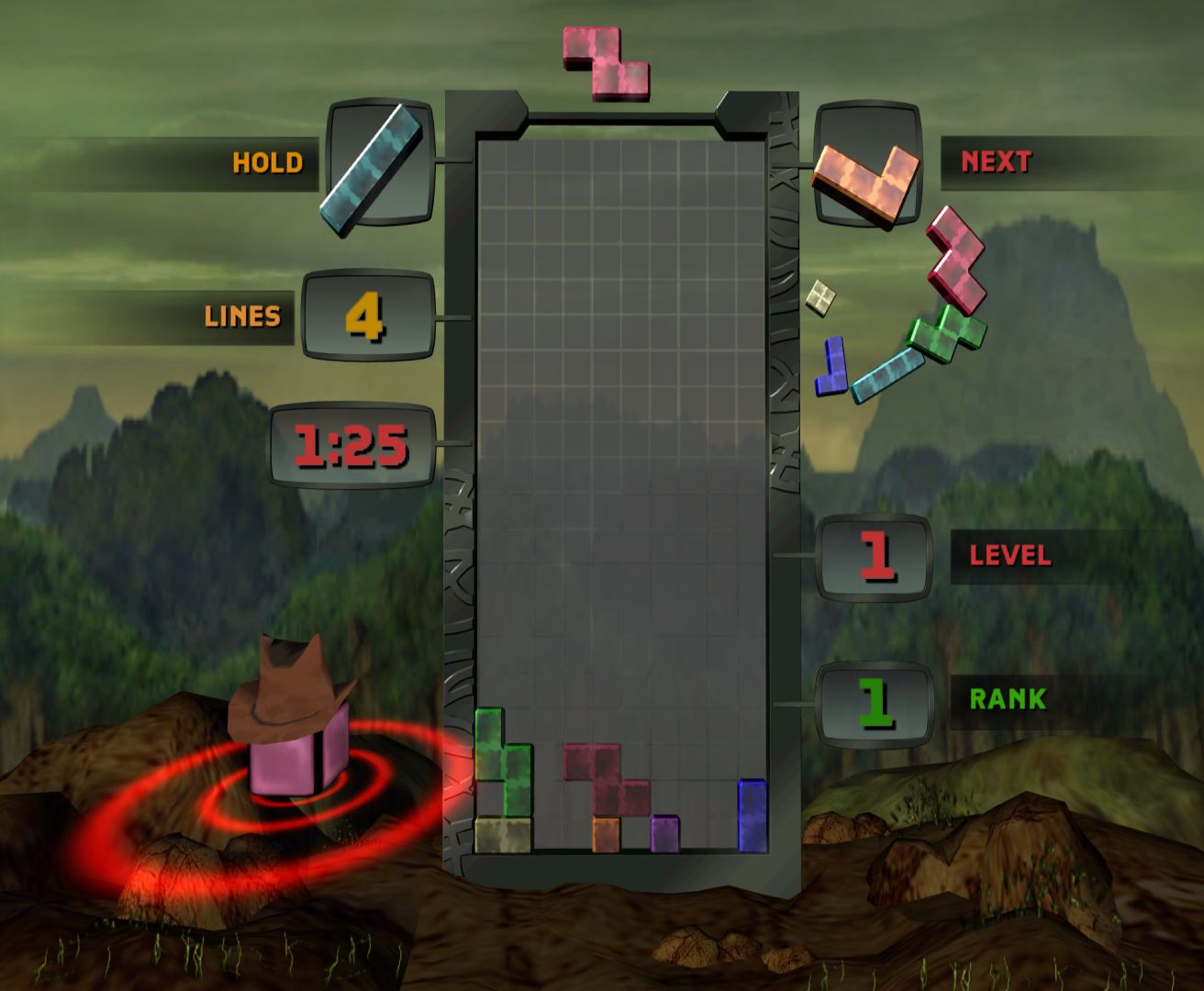
This means having separate Soft and Hard Drops, the 7-bag randomiser system, the 5 piece preview, the Hold function, the Super Rotation System, and yes… the much maligned Infinite Rotation mechanic. You have your now standard Marathon, Sprint and Ultra modes too.
While the guideline was modified slightly and altered in response to public outcry and criticism (most notably the Infinite Rotation was nerfed heavily to become the Finite Rotation system), this guideline is still in place today.
Developed in response to the wide range of inconsistent Tetris games flooding the market in the late 90s/early 2000s (most notably the Tetris: The Grand Master series; which played very fast and loose with the series mechanics), the decision was made to heavily restrict Tetris licensing to 3rd party developers and to standardise the series mechanics across every game. While developers could introduce additional modes and features, they absolutely had to adhere to the standard physics & gameplay mechanics; and include both the standard sets of gameplay modes (Marathon/Sprint/Ultra), as well as the song “Koroboniki” (which has since become the series’ main theme song).
The Guideline was enforced with an iron fist, and The Tetris Company’s new strict licensing rules meant that only one publisher was allowed to develop Tetris games at a time for any given platform. This meant that games like Puyo Puyo Tetris could not be released outside Japan originally (since Ubisoft and then EA had exclusive licensing rights outside of Japan at the time of its original release.
It wasn’t until the late 2010s (2017 to be precise), that The Tetris Company finally realised that their draconian licensing model and overly strict Tetris Guideline enforcement was severely damaging the brand… in light of the explosive success of the Classic Tetris World Championships (CTWC; which was based on NES Tetris competition), and the dismal failure of both EA and Ubisoft’s handling of the IP; The Tetris Company finally wised up, and began relaxing their iron grip… resulting in the western release of Puyo Puyo Tetris on Switch, and the current Tetris renaissance were currently living in; as the Guideline has finally been relaxed, allowing developers to freely explore new mechanics once again.
And now the series is more popular and relevant than ever before. It’s even been successfully adapted into a feature film!
Tetris Worlds began the dark age of Tetris, that we only just recently escaped from.
actually… the new tetris introduced many of those mechanics.